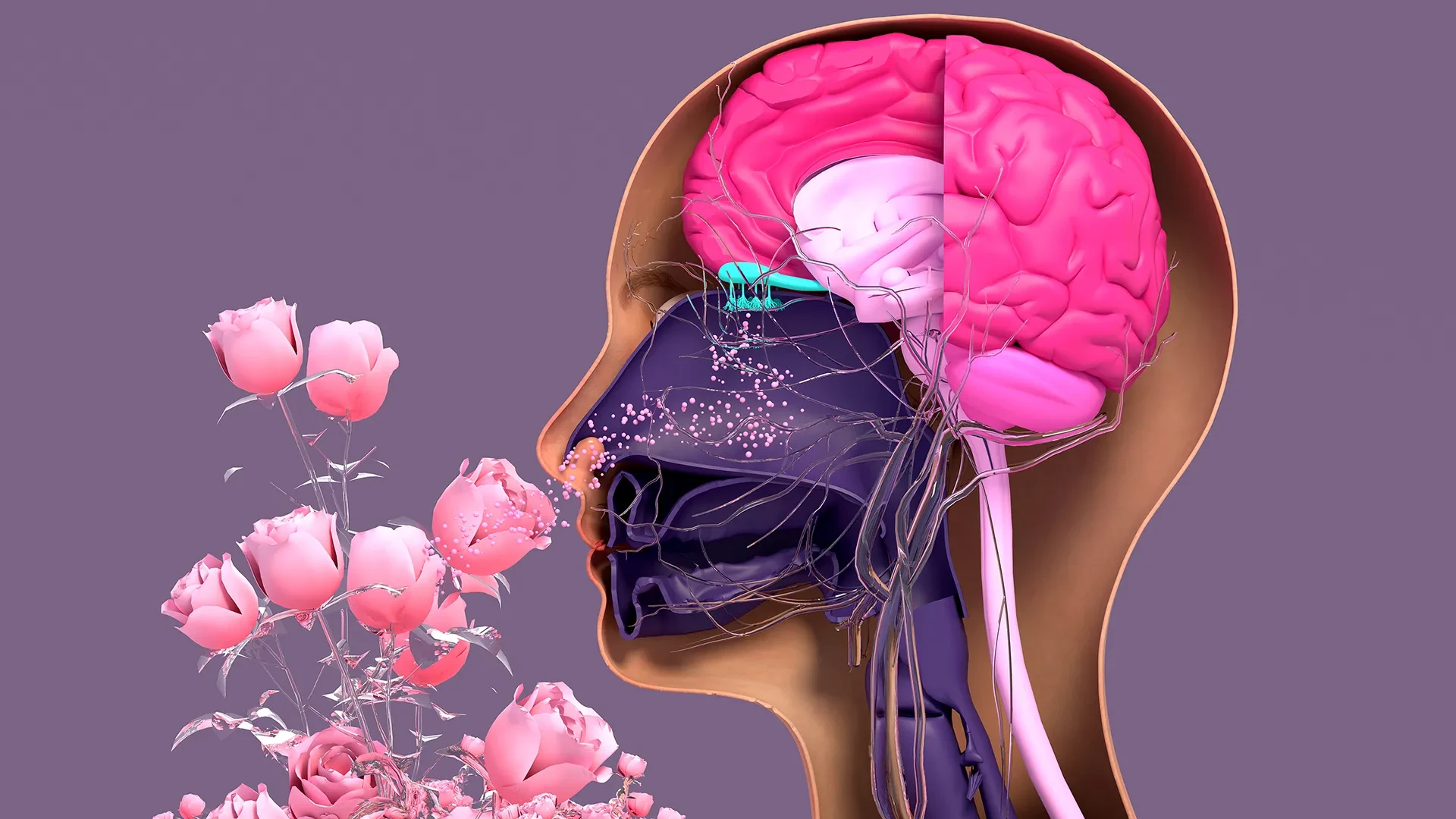
In the complex architecture of the human sensory system, the sense of smell often occupies a paradoxical position. It is perhaps our most primal sense, capable of triggering vivid memories or alerting us to invisible dangers, yet it remains one of the least understood in terms of its regenerative capacity and the mechanisms of its decline. While the neurons of the central nervous system are notoriously limited in their ability to repair or replace themselves, the sensory neurons located within the nasal cavity are remarkably resilient. They possess a unique, lifelong ability to regenerate, a necessary adaptation given their constant exposure to an environment filled with pollutants, allergens, and pathogens.
However, this resilience is not infinite. Factors ranging from viral infections, such as the global impact of COVID-19, to toxic environmental exposures and the natural progression of aging can severely hinder the body’s ability to maintain this delicate sensory interface. When the regenerative cycle fails, the result is often a partial or total loss of smell—a condition that can significantly diminish quality of life.
In a significant step forward for the field of regenerative medicine, a team of researchers at Tufts University School of Medicine and the Graduate School of Biomedical Sciences (GSBS), along with their international colleagues, has developed a sophisticated new tool to study this process. By creating a three-dimensional organoid model of olfactory tissue, the team has challenged long-standing assumptions about the "dormant" nature of certain stem cells in the nose, revealing that they play a far more active and essential role in preserving our sense of smell than previously recognized.
A New Perspective on Nasal Stem Cells
The research, recently published in the journal Cell Reports Methods, focuses on the intricate dance between two primary types of stem cells found in the olfactory epithelium: horizontal basal cells (HBCs) and globose basal cells (GBCs). Traditionally, the scientific community viewed GBCs as the primary "workhorses" of nasal regeneration—the active progenitors that divide frequently to replace aging or damaged neurons. In contrast, HBCs were often characterized as a reserve population, a "dormant" backup system that only sprung into action in the event of catastrophic tissue damage.
The Tufts study, led by senior author Brian Lin, a research assistant professor in the Department of Developmental, Molecular and Chemical Biology, suggests this binary view is incomplete. Using their newly devised 3D mouse model, the researchers discovered that these two cell types exist in a state of interdependence.
"Our research suggests that these two stem cells may be interdependent," Lin explained. "One type that we thought was largely dormant—HBCs—may actually play a crucial role in supporting the production of new neurons and the repair of damaged tissue."
This discovery shifts the narrative of nasal regeneration from a simple replacement process to a complex, collaborative effort. The HBCs appear to provide a necessary support structure or signaling environment that allows the GBCs to function effectively. Without the active participation of the HBCs, the entire assembly line of new sensory neurons begins to stall.
The Power of the 3D Organoid Model
To reach these conclusions, the team had to overcome the limitations of traditional laboratory methods. In many previous studies, researchers relied on two-dimensional cell cultures, which fail to capture the physical and chemical complexities of living tissue. To bridge this gap, the Tufts team developed a three-dimensional olfactory organoid—a "mini-organ" grown in a dish that mimics the structure and function of the mouse nasal lining.
This organoid model allowed the researchers to observe cellular interactions in real-time and manipulate specific variables with high precision. One of the study’s most significant breakthroughs involved identifying a specific subpopulation of HBCs. These cells are distinguished by their production of a protein known as KRT5 (Keratin 5).
The researchers observed that these KRT5-producing HBCs were not merely sitting by; they were actively facilitating the generation of new olfactory neurons. To test the importance of these cells, the team performed a depletion experiment, selectively removing the KRT5-positive HBCs from the organoid cultures. The results were stark: without these specific stem cells, the generation of new neurons was significantly impaired. This finding provides strong evidence that HBCs are essential players in the regenerative process, even under conditions that were not previously considered "catastrophic" enough to trigger them.
Understanding the Impact of Aging and Disease
The development of this model comes at a critical time. The COVID-19 pandemic brought the issue of anosmia—the loss of smell—into the global spotlight, as millions of patients experienced sensory disruptions as a primary symptom of the virus. Beyond viral infections, the sense of smell is also known to decline with age and is often one of the earliest clinical signs of neurodegenerative diseases like Parkinson’s and Alzheimer’s.
By utilizing their model to compare cells from mice of different ages, the Tufts team began to uncover why these declines occur. "We found a decline in the ability of the older mice cells to generate new neurons," Lin said. "We think this is due to a decrease in the GBC population as we age, but we need to do more work to test this hypothesis and if so, develop ways to rejuvenate them."
The ability to pinpoint whether a regenerative failure is due to a lack of "worker" cells (GBCs) or a failure in the "support" system (HBCs) is vital. If the GBC population is indeed the bottleneck in aging, future therapies might focus on stimulating their proliferation or finding ways to "reset" their biological clock.
An Easy-To-Use Model
One of the most remarkable aspects of this research is not just the biological discovery itself, but the philosophy behind the model’s creation. The study’s lead author, Juliana Gutschow Gameiro, a former Ph.D. student who visited the Graduate School of Biomedical Sciences from the State University of Londrina in Brazil, was determined to create a tool that was accessible to the wider scientific community.
Research into olfactory stem cells has historically been a niche field, but the link between smell loss and major health conditions has spurred a surge of interest. "Because loss of smell is associated with COVID-19, as well as with Parkinson’s disease and other conditions, a much larger number of researchers from a variety of different fields have begun researching olfactory epithelial cells in the last few years," Lin noted.
Recognizing that many of these researchers might not be experts in stem cell biology or might be working in laboratories with limited budgets and specialized equipment, Gameiro and Lin focused on making the organoid model easy to replicate. The goal was to provide a standardized, inexpensive platform that would allow scientists around the world to study how olfactory neurons regenerate and, perhaps more importantly, why that process fails in certain diseases.
By democratizing this technology, the Tufts team hopes to accelerate the pace of discovery across the field, moving from basic mouse biology to clinical applications for human health more rapidly.
Next Step: A Human Organoid
While the mouse model has provided invaluable insights, the ultimate objective for Lin and his colleagues is to translate these findings into human health. The team is currently working toward the development of a human olfactory organoid. Such a model would serve as a powerful platform for drug screening, allowing scientists to test potential treatments on living human tissue before moving to expensive and time-consuming clinical trials.
The use of organoids in pre-clinical research offers a "middle ground" that is often more effective than traditional animal models. Because organoids are derived from human cells, they can more accurately reflect human genetics and cellular responses. They have already been successfully developed for other organs, including the lungs and kidneys, but the human nose presents a unique set of challenges.
The primary hurdle lies in the difficulty of obtaining pure olfactory tissue. "It’s challenging to get pure olfactory tissue from humans," Lin explained. Currently, the process involves anesthetizing a patient and using a specialized brush—similar to the long swabs used in COVID-19 testing—to reach deep into the upper nasal cavity.
However, the sample collected is often a mixture of different cell types. Unlike the mouse model, where researchers can more easily isolate specific tissues, human samples typically contain a blend of respiratory stem cells and olfactory stem cells. These two types of cells look and behave differently, and for an organoid to be effective for studying smell, the olfactory cells must be isolated.
The research team’s next major challenge is to develop a simple, cost-effective technique for separating these human olfactory stem cells and "coaxing" them to grow and differentiate in a laboratory setting. If successful, this would open the door to personalized medicine for sensory disorders. A patient suffering from chronic smell loss could have their own cells harvested, grown into an organoid, and used to identify exactly which medications or therapies are most effective for their specific biological makeup.
As the team moves forward, the focus remains on the "dormant" cells that started it all. By proving that HBCs are vital partners in the regenerative process, the Tufts researchers have not only updated our understanding of nasal biology but have also identified a new potential target for therapies aimed at restoring one of our most essential connections to the world around us. Through international collaboration and a commitment to accessible science, the path toward treating sensory loss is becoming clearer, one cell at a time.