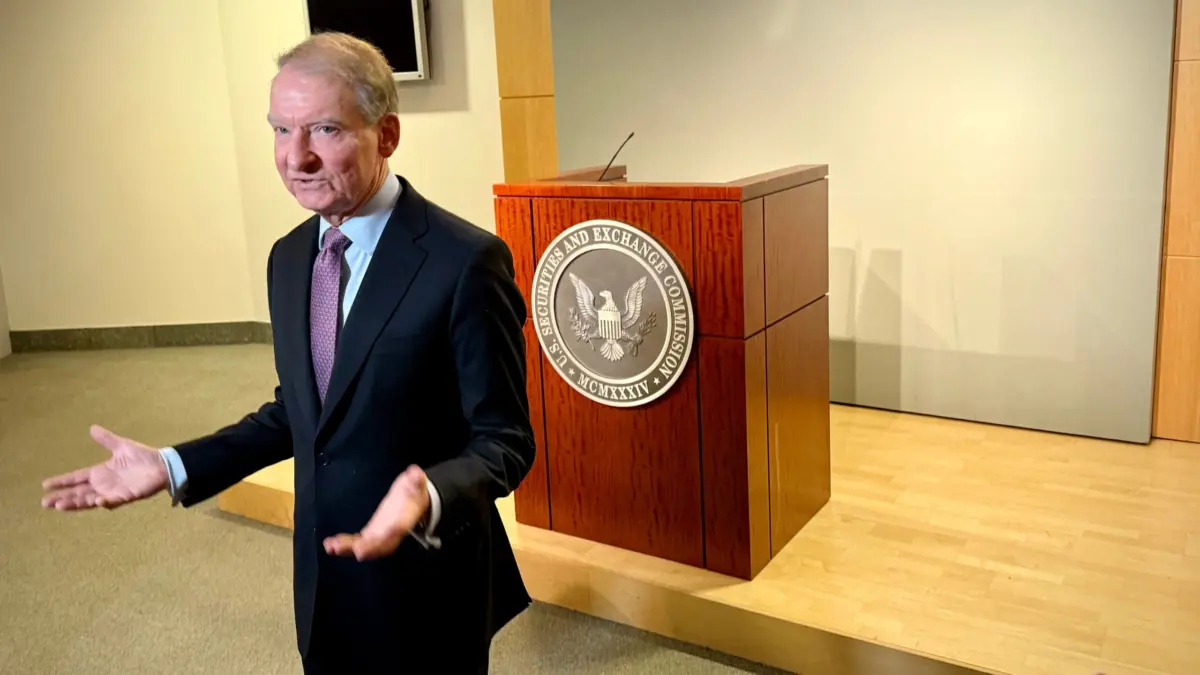
Only two days after the Clarity Act was declared dead, Atkins moved forward with a major policy initiative aimed at establishing a legitimate regulatory space for the tokenization of securities. This move is seen as a centerpiece of the SEC’s new crypto focus, shifting away from the enforcement-heavy approach of his predecessor and toward a framework that encourages domestic growth.
Atkins, along with CFTC Chairman Mike Selig—a former crypto-focused official who previously worked under Atkins at the SEC—had already begun a joint digital assets campaign prior to the bill’s failure. The two leaders have been working on a "taxonomy" of standards to determine how various assets should be treated. While these staff-level projects have provided a degree of the "clarity" the industry craves, they lack the permanence of law. Because these standards are born of agency policy rather than statutory requirement, they are inherently fragile; a change in administration or even a shift in commission leadership could see these rules overwritten or discarded.
To bolster the durability of his agenda, Atkins has launched several formal initiatives, including "Project Crypto," an internal agency effort designed to streamline the SEC’s approach to digital assets. The Chairman has also moved to fill the gaps left by the Clarity Act by proposing rules that would allow for specific innovation exemptions. These exemptions are intended to act as a "practice run" for future policies, helping to guide the market toward a standardized framework that might eventually be codified by a future Congress.
The CFTC and the Shift into Overdrive
The SEC is not the only agency moving to claim territory in the post-Clarity vacuum. At the CFTC, Chairman Mike Selig has similarly embraced a more active rulemaking role. Just days after the legislative breakdown in the Senate, Selig sent a proposal regarding crypto transactions and markets to the White House for review.
The CFTC currently operates under a unique dynamic: Selig is the only sitting member of what is typically a five-member commission, granting him a degree of unilateral authority to set the agency’s direction. Under his leadership, the CFTC has already begun addressing "perpetual futures"—often referred to as "perps"—which are a staple of the crypto trading world but have long lacked a clear regulatory home in the U.S.
Selig has also directed his staff to develop a new "crypto asset market" label for firms. This category would be modeled after the CFTC’s existing "designated contract markets" (DCMs), providing a formal structure for crypto platforms to operate under federal oversight. By creating these labels and frameworks now, Selig is attempting to create a "fait accompli" for the industry—a set of established rules that would be difficult for future regulators to untangle.
Capital Alpha policy analyst Ian Katz noted that the Republican leadership at both the SEC and CFTC are now in a position to "shift into overdrive with aggressive, pro-industry proposals." Katz suggested that the rapid pace of rulemaking is, in part, a political message to lawmakers. "Some of those proposals may come with an implied message to Democrats amounting to: This is what you get when you don’t legislate," Katz wrote in a recent note to clients.
The Durability Dilemma