The collapse of the Digital Asset Market Clarity Act in the United States Senate has left a significant vacuum in the nation’s financial regulatory framework, but federal agencies are not waiting for a legislative resurrection. In the wake of the bill’s failure, the U.S. Securities and Exchange Commission (SEC) and the Commodity Futures Trading Commission (CFTC) have embarked on an aggressive, high-stakes race to substitute internal agency rulemaking for the statutory bedrock that Congress failed to provide.
For years, the Digital Asset Market Clarity Act was viewed by many in the industry as the definitive solution to a decade of jurisdictional infighting and "regulation by enforcement." The legislation was designed to provide a comprehensive taxonomy for digital assets, clearly demarcating which tokens fall under the SEC’s securities oversight and which belong to the CFTC’s commodities domain. Its failure to pass has forced a pivot: instead of a unified law, the industry is now facing a piecemeal regulatory landscape built on the personal initiatives of agency leaders.
The Clarity-Shaped Hole in U.S. Policy
The Digital Asset Market Clarity Act was the latest and perhaps most robust attempt by Congress to define the different categories of cryptocurrencies and blockchain-native assets. For the better part of the last decade, the U.S. crypto sector has been defined by a state of perpetual conflict with federal regulators. Under previous leadership, most notably former SEC Chair Gary Gensler, the agency pursued a flurry of enforcement actions against major platforms like Coinbase and Kraken. The central point of contention was almost always whether the issuance and trading of digital assets were legally indistinguishable from the launching of traditional securities.
This friction led to expensive settlements, high-profile court battles, and a general sense of domestic stagnation as firms looked toward more unified regulatory regimes in Europe and Asia. The Clarity Act promised to end this era by establishing "rules of the road" that would have elevated the CFTC to a more prominent role. Most significantly, it would have granted the CFTC full supervisory powers over crypto commodity spot markets—the venues where assets like Bitcoin and Ethereum are traded directly.
In the current U.S. system, the regulation of spot markets for commodities is largely absent a hands-on federal overseer, except in cases of fraud or market manipulation. Since Bitcoin and Ether were eventually determined to be commodities rather than securities, a massive portion of the crypto market has existed in a regulatory gray zone. The Clarity Act aimed to fill this gap, while also introducing measures to curb illicit finance and provide limited legal protections for software developers working in decentralized finance (DeFi). The goal was to ensure that developers would not be held liable for how third parties chose to use their open-source protocols.
When the Senate vote failed, that vision of a legislative "bedrock" vanished. However, the agencies responsible for the sector did not pause to mourn.
The SEC’s Aggressive Pivot Under Paul Atkins
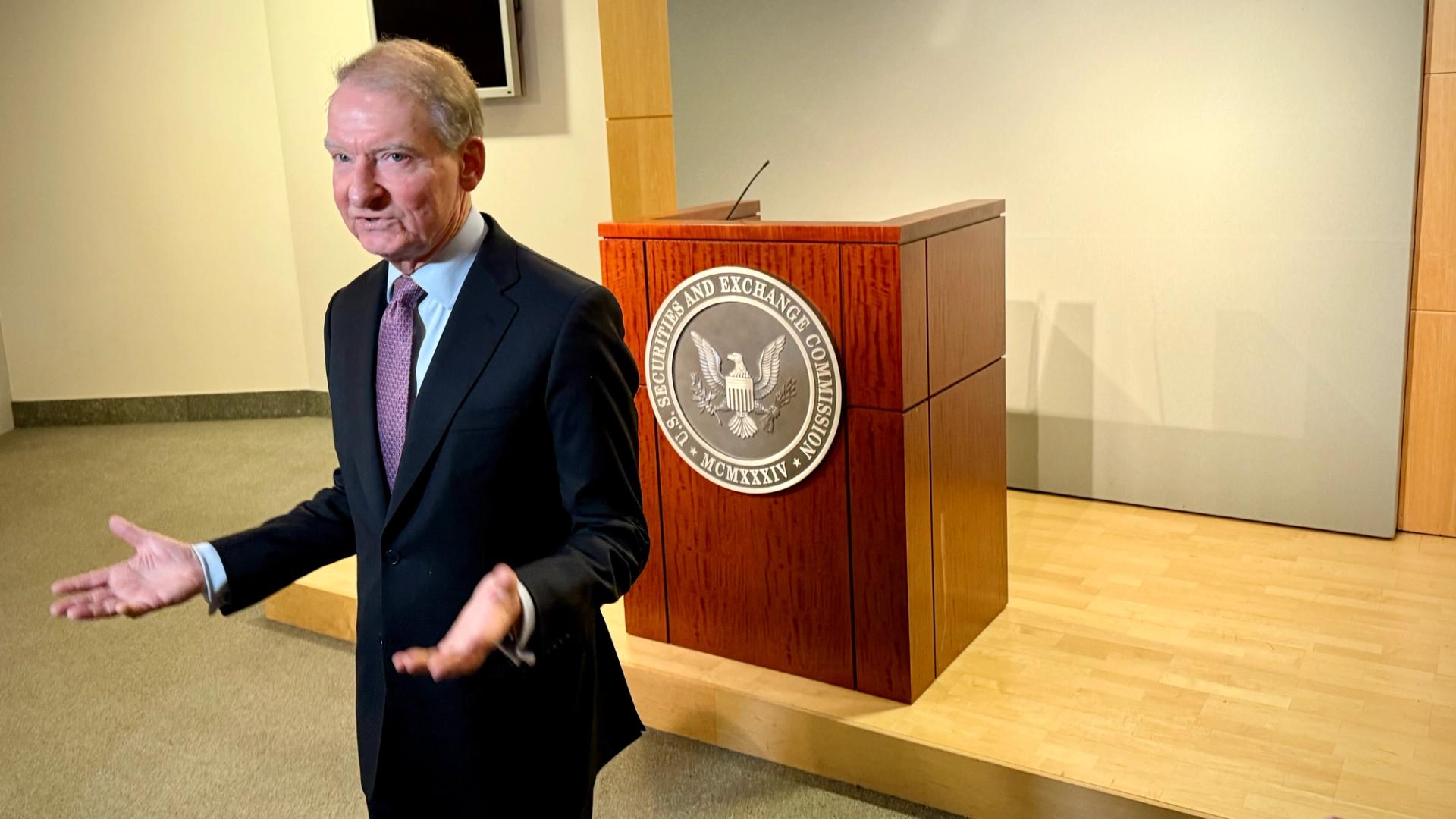
Leading the charge to fill the legislative void is SEC Chairman Paul Atkins. A Trump appointee and a known proponent of digital asset innovation, Atkins has wasted no time in asserting the SEC’s authority to shape the market through internal policy rather than waiting for a new congressional mandate.
Only two days after the Clarity Act was declared dead, Atkins moved forward with a major policy initiative aimed at establishing a legitimate regulatory space for the tokenization of securities. This move is seen as a centerpiece of the SEC’s new crypto focus, shifting away from the enforcement-heavy approach of his predecessor and toward a framework that encourages domestic growth.
Atkins, along with CFTC Chairman Mike Selig—a former crypto-focused official who previously worked under Atkins at the SEC—had already begun a joint digital assets campaign prior to the bill’s failure. The two leaders have been working on a "taxonomy" of standards to determine how various assets should be treated. While these staff-level projects have provided a degree of the "clarity" the industry craves, they lack the permanence of law. Because these standards are born of agency policy rather than statutory requirement, they are inherently fragile; a change in administration or even a shift in commission leadership could see these rules overwritten or discarded.
To bolster the durability of his agenda, Atkins has launched several formal initiatives, including "Project Crypto," an internal agency effort designed to streamline the SEC’s approach to digital assets. The Chairman has also moved to fill the gaps left by the Clarity Act by proposing rules that would allow for specific innovation exemptions. These exemptions are intended to act as a "practice run" for future policies, helping to guide the market toward a standardized framework that might eventually be codified by a future Congress.
The CFTC and the Shift into Overdrive
The SEC is not the only agency moving to claim territory in the post-Clarity vacuum. At the CFTC, Chairman Mike Selig has similarly embraced a more active rulemaking role. Just days after the legislative breakdown in the Senate, Selig sent a proposal regarding crypto transactions and markets to the White House for review.
The CFTC currently operates under a unique dynamic: Selig is the only sitting member of what is typically a five-member commission, granting him a degree of unilateral authority to set the agency’s direction. Under his leadership, the CFTC has already begun addressing "perpetual futures"—often referred to as "perps"—which are a staple of the crypto trading world but have long lacked a clear regulatory home in the U.S.
Selig has also directed his staff to develop a new "crypto asset market" label for firms. This category would be modeled after the CFTC’s existing "designated contract markets" (DCMs), providing a formal structure for crypto platforms to operate under federal oversight. By creating these labels and frameworks now, Selig is attempting to create a "fait accompli" for the industry—a set of established rules that would be difficult for future regulators to untangle.
Capital Alpha policy analyst Ian Katz noted that the Republican leadership at both the SEC and CFTC are now in a position to "shift into overdrive with aggressive, pro-industry proposals." Katz suggested that the rapid pace of rulemaking is, in part, a political message to lawmakers. "Some of those proposals may come with an implied message to Democrats amounting to: This is what you get when you don’t legislate," Katz wrote in a recent note to clients.
The Durability Dilemma
Despite the enthusiasm with which Atkins and Selig are moving, there remains a fundamental problem: agency rules are not the law. While the SEC’s current all-Republican commission can pass regulations without Democratic approval—due to two lingering vacancies on the board—these rules are vulnerable.
Atkins himself has been vocal about this limitation. Throughout the year, he has repeatedly described legislation as "indispensable" for creating "future-proofed" rules. In a statement made in August, he warned that without the protection of a federal law, any progress made today could be "unwound by a future rogue regulator." For Atkins, the term "future-proof" implies a level of durability that only Congress can provide.
Furthermore, rules established by agencies are frequently subject to legal challenges in federal court. Critics and opposing political factions often argue that agencies exceed their delegated authority when they create expansive new regulatory frameworks without a specific mandate from Congress. If the SEC or CFTC’s new crypto rules are challenged, the resulting litigation could tie the industry in knots for years, further delaying the stability that market participants have been seeking for over a decade.
The tokenization initiative and the CFTC’s move toward "perp" futures are significant steps, but they are built on a foundation of administrative policy rather than legislative certainty. For the industry, this means that while the "Gensler era" of enforcement may have cooled, a new era of "policy volatility" may be beginning.
The Road Ahead for Project Crypto
As the SEC continues to build out its "Project Crypto" framework, the agency is attempting to position itself as an ally to future legislative efforts rather than a replacement for them. Atkins has maintained that his agency’s work is intended to complement the work of Congress, providing a template that lawmakers can eventually use to draft a more permanent version of the Clarity Act.
However, for the time being, "Project Crypto" and the CFTC’s new market labels stand alone. They represent a piecemeal version of the grand vision once held by proponents of the Clarity Act. While these measures offer a temporary reprieve from regulatory uncertainty, the industry remains wary. The race to substitute agency regulations for the law is a high-speed maneuver, but without the "bedrock" of a Senate-approved bill, the path forward remains fraught with political and legal risks.
The U.S. crypto market is now effectively being governed by a set of "stand-in" rules. Whether these stand-ins can survive the next political shift in Washington remains the most critical question for the future of digital assets in America. For now, the regulators are in the driver’s seat, moving as fast as possible before the legislative window—or their own tenure—closes.