In the vast, sun-drenched expanse of rural Kansas, a long-standing dispute over water rights has created a delicate balancing act between the survival of a premier wildlife refuge and the economic lifeblood of local farming communities. At the center of this struggle is U.S. Senator Roger Marshall, a Republican who recently sought to resolve the tension through a significant infusion of federal cash. However, the $4.2 million earmark requested by the senator has drawn intense scrutiny, not only for its departure from his vocal opposition to "pork-barrel" spending but also for its proximity to a private hunting ranch in which he holds a financial stake.
The funding request, documented in official Senate records, was designed to finance infrastructure improvements aimed at increasing the flow of water into the Quivira National Wildlife Refuge. While the project is framed as an environmental and agricultural necessity, Marshall’s personal connection to the land bordering the preserve has raised questions about potential conflicts of interest. The senator is a part-owner of Rattlesnake Ranch, a property that sits directly adjacent to the refuge and stands to benefit from the very water stabilization efforts he championed in Washington.
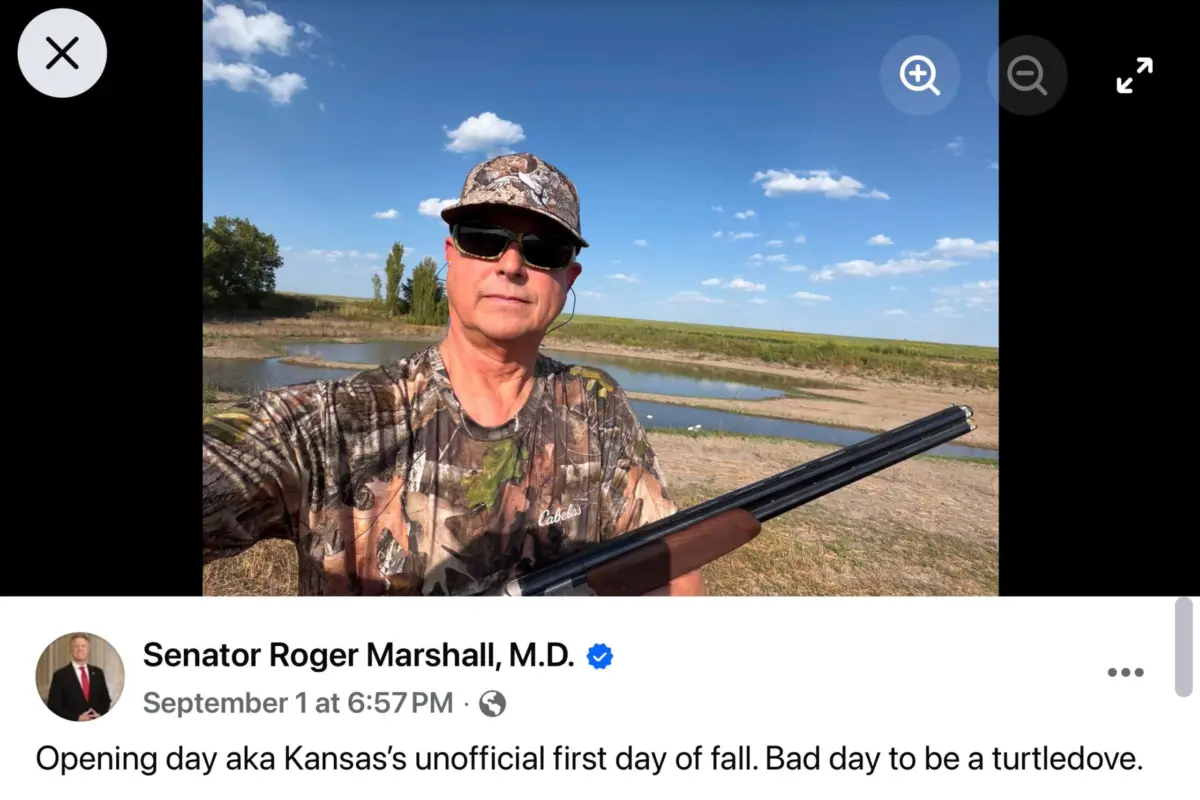
The situation presents a complex intersection of public policy, environmental conservation, and personal financial interest. As an avid outdoorsman who frequently shares photos of his hunting expeditions, Marshall has long portrayed himself as a steward of Kansas’s natural resources. Yet, the intersection of his legislative power and his private landholdings has provided critics with ammunition, suggesting that the senator’s efforts to "save farms" might also be an effort to preserve the value of his own backyard.
Plan will ensure refuge gets more water to help birds
The Quivira National Wildlife Refuge is a crown jewel of the Great Plains, serving as a critical stopover for hundreds of thousands of migratory birds, including the endangered whooping crane and various species of waterfowl. For decades, hunters and naturalists have been drawn to the region every autumn to witness the spectacular descent of birds onto the marshes. However, the expansion of industrial agriculture in the surrounding counties has placed an immense strain on the local water supply. To irrigate vast fields of corn and soybeans, farmers have increasingly tapped into the groundwater, a practice that has steadily diminished the natural flow of Rattlesnake Creek into the refuge.
The federal plan supported by Marshall’s earmark proposes a technical solution to this ecological crisis. According to federal records, the project involves pumping water from a separate, more robust watershed and transporting it via a new pipeline into Rattlesnake Creek. From there, the water would flow downstream directly into the Quivira marshes. Because Rattlesnake Creek runs alongside Marshall’s Rattlesnake Ranch, the project would effectively stabilize the water levels in the immediate vicinity of his property before the water reaches the refuge.
This legislative maneuver comes at a pivotal moment for Marshall’s political career. Though Kansas remains a reliably red state—President Donald Trump won the state by 16 percentage points in 2020—the political landscape has shown signs of shifting. Kansas has not sent a Democrat to the U.S. Senate since 1932, but the current reelection cycle has proven more competitive than many observers anticipated.
The tightening race has seen millions of dollars in Republican spending directed toward advertising to protect Marshall’s seat against his challenger, Adam Hamilton. Hamilton, a former Republican and a prominent leader of one of the nation’s largest United Methodist churches, has mounted a campaign that appeals to moderate and independent voters. In this high-stakes environment, the optics of a multi-million-dollar earmark that benefits a senator’s private holdings have become a flashpoint for debate.
When asked for comment, Senator Marshall’s office declined to make him available for an interview. His staff also did not provide answers to specific questions regarding the valuation of his property or the details of his business interests at Rattlesnake Ranch. Instead, spokeswoman Payton Fuller issued a brief statement emphasizing the public benefits of the project.
"All the water for this project would go into Quivira Wildlife Refuge," Fuller said. "Rattlesnake Ranch would not benefit from it." She further noted that the initiative was designed to "literally save farms" by preventing the federal government from forcing farmers to shut off their irrigation wells during times of drought.