As the air turns crisp and the light begins to slant in that particular, amber-hued way unique to October, the staff at Literary Hub finds themselves drifting away from their usual towers of books. While the written word remains their primary anchor, this week has seen a shift toward what might be called a narrative diet of the "time-bound object." This is art that demands a specific presence: the kind of immersive experience one can only truly imbibe while sitting on a velvet theater seat or curled up on a couch, surrendering to the tempo of a live performance or a flickering screen. It is a season for the communal and the ephemeral, and the staff has been out in the world, absorbing stories that exist in the air as much as they do on the page.
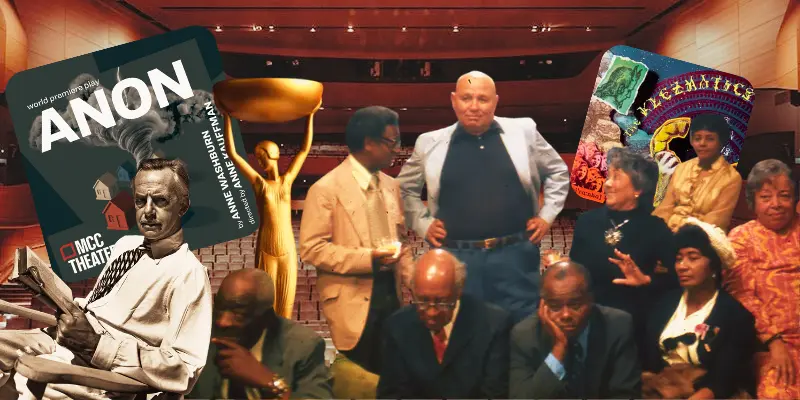
James Folta has been immersing himself in the latter, specifically through the medium of live drama. This week, he attended a performance of ANON: A Tempest at Our Kitchen Table, a striking new production from the mind of Anne Washburn. Washburn has long been regarded as one of the most intellectually daring and "weirdest" dramatists currently working in the American theater. Known for her ability to blend the surreal with the profoundly human—most notably in her acclaimed work Mr. Burns, a Post-Electric Play—Washburn’s latest effort continues her tradition of challenging the audience’s expectations of what a stage play can accomplish.
The premise of ANON is deceptively straightforward: it follows two Texas households that find themselves on diametrically opposite sides of a modern culture war. However, as Folta points out, the simple logline of the play fails to capture the sheer brilliance of Washburn’s dialogue or the uncanny, often unsettling spectacle that she is famous for creating. It is a work that attempts to grapple with the visceral, often messy reality of contemporary political divisions without falling into the trap of didacticism or cliché.
Folta admitted to some initial hesitation regarding the play’s subject matter. "I was skeptical of something so ripped from the recent headlines," he noted, echoing a common sentiment among theatergoers who often find "topical" theater to be lacking in depth. However, the production quickly dispelled those concerns. Folta described the experience as excellent, noting it was a "very interesting dramatization of the moment." Much of the play’s success can be attributed to the synergy between Washburn’s writing and the staging by director Anne Kauffman. Kauffman, a frequent collaborator of Washburn’s, brings a precision to the "uncanny" elements of the script, supported by standout performances from the cast. Folta offered special praise for Crystal Finn and Izabel Mar, whose performances anchored the play’s more abstract moments in a recognizable, human reality. ANON is currently continuing its run off-Broadway at MCC, where it will remain through November 1, offering a rare opportunity to see a master of the form tackle the complexities of the present day.
Dan Sheehan is also turning his attention to the stage this weekend, though his theatrical journey takes him across the Atlantic. Sheehan, along with his father, is heading to the Dublin Theatre Festival, an institution that has long served as a premiere showcase for both Irish and international drama. Their destination is a production of Eugene O’Neill’s classic, A Moon for the Misbegotten. The play is a cornerstone of American drama, a haunting exploration of guilt, redemption, and the immigrant Irish experience, set in rural Connecticut.
The production carries a significant weight, not only because of O’Neill’s status but because of the creative team involved. This iteration is directed by Garry Hynes, the legendary artistic director of Ireland’s Druid Theatre. Hynes is widely considered a titan of the theater world, known for her ability to breathe new life into classic texts with a direction that is often described as "unmissable." For Sheehan, however, the anticipation is tempered by a very practical concern. O’Neill’s work is famously expansive, and this production of A Moon for the Misbegotten clocks in at over three hours. As an "under-slept editor," Sheehan expressed a humorous anxiety about the possibility of "disgracing" himself by falling into a snore during the performance. Despite the sleep deprivation, the draw of Hynes’ direction and the opportunity to see O’Neill’s Hogan family brought to life in Dublin is a powerful motivator. The hope is that the lively energy of the production will be enough to keep the audience—and the editor—fully awake and engaged in the tragedy unfolding on stage.
Molly Odintz has found her narrative inspiration in a different medium entirely, though one no less steeped in tradition and communal history. With the high holiday of Simchat Torah approaching, Odintz has been revisiting the music of her past, specifically the work of The Klezmatics. The holiday, which celebrates the conclusion of the annual cycle of public Torah readings and the beginning of a new cycle, is traditionally a time of great joy and dancing.
Odintz has found herself "jamming out" to a particular song by the group: "Simkhes-Toyre." Reconnecting with the track has been a revelation for her, confirming that the music holds up just as well today as it did when she was younger. She noted that the song is "apparently just as much of a banger" as her teenage self remembered. The Klezmatics are renowned for their ability to infuse traditional Klezmer—the instrumental musical tradition of the Ashkenazi Jews of Central and Eastern Europe—with modern sensibilities, ranging from jazz to punk. In doing so, they create a sound that is both ancient and vibrantly contemporary. For Odintz, the music serves as a bridge between memory and the present moment, a rhythmic celebration that aligns perfectly with the spirit of the upcoming holiday.
Brittany Allen has been spending her week in the darkened rooms of Lincoln Center, taking advantage of the New York Film Festival (NYFF). By "riding a member friend’s coattails," Allen has been able to attend a series of screenings at one of the most prestigious film festivals in the world. The atmosphere at NYFF is unique; it is a concentrated gathering of film enthusiasts where the air is thick with opinions on everything from the nuances of the Korean New Wave to the latest critiques by Richard Brody of The New Yorker. Allen noted that the "eavesdropping alone" is worth the price of admission, as the lobby of Lincoln Center becomes a hub of high-level discourse on cinema, the Criterion Closet, and the state of the industry.
Among the many films screened, Allen highlighted three that stood out as "warm-hearted odes to human intimacy, intelligence, and grace." The first is the documentary Once Upon a Time in Harlem, a film that transports viewers into a salon filled with intellectual and cultural luminaries. The documentary captures a specific sense of place and time, offering a window into a world of profound conversation and creative energy.
The second film, Mike Leigh’s Tender Loving Care, marks a return for the veteran director who is celebrated for his hyper-realistic portrayals of British life. This latest work focuses on quiet, often overlooked acts of care within families, friendships, and the institutions that govern them. It is a film that finds the extraordinary in the ordinary, a hallmark of Leigh’s storied career.
Finally, Allen pointed to Lee Chang-dong’s Possible Love. Lee, a master of South Korean cinema, is known for his deeply philosophical and emotionally searing films like Poetry and Burning. In Possible Love, he anchors a sharp social critique within two "electrically human" lead performances. The film explores the complexities of connection in a modern world, balancing its intellectual weight with a visceral emotional resonance. Allen urged audiences to keep an eye out for these titles as they move toward wider release later this year, noting that they represent some of the most vital storytelling currently being captured on film.
Drew Broussard, the podcasts editor, rounds out the week’s cultural survey by returning the focus to the literary world, albeit through the lens of awards and recognition. While the announcement of literary prize lists often brings out a certain amount of cynicism or "grumbling" from media circles, Broussard finds himself in agreement with columnist Maris Kreizman: this year’s crop of finalists is a genuine cause for celebration.
In particular, the Cercador Prize list and the Booker Prize shortlist have been sources of "SO much joy" for Broussard. The Cercador Prize, which is unique for being an award "from booksellers to books," often highlights works that might be overlooked by more traditional mainstream committees. Seeing favorites like M. John Harrison’s The End of Everything and Rebecca Perry’s May We Feed the King receive such high-profile recognition has been a highlight of the season. Harrison’s work, known for its genre-defying depth, and Perry’s evocative prose represent the kind of ambitious writing that the Lit Hub staff champions.
For Broussard, the quality of these lists is a testament to the health of the current literary landscape. "I just feel like it’s a fun time to be reading, ya know?" he remarked. It is a sentiment that seems to echo across the entire staff this week. Whether it is the experimental theater of Anne Washburn, the classic Irish-American tragedies of Eugene O’Neill, the celebratory rhythms of The Klezmatics, or the profound humanism of the films at NYFF, there is a sense that the narrative world is currently in a state of abundance. As the weekend approaches, the message from the Lit Hub office is clear: it is a good time for art of all kinds, and one should remain wide awake to the stories being told in every medium.