The literary landscape this week is defined by a rigorous exploration of the human condition, ranging from the historical roots of American political dissent to the philosophical complexities of modern addiction and the evolving stylistic ambitions of contemporary novelists. Through the lens of five significant new reviews highlighted by Book Marks, the literary community is engaging with works that challenge the simplicity of modern binaries, seeking instead to uncover the messy, often contradictory truths beneath the surface of our social and personal lives. From the "socialist evangelism" of Eugene Debs to the bureaucratic labyrinths of Tom McCarthy, these works suggest that the most profound insights often emerge from the tension between individual will and collective necessity.
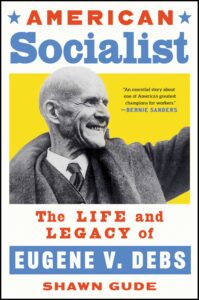
At the forefront of this week’s critical discussion is Shawn Gude’s American Socialist: The Life and Legacy of Eugene Debs, a biography that arrives at a moment of renewed interest in democratic socialism within the United States. Writing for The New Republic, Joanna Scutts examines how Gude’s work serves as a vital corrective to the long-held assumption that socialism is an alien ideology within the American tradition. By tracing the life of Debs, the book highlights a figure who did not merely import European Marxism but instead fused it with a uniquely American rhetoric of nationalist and Christian mythology. Scutts notes that Debs’s oratory—a potent "brew" of abolitionist fire and the spirit of Christ—created an electrical connection with audiences that felt like a new political religion.

Gude’s biography reveals a deeper, perhaps more sobering truth: that the history of American socialism is inextricably linked to the history of the forces organized to crush it. The "brutal disillusion" experienced by early 20th-century labor movements, as they faced the mines and mills of a resource-rich but hierarchy-bound nation, mirrors the modern struggles of figures like Bernie Sanders or Alexandria Ocasio-Cortez. Scutts emphasizes that Gude’s meticulous narrative moves beyond the idolization of a single leader, suggesting instead that the true legacy of Debs lies in the "collective resistance and joyful community" of ordinary people. It is a story of reinvention—one that suggests that even the most entrenched systems of capitalism and politics are subject to the transformative power of the people.
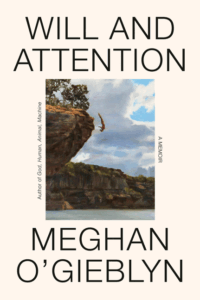
While Gude explores the external struggle for social change, Meghan O’Gieblyn’s new memoir, Will and Attention, turns the gaze inward to the "human soul"—a term O’Gieblyn treats with the reverence of an antique in an era often defined by nihilism and digital disenchantment. Reviewed by Rhian Sasseen in The Baffler, the memoir navigates O’Gieblyn’s relapse into alcoholism during the pandemic, set against her unexpected intellectual flirtation with Catholicism years after renouncing religion for atheism. Sasseen observes that the book functions as an exploration of "obliteration," where substance abuse and the divine both threaten to blot out the individual self.
O’Gieblyn’s work is distinguished by its refusal to view addiction through a purely medical or moral lens. Instead, she draws on a rich humanistic tradition, invoking the French philosopher Simone Weil and the German thinker Arthur Schopenhauer to examine the "twinned problems" of will and attention. Sasseen highlights O’Gieblyn’s awareness of a cruel irony: that the achievement of stability and happiness can often breed a boredom that triggers a destructive willfulness. By focusing on the quality of attention we pay to ourselves and the world, O’Gieblyn manages to transcend the traditional addiction memoir, offering instead a profound meditation on the varieties of care required to maintain a sense of self in a world of "zeroes and ones."
The theme of moral complexity and the difficulty of "being good" continues in Lily Meyer’s review of Madeline ffitch’s Avalon, Rise for The Atlantic. ffitch’s novel is described as a sophisticated and slyly funny exploration of a community facing an external "Big Bad"—specifically, the infiltration of white supremacists into a town. Meyer notes that the novel operates with the directness of a children’s classic, such as Abiyoyo or Frog and Toad, yet maintains an intellectual complexity that avoids the pitfalls of preachy "purity."
In ffitch’s narrative, the act of opposing evil is presented as a necessary but grueling task, complicated by the fallibility and confusion of the characters themselves. By braiding together various stories of resistance, ffitch demonstrates that collective action is rarely easy, even when the stakes are high. The novel’s strength, according to Meyer, lies in its ability to mirror the ethical clarity of children’s literature—where characters must face their situations with courage—while acknowledging the "mischief, humor, and delight" that coexist with emotional complication. Avalon, Rise ultimately serves as a testament to the difficulty of getting people to work together and the remarkable persistence required to protect a community.
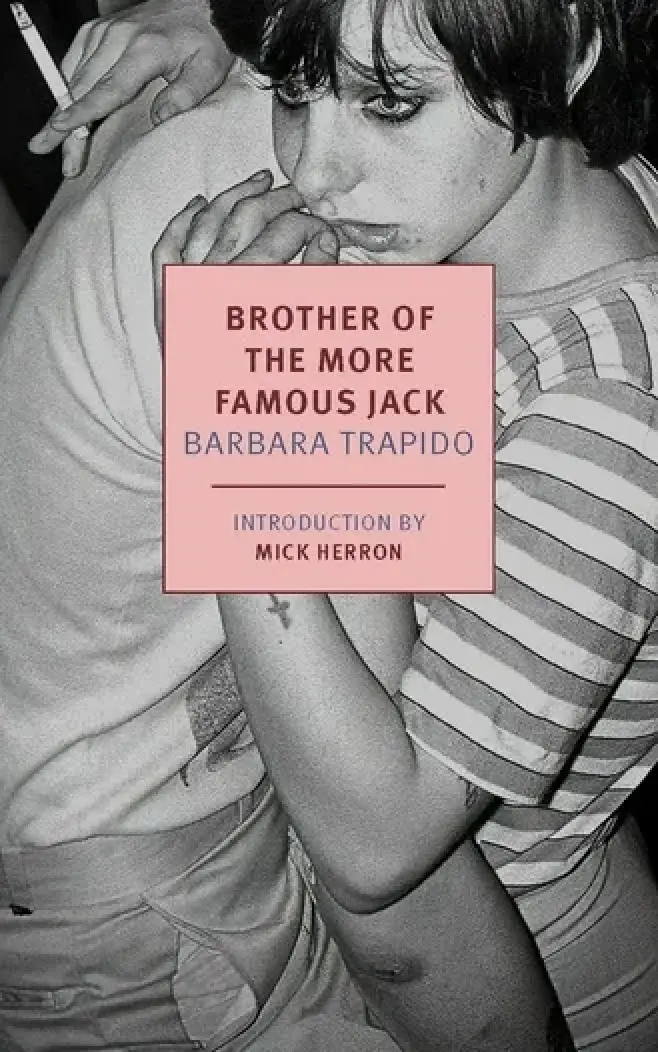
In a different vein of literary exploration, Barbara Trapido’s Brother of the More Famous Jack has been hailed by Dwight Garner in The New York Times as a "pocket classic" that deserves a wider audience. Garner’s review celebrates the reissue of this "literate, funny, cruel, and eccentric" novel, which follows a young person from a narrow cultural background who is "nearly adopted" by an unconventional, urbane family. The novel’s title, an allusion to the painter Jack Yeats, may have contributed to its relative obscurity, but Garner argues that the book’s "Stoppard-level" dialogue and its ability to take life seriously without becoming "gooey" make it an ornament to the genre of coming-of-age fiction.
For Garner, the charm of Trapido’s work lies in the way it captures the "charmed parenthesis" of a life lived outside the daily grind. The characters express their love through "hassling" and intellectual sparring, creating an environment that feels both intellectually stimulating and emotionally resonant. The resurgence of interest in Trapido’s work suggests a desire among readers for novels that earn their emotions through wit and sharp observation, providing a refuge of "urbane and unconventional" thinking in a cluttered literary market.
Finally, Max Callimanopulos’s review of Tom McCarthy’s The Rhyl Poster in The New Yorker offers a more critical look at the direction of contemporary avant-garde fiction. McCarthy, known for the spare and "clean" prose of his breakout novel Remainder, has increasingly moved toward a style saturated with bureaucratic jargon and technical terminology. Callimanopulos notes that The Rhyl Poster is filled with "networks and spreads," "vectors," and "hyper-converged-infrastructure systems," creating a reading experience that can feel like "stumbling into a junk shop."
The review highlights a sense of repetition in McCarthy’s latest work, which echoes the themes of his previous novels, Satin Island and The Making of Incarnation. Callimanopulos describes the experience of reading the book as a "topographic, not a spiritual, drama," where the author seems to intentionally deflect the usual pleasures of reading in favor of an "elaborate banality." However, the review concludes on a note of cautious optimism. In the novel’s final chapters, McCarthy appears to be moving away from "X-raying bureaucracies" and toward a more direct way of "looking at the world." While the book may lack the "clean and spare" quality of McCarthy’s earlier work, it suggests a writer in transition, searching for new ways to capture the infrastructural "master-meaning" of our times.
Together, these five reviews represent a cross-section of the contemporary intellectual struggle to find meaning in an increasingly fragmented world. Whether through the historical lens of socialist struggle, the philosophical inquiry into the soul, the moral imperatives of community resistance, or the stylistic experimentation of the modern novel, these authors and their critics are grappling with the fundamental question of how we attend to ourselves and each other. In a week of "quality reviews," the consensus seems to be that while the answers are never simple, the act of looking—with attention, with humor, and with courage—remains the essential task of both the writer and the reader.