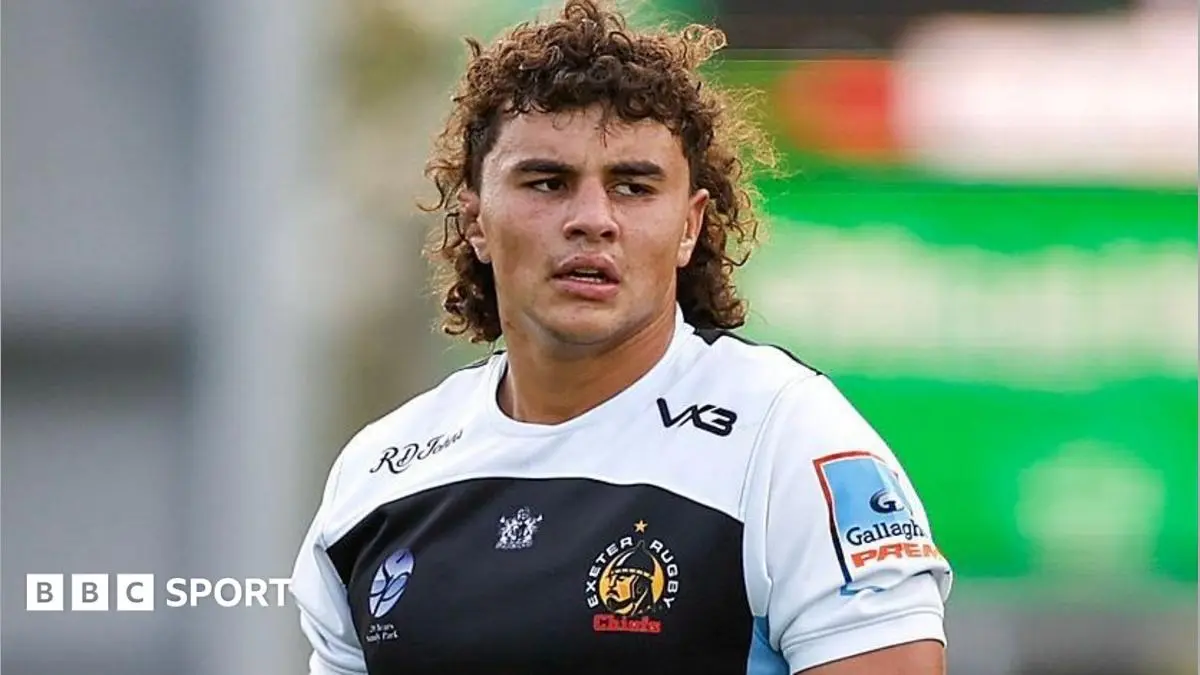
In the high-stakes environment of the Gallagher Premiership, where the transition from promising academy prospect to established first-team regular can often be a turbulent journey, Exeter Chiefs director of rugby Rob Baxter believes he is witnessing something special in the development of Kane James. The 21-year-old back-rower has become a focal point of discussion at Sandy Park, not merely for his recent international honors, but for the composed and methodical way he is navigating the early stages of his professional career.
The young forward’s rise has been nothing short of meteoric over the past twelve months. After breaking into the Exeter first-team squad during the previous campaign, James has quickly become an integral part of Baxter’s tactical planning. This season, he has started both of the Chiefs’ opening Premiership fixtures, demonstrating a level of consistency that belies his age and relatively limited experience at the highest level of the club game.
Baxter, a man known for his measured approach to player development and his ability to spot long-term potential, has been particularly struck by the maturity James is showing. According to the long-serving Exeter boss, the youngster is currently following what he describes as a "really nice route." It is a path defined by steady, incremental improvement rather than erratic flashes of brilliance, a quality that coaches value immensely when building a squad capable of competing across a grueling domestic and European calendar.
"He’s just following that really nice route where he’s improving at a nice rate, he’s having some good impact on games," Baxter remarked when assessing the player’s recent contributions. "Kane can be really pleased with the trajectory his game is going in at the minute."
This trajectory took a significant upward turn during the summer months. In July, James achieved a milestone that many players spend their entire careers chasing: a first international cap. Representing Wales during their tour of South America, James featured in the clash against Argentina as part of the Nations Championship. Although the match resulted in a defeat for the Welsh side, the experience of competing on the international stage provided James with an invaluable education in the nuances of Test-match rugby.
His inclusion in the Wales setup was also the culmination of a significant personal and professional decision. Earlier this year, James made the choice to switch his international allegiance. Having previously represented England at Under-20 level, he opted to commit his future to Wales, the country in which he grew up. Such moves are often scrutinized, but for James, the transition appears to have been seamless, fueled by a desire to represent his roots and a clear understanding of where his international opportunities might best flourish.
Beyond the tactical and international headlines, Baxter has been equally impressed by the physical transformation James is undergoing behind the scenes. The modern back-rower must be a physical polymath—possessing the strength of a front-rower, the engine of a marathon runner, and the explosive power of a sprinter. Baxter noted that James has been incredibly diligent in his off-field preparations, focusing heavily on his strength and conditioning and his nutritional requirements to meet the demands of the professional game.
"He’s getting thicker, that will happen with quality training, making sure he gets his nutrition and all this kind of stuff," Baxter explained, highlighting the visible changes in the player’s frame. The Exeter boss suggests that this physical evolution is far from over. "He’s such a diligent guy he is going to maximise his strength and his growth, but he is going to get bigger for quite some time, I would say with Kane."
This added bulk is not merely for show; it serves a vital functional purpose on the pitch. In the collision-heavy world of the Premiership, the ability to "ride the contact"—to absorb an opponent’s impact and maintain forward momentum—is crucial. Baxter believes that James’s increasing physicality, combined with his natural attributes, makes him a formidable opponent in the loose. "That obviously is helping him ride the contact, he’s explosive and very quick," the coach added.
However, with youth and enthusiasm often comes a degree of raw unpredictability. Baxter acknowledged that while James’s work rate is exemplary, there are still areas of his game that require refinement. The "individual bits and pieces," as Baxter calls them, involve tempering that high-octane energy with the clinical accuracy required at the elite level.
"Kane’s had a really, really good start to the season, we’ve got to just keep working on these little individual bits and pieces—sometimes in his determination to fly around, a little bit of accuracy trips, but that’s the way you want it," Baxter said. "You want these lads enthusiastic to run around and get in the game and I think there’s a lot more still to come from Kane."
One of the most intriguing aspects of James’s development this season has been his positional flexibility. Historically, the youngster has featured primarily as a number eight, a role that allows a player to utilize their carrying power and vision from the base of the scrum. However, in the opening matches of the current Premiership campaign, James has been deployed at openside flanker.
In the traditional hierarchy of rugby positions, the move from number eight to the number seven shirt often implies a significant change in responsibilities, particularly regarding breakdown work and defensive positioning. Yet, Baxter was quick to clarify that this shift is less about a permanent change in James’s identity as a player and more about the pragmatic realities of squad management and maximizing the talent available to the Chiefs at any given time.
The Exeter squad has faced some early-season "challenges" in the back five of the scrum—the collective unit consisting of the two locks and the three back-rowers. Consequently, Baxter and his coaching staff have focused on selecting the three best available back-rowers and fitting them into a scrummaging configuration that suits their individual physical strengths.
"We’ve been a bit challenged in the back five of the scrum, so what we’ve been doing is selecting the best three to start the game and then putting them in the best combo onto the scrum as they are," Baxter explained.
This pragmatic approach reflects a broader philosophy at Sandy Park regarding the modern evolution of the game. Baxter is a firm believer that the number on a player’s back should not be a restrictive label that defines their entire contribution to the team’s performance. In his view, the modern game requires "hybrid" players who can perform a variety of roles regardless of their starting position.
"Where they really play around the field is a little bit irrelevant to the number on their back really, they’re scrummaging that way because that suits the strengths of each of them individually," he said. "We won’t have any problem picking Kane at number eight, as he’s been playing in other games, when a rotation happens or injuries or that’s the best formulation for that game."
For James, this means that while he may be wearing the number seven jersey and packing down on the side of the scrum, his role in open play remains remarkably similar to that of a traditional number eight. He continues to be a primary ball-carrier and occupies key tactical positions during line-outs.
"I’ve never been a big one for this ‘numbers on backs dictates what player you are’—Kane plays like a number eight outside of the scrum for us in that he gets on the ball and he plays the kind of plus-one roles at line-out, so he very much plays what they call that kind of hybrid role for us," Baxter concluded.
As the season progresses, the spotlight on Kane James is likely to intensify. With the Autumn Internationals on the horizon and the Premiership season gathering pace, the young back-rower finds himself in an enviable position. Backed by a coach who trusts his development and armed with a burgeoning physical presence and a versatile skill set, James is rapidly becoming one of the most talked-about young talents in the league. For Exeter Chiefs, his emergence is a testament to their enduring ability to cultivate international-standard talent; for Wales, he represents a dynamic new option in a back-row stable that is constantly evolving. For the player himself, the focus remains on the "diligent" work that has brought him this far, ensuring that his current trajectory continues toward a very bright future in the game.