In 2022, a significant legislative milestone was reached when Congress passed a law requiring the U.S. Department of Education to begin tracking incidents of sexual violence across all institutions of higher education that receive federal student aid. The mandate was hailed by advocates as a critical step toward understanding the true scale of sexual misconduct on American campuses and developing more effective prevention strategies. However, years after the law’s inception, the federal government has yet to collect this comprehensive national data, and it remains deeply uncertain when—or if—the agency will ever fulfill this requirement.
The urgency of this data collection has been thrust back into the public consciousness following a high-profile gang-rape allegation at Cornell University. The incident has sparked renewed outcry and put a spotlight on the persistent gaps in the information the American government gathers regarding campus safety. While individual tragedies often dominate the headlines, advocates argue that the lack of a standardized, nationwide dataset prevents a holistic understanding of the problem, leaving policymakers and university administrators to fly blind in their efforts to protect students.
The legislative push for a national campus climate survey was born out of a recognition that existing reporting mechanisms were insufficient. Yet, the ambition of the law has been hampered by a stark lack of resources. While the mandate is vast, Congress allocated only $1 million toward the nationwide initiative. Experts in data collection and higher education policy point out that this sum is a mere fraction of what would be required to execute a survey of such magnitude, leading to a stalemate between legislative intent and administrative reality.
A Growing Vacuum in Sexual Misconduct Data
The delay in the federal survey comes at a time when other major efforts to document sexual misconduct in higher education have been significantly scaled back or discontinued entirely. For years, the Association of American Universities (AAU) conducted one of the most influential multicampus studies on sexual assault. At its peak, the survey included 33 prestigious institutions and provided a vital, if limited, look at the prevalence of misconduct.
However, the last edition of the AAU survey was released in 2019. The organization has since ceased the project, explicitly stating that it ended the initiative because of the impending federal survey. With the AAU bowing out to make room for a government-led effort that has yet to materialize, a massive void has been left in the research landscape. Other recent attempts to fill this gap have been much smaller in scope; a 2024 survey conducted by the research firm Westat included only 10 institutions, hardly enough to provide a representative national picture.
In the absence of a federal standard, the responsibility has fallen on individual colleges and a handful of states. Currently, at least nine states—including New York, where Cornell University is located—require institutions to conduct their own campus climate surveys. These localized efforts continue to show that sexual violence remains a pervasive issue.
Cornell’s own 2025 campus climate survey, for example, revealed a disturbing trend: the percentage of undergraduate women reporting nonconsensual sexual contact rose from 23 percent in 2023 to 35 percent in 2025. While these figures are alarming, they are also difficult to interpret in a vacuum; the same survey saw its response rate drop by more than half, complicating the statistical analysis. Without national benchmarks, it is nearly impossible to determine whether such a rise reflects a genuine increase in violence, an increase in the willingness of students to report, or a statistical anomaly.
“Outside of institutions that are electing to continue to do campus climate surveys and publish that data for the general public’s consumption, it’s unclear exactly what the incidence rates are across campuses nationwide,” said Tracey Vitchers, the executive director of It’s On Us, a nonprofit dedicated to ending campus sexual assault. “It’s essentially just keeping with the status quo.”
The Limitations of the Clery Act
The federal government does currently require colleges to report certain statistics under the Jeanne Clery Disclosure of Campus Security and Campus Crime Statistics Act. However, advocates and policy experts have long argued that Clery Act data provides a fundamentally incomplete picture of the student experience.
The Clery Act focuses on crimes that are formally reported to campus police or local law enforcement and that occur within specific geographical boundaries, such as on-campus housing or nearby public property. Because the vast majority of sexual assaults go unreported to law enforcement, and many occur in off-campus settings that fall outside Clery’s narrow definitions, the resulting data often represents only the tip of the iceberg.
A robust campus climate survey, by contrast, would capture "dark figure" data—incidents that students may never report through formal channels but are willing to disclose anonymously in a survey. Such surveys also gather more granular information about the "climate" of a campus, including student perceptions of how their institution handles reports and whether they feel safe in specific environments.
“Particularly in this current Title IX climate, we recognize that many students are either choosing not to report because there’s multiple barriers to entry or they may be seeking an alternative resolution process,” Vitchers said. She noted that without granular data, colleges cannot identify high-risk populations or tailor their prevention efforts to the specific needs of their student bodies.

An Understandable Delay or an Avoidable Failure?
The mandate for the national survey was originally tucked into the 2022 reauthorization of the Violence Against Women Act (VAWA), which was signed into law as part of a massive omnibus budget bill. The legislation was specific in its requirements: the Department of Education was tasked with developing a standardized, secure online survey tool. Institutions receiving federal aid would then be required to administer this survey to a representative sample of students every two years.
The law stipulated that the survey must be confidential and protect student privacy while still collecting detailed demographic information to help identify trends. The first report based on this data was due to Congress in 2024, a deadline that has passed without a survey being launched.
Some experts, like Joseph Storch, who serves as general counsel at Excelsior University and has spent over a decade advocating for campus climate surveys, argue that the delay is symptomatic of a massive disconnect between legislative ambition and financial support. He compares the task to the work of the U.S. Census Bureau.
“The Census Bureau is funded in the billions to conduct that survey every 10 years,” Storch said. “The Department of Education has either zero funding or maybe some share of $1 million to conduct a survey of tens of millions of college students at thousands of institutions.”
Storch has attempted to track the progress of the survey through public records requests but reported receiving no substantive information in response. The Department of Education and the lawmakers who championed the original bill have similarly remained silent on the status of the project, leaving the higher education community in the dark.
“Sticky Wording” and Administrative Obstacles
Beyond the lack of funding, the survey’s failure to launch may be rooted in the way the legislation was drafted and passed. According to higher education policy experts, the bill did not pass through the traditional House or Senate education committees. Instead, it was included in a broader budget package, meaning the lawmakers and staff who wrote the mandate may not have fully grasped the logistical nightmare of standardized data collection across thousands of diverse institutions.
One policy expert, speaking on the condition of anonymity, noted that “sticky wording” in the bill has created significant administrative headaches. For example, while the law calls for a standardized tool to allow for national comparisons, many universities want to include their own campus-specific questions. If institutions are allowed to modify the survey, the data becomes statistically incomparable, defeating the purpose of a national baseline.
There are also concerns regarding the burden on smaller, less-resourced institutions. Implementing a survey that ensures a statistically representative sample while maintaining strict anonymity requires technical infrastructure that many small colleges lack. It remains unclear whether the Department of Education would provide the technical portal for the entire process or if the onus would fall on the schools themselves to build and maintain the systems.
“The department, during both the Biden and Trump eras, has seemed to throw their hands up and say it would be very difficult and perhaps impossible,” another policy expert said.
The Cost of Inaction
For advocates like Vitchers, these bureaucratic and financial explanations ring hollow when weighed against the safety of students. The recent allegations at Cornell have served as a grim reminder that sexual violence remains a daily reality on American campuses, and the lack of data is not just an administrative failure but a barrier to justice and prevention.
“Frankly, without campus climate data, it’s really difficult to develop responsive prevention and education strategies in a strategic way,” Vitchers said. She argued that the government and institutions must find a way to overcome the logistical hurdles, rather than using them as a shield against accountability.
“When we hear explanations from institutions that this is a burden or too much of a challenge, I find that excuse unacceptable, because there should be no excuse to having the best data available to ensure a campus that is free from sexual violence.”
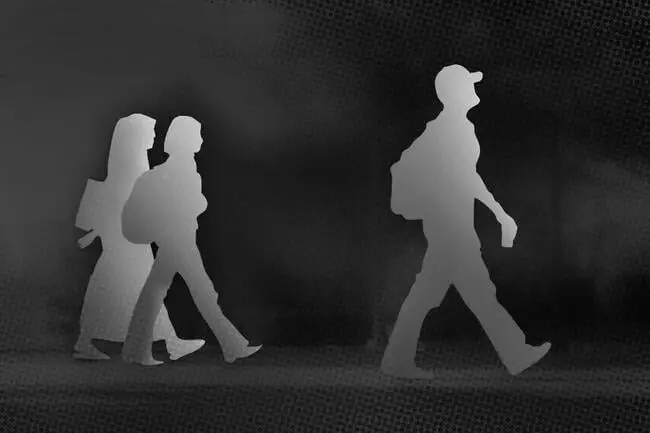
As the 2024 deadline fades into the past, the future of the federal campus climate survey remains in limbo. Without a significant infusion of capital and a clear administrative roadmap, the "standardized online survey tool" promised by the 2022 law may remain a theoretical solution to a very real and pressing crisis. For now, the most comprehensive data on campus sexual violence continues to exist in fragments—scattered across individual university reports and state-mandated studies—leaving the national picture as dark as the silhouettes of students walking across a campus at night.