First Minister John Swinney has officially inaugurated the 2026 funding round of the Scottish Government’s landmark Just Transition Fund, announcing a £17.5 million investment package designed to accelerate the region’s shift toward a sustainable, low-carbon economy. This latest allocation of capital is set to be distributed across a diverse portfolio of twenty-two projects, targeting both large-scale industrial innovation and grassroots community resilience. By focusing on the North East and Moray, the funding aims to solidify Scotland’s standing as a global leader in renewable energy while ensuring that the workforce and local residents are not left behind during the inevitable decline of fossil fuel reliance.
The 2026 funding round represents a critical phase in the government’s ten-year, £500 million commitment to the region. Of the £17.5 million announced, a significant portion will be directed toward seven major projects that are described as being adjacent to the clean energy sector. These initiatives are expected to serve as the industrial engine of the transition, providing the infrastructure and technological advancements necessary to support Scotland’s burgeoning renewables industry. By targeting projects that sit alongside primary energy production, the government is looking to build a robust supply chain and a supportive ecosystem that can sustain long-term economic growth independently of traditional oil and gas revenues.
In a move that highlights the multifaceted nature of the transition, the funding also includes a newly established dedicated stream specifically for community-led initiatives. Fifteen separate community projects have been selected to receive support through this specialized channel. The scope of these projects is notably broad, moving beyond technical energy solutions to address the socio-economic challenges that often accompany industrial shifts. This stream is focused on tackling some of the most pressing issues facing the region today, including fuel poverty and child poverty. By integrating social welfare goals with environmental objectives, the Scottish Government is attempting to demonstrate that the transition to net zero can be a vehicle for social justice and improved standards of living for the most vulnerable members of society.
Furthermore, these community-focused investments are designed to build climate resilience and promote nature restoration. As the impacts of a changing climate become more pronounced, particularly in coastal and rural areas like the North East and Moray, the government is prioritizing projects that help local environments adapt. Nature restoration efforts funded through this round will work in tandem with carbon reduction goals, recognizing that healthy ecosystems are essential for carbon sequestration and the overall health of the regional economy. This holistic approach suggests that the Just Transition is viewed not merely as a technological upgrade for the energy sector, but as a comprehensive reimagining of how communities interact with their local environment and economy.
One of the most significant metrics of success for this funding round is its projected impact on the regional labor market. The investment is expected to create more than 500 new jobs, providing a vital boost to the North East’s employment landscape. These positions are intended to offer high-quality, sustainable alternatives for workers who may currently be employed in the oil and gas sector or for those entering the workforce for the first time. The emphasis on job creation is a direct response to concerns that the move away from hydrocarbons could lead to economic stagnation in regions historically dependent on the North Sea energy industry. By fostering new opportunities in clean energy and its associated sectors, the government aims to maintain the economic vibrancy of Aberdeen, Aberdeenshire, and Moray.
To ensure that the local workforce is equipped to fill these new roles, the funding package also places a heavy emphasis on education and professional development. The investment will enable 350 learners per year to enhance their skill sets through industry-aligned training programs. This educational component is vital for bridging the "skills gap" that often hinders the rapid expansion of emerging industries. By aligning training with the specific needs of clean energy employers, the initiative ensures that the 500 newly created jobs can be filled by local residents. This focus on human capital is a cornerstone of the Just Transition philosophy, which posits that a successful economic shift requires not just new machines and buildings, but a workforce that is empowered with relevant, modern expertise.
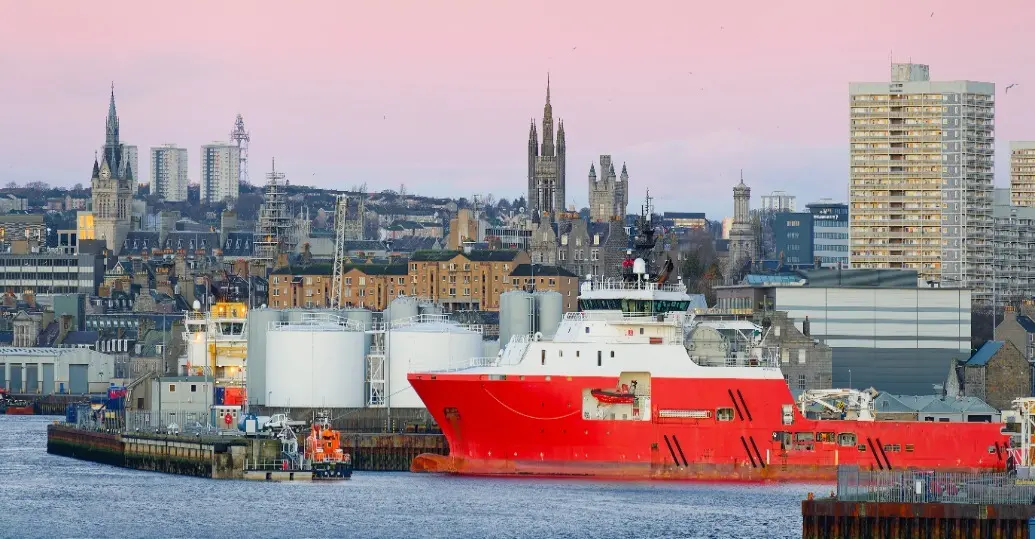
The economic context for this investment is substantial. Recent data indicates that green jobs already contribute approximately £10.2 billion to the Scottish economy, and the 2026 funding round is intended to build upon this momentum. By investing in the North East, the government is doubling down on a region that has served as the backbone of Scotland’s energy sector for decades. The goal is to transform the area from the "oil capital of Europe" into a premier hub for green innovation. The First Minister’s announcement underscores the belief that the expertise gained during the oil and gas era—ranging from subsea engineering to complex project management—is directly transferable to the offshore wind, hydrogen, and carbon capture sectors.
During the official opening of the funding round, First Minister John Swinney emphasized the strategic importance of the North East in Scotland’s national energy strategy. He noted that while the country will continue to utilize oil and gas for years to come to ensure energy security and economic stability, the foundation of the future must be built on clean energy. Swinney’s remarks reflected a pragmatic approach to the energy transition, acknowledging the ongoing role of traditional resources while firmly pivoting toward a renewable future. He stated that the funding would ensure the North East remains at the forefront of this global shift, utilizing its unique geographical advantages and its highly skilled population to lead the way.
The First Minister further characterized Scotland as an "energy superpower," a term that highlights the country’s vast potential in wind, tidal, and solar power. He argued that the workers, businesses, and communities of the North East are the essential components required to capitalize on these remarkable renewable resources. By framing the transition as an opportunity for national leadership rather than a managed decline, the government is seeking to inspire confidence among investors and local residents alike. The rhetoric of an "energy superpower" serves to remind the public that the natural resources of the North Sea remain a source of immense national wealth, provided the right investments are made to transition from extraction to generation.
The Just Transition Fund itself is a long-term strategic instrument, representing a decade-long commitment to the North East and Moray. This £500 million pledge is a recognition of the specific challenges faced by a region that is so deeply intertwined with a single, carbon-intensive industry. The fund acts as a financial buffer and a catalyst for change, providing the certainty that businesses and local authorities need to plan for a net-zero future. Each annual funding round, such as this £17.5 million allocation for 2026, serves as a building block toward a larger goal of economic diversification and environmental sustainability.
The distribution of the 2026 funds across twenty-two distinct projects suggests a strategy of diversified investment. By spreading the capital across a range of initiatives—from industrial training to nature restoration—the government is attempting to mitigate risk and maximize the reach of the funding. This approach acknowledges that a "just transition" cannot be achieved through a single "silver bullet" solution but requires a series of coordinated interventions across different sectors of society and the economy. The focus on Moray alongside the North East also ensures that the benefits of the transition are felt beyond the immediate vicinity of Aberdeen, reaching rural and coastal communities that are equally vital to the region’s success.
As the 2026 projects begin to take shape, the focus will likely remain on the tangible outcomes of the investment: the number of people trained, the number of jobs created, and the measurable impact on poverty and climate resilience. The success of these initiatives will be a benchmark for the broader Just Transition Fund and a testament to Scotland’s ability to navigate the complexities of the global energy shift. With the First Minister’s backing and a clear financial commitment, the North East of Scotland is being positioned not just to survive the end of the oil and gas era, but to thrive as a central pillar of the global green economy.
In the coming months, the specific details of the seven clean energy projects and fifteen community streams will likely emerge, providing a clearer picture of how this £17.5 million will be utilized on the ground. For the 350 learners expected to enter training programs each year, the funding represents a path toward a stable and meaningful career. For the communities struggling with fuel and child poverty, it offers a glimmer of hope that the transition to a greener world will also be a transition to a fairer one. The First Minister’s announcement marks another step in a long journey, but it is one that reaffirms the Scottish Government’s intent to lead by example in the global pursuit of a net-zero future.