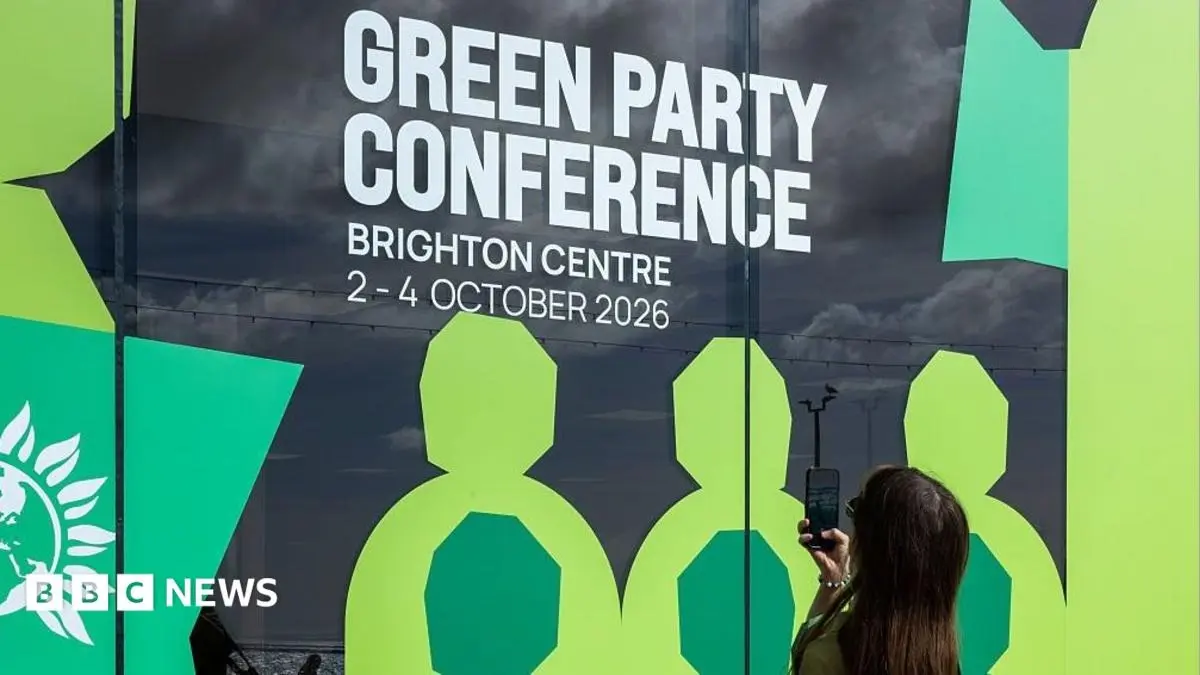
It is highly unusual for a British party conference, particularly that of one of the country’s smaller political organizations, to trigger a wave of international condemnation and diplomatic sanctions. Yet that is precisely the extraordinary situation the Green Party of England and Wales finds itself in following a decision by Israel’s foreign ministry to officially ban the party’s deputy leader, Zack Polanski, from entering the country. The dramatic move by the Israeli government marks a significant escalation in relations and has thrust the internal debates of the Green Party into the global diplomatic spotlight.
The catalyst for this international incident was a highly controversial motion proposed by grassroots party members and subsequently adopted by the Green Party conference. The resolution, which was passed by delegates, officially declared Zionism—the movement for the self-determination and establishment of a Jewish homeland—to be a form of racism. By adopting this stance, the Green Party has aligned itself with a deeply contentious position that has drawn immediate and fierce pushback from international observers and domestic political opponents alike.
In its specific wording, the approved Green motion describes Zionism as an ideology that actively supports what it characterizes as "an ethnonationalist Jewish state." Rather than endorsing a traditional two-state solution, which has long been the consensus position of mainstream British foreign policy, the motion instead advocates for a radically different alternative: the establishment of a "single democratic Palestinian state in all of historic Palestine." This position effectively calls for the end of Israel as a Jewish state, a stance that lies at the heart of the intense controversy and the subsequent travel ban imposed on Polanski.
For Polanski and many within the Green Party’s activist base, however, the condemnation from the Israeli government is unlikely to cause much distress. Over the past year, the Greens have enjoyed an unprecedented wave of electoral success, securing historic gains in local government and expanding their representation in the House of Commons. A major driver of this political momentum has been the party’s clear, vocal, and uncompromising condemnation of Israel’s military campaign in Gaza and its broader actions across the Middle East. For a party that has successfully mobilized voters angry over the humanitarian situation in the region, standing in opposition to the Israeli government is viewed by many activists not as a liability, but as a core element of their political appeal.
Yet, while the international fallout may not deeply trouble the party’s grassroots, the internal ramifications of this decision could prove far more difficult to manage. What this episode exposes is a deep and potentially damaging fracture within the Green Party’s institutional dynamics. The very structure that many Greens celebrate—their radical internal democracy—has created a profound disconnect between the party’s voting members and its highest-profile elected representatives. In the Green Party, policy is not handed down from the leadership; instead, it is proposed, debated, and voted on directly by the membership at conference.
This democratic purity has now engineered a deeply uncomfortable scenario: the party’s leading elected politicians are being forced to face intense public scrutiny over a highly sensitive policy that the vast majority of them actively opposed. The internal division is starkly illustrated by the actions of the party’s leadership during the debate. Zack Polanski, who does not hold a seat in Parliament but serves as the party’s deputy leader, did not actually support the motion in its final form. Polanski had sought to introduce changes to the text of the motion in an attempt to temper its language, but these proposed amendments were rejected by the conference delegates. Ultimately, Polanski chose not to participate in either the debate or the final vote.
The division is even more pronounced within the Greens’ parliamentary caucus. Of the five Green MPs currently sitting in the House of Commons, four voted against the motion. This overwhelming opposition from the party’s parliamentary wing highlights the gap between those who must contest national elections and appeal to a broader electorate, and the highly ideological activist base that dominates the party conference. The most vocal opponent of the motion among the MPs was Adrian Ramsay, the newly elected MP for Waveney Valley. Ramsay’s opposition carries significant internal political weight; he served as a Green co-leader for four years until September of last year, when he and his running mate were defeated by Polanski by a very wide margin.
This leadership transition and the subsequent policy shift point to a broader evolution within the Green Party’s activist base. Under Polanski’s influence, the party has increasingly shifted away from a purely ecological or environmental focus. Instead, it has embraced a broader, left-populist political agenda that incorporates strong elements of "anti-imperialist" foreign policy. This ideological realignment has attracted a new cohort of younger, more radical activists who view environmental justice as inseparable from global anti-imperialism and Palestinian solidarity. However, this shift also risks alienating more traditional, ecologically focused voters and creating persistent friction with the party’s elected representatives.
The Zionism motion is highly unlikely to be the last issue where this ideological shift results in a very public dispute between the membership and the party’s MPs. Four of the Greens’ five MPs were elected for the first time at the last general election, running under a different leadership style and presenting a platform that was carefully calibrated to win over moderate, environmentally conscious voters in rural and suburban constituencies. As the grassroots membership continues to push the party toward more radical left-populist positions, these MPs will find themselves under increasing pressure to align with policies that may not sit well with their local electorates.
Furthermore, the situation presents a fascinating paradox regarding Polanski’s own leadership. While his election was widely seen as a defining symbol of the Greens’ shift toward a more activist, left-wing foreign policy, he ultimately declined to back this signature motion. This hesitance could presage significant future tensions between Polanski and the very membership that swept him to power. Some of these members were inspired to join the Greens specifically by his leadership and his outspoken rhetoric, and they may now feel disappointed by his refusal to endorse a motion that represents the logical conclusion of the "anti-imperialist" stance they champion.
In practical, day-to-day terms, the Green MPs will be able to navigate this policy divergence relatively easily due to the unique organizational structure of their party. Unlike the major Westminster parties, the Greens do not operate a traditional whipping system. This means that Green MPs are entirely free to vote in Parliament according to their own conscience and the interests of their constituents, rather than being bound by official party policy. This high degree of political autonomy also extends to the party’s local government representatives. Following significant gains in the May local elections, Green councillors now hold power, either outright or in coalition, in nearly 40 local councils across England and Wales. These councillors, too, are free to ignore the conference’s foreign policy resolutions.
Nevertheless, the public embarrassment of such a stark division is bound to trigger internal debate about how the Green Party governs itself. Observers will be watching closely to see if these tensions spark a reform movement within the party. There could be a push from the parliamentary wing and moderate factions to constrain the power of the annual party conference to set binding, high-profile policies on sensitive international issues. Conversely, the radicalized grassroots membership might push in the opposite direction, seeking to introduce mechanisms that would constrain the ability of elected representatives to openly defy democratically decided party policy. Any move toward a more centralized, disciplined party structure would represent a fundamental departure from the Greens’ traditional identity.
Beyond the internal dynamics of the Green Party, the fallout from this weekend’s conference has wider political implications, particularly for the Labour Party and its ongoing debates over electoral reform. Specifically, the controversy may present a significant political headache down the line for figures like Andy Burnham. During his speech at the Labour Party conference last week, the prime minister announced the creation of a "national commission" on electoral reform, signaling a long-term intention to examine changes to the system used for general elections. This commission represents a major concession to those within and outside Labour who argue that the first-past-the-post system is outdated and undemocratic.
Although Burnham did not specify the exact proportional representation system he would favor, he made a clear commitment on behalf of the progressive movement. He stated that, at the next general election, Labour would commit to a new electoral system designed to ensure that "everyone’s vote counts and everyone’s voice is heard." For proponents of electoral reform, a move to any form of proportional representation would be a historic victory. Under current voting trends, such a system would almost certainly result in a substantial increase in the number of Green MPs elected to Parliament, reflecting their significant share of the national popular vote.
In the event of a future hung parliament—a highly plausible scenario under a proportional system—the Greens would be a natural partner for a minority Labour government. Labour would almost certainly look to the Greens as a key component of a broader "progressive bloc" to secure a working majority. However, the Green Party’s adoption of the Zionism-as-racism motion makes the prospect of any future cooperation highly toxic for Labour’s leadership. The resolution has drawn immediate, scathing condemnation from senior Labour figures, who are keen to demonstrate that the party has moved decisively away from the controversies that dogged it in recent years.
Bridget Phillipson, the Labour Party chair, did not mince her words, describing the Greens’ actions over the weekend as "shameful" and "fundamentally wrong." Her condemnation was echoed by Angela Rayner, the communities secretary, who stated unequivocally that the Zionism motion "crosses a line and is rightly being condemned across the political spectrum." For a Labour leadership that has spent years rebuilding its relationship with the Jewish community and purging antisemitism from its own ranks, the prospect of being forced into a parliamentary alliance with a party that officially defines Zionism as racism is a political nightmare.
Ultimately, the Green Party’s weekend conference has highlighted the complex challenges of rapid political growth. As the Greens transition from a single-issue pressure group into a significant electoral force with parliamentary representation and local government responsibilities, the tension between grassroots radicalism and pragmatic governance will only intensify. At the same time, the controversy has reverberated through Westminster, providing fresh ammunition to those within the Labour Party who remain deeply skeptical of electoral reform. By passing a motion that has alienated mainstream political allies and triggered international condemnation, the Green membership may have inadvertently strengthened the hand of those who wish to keep the electoral system exactly as it is, shutting the door on the very proportional system that would allow the Greens to truly expand their power.