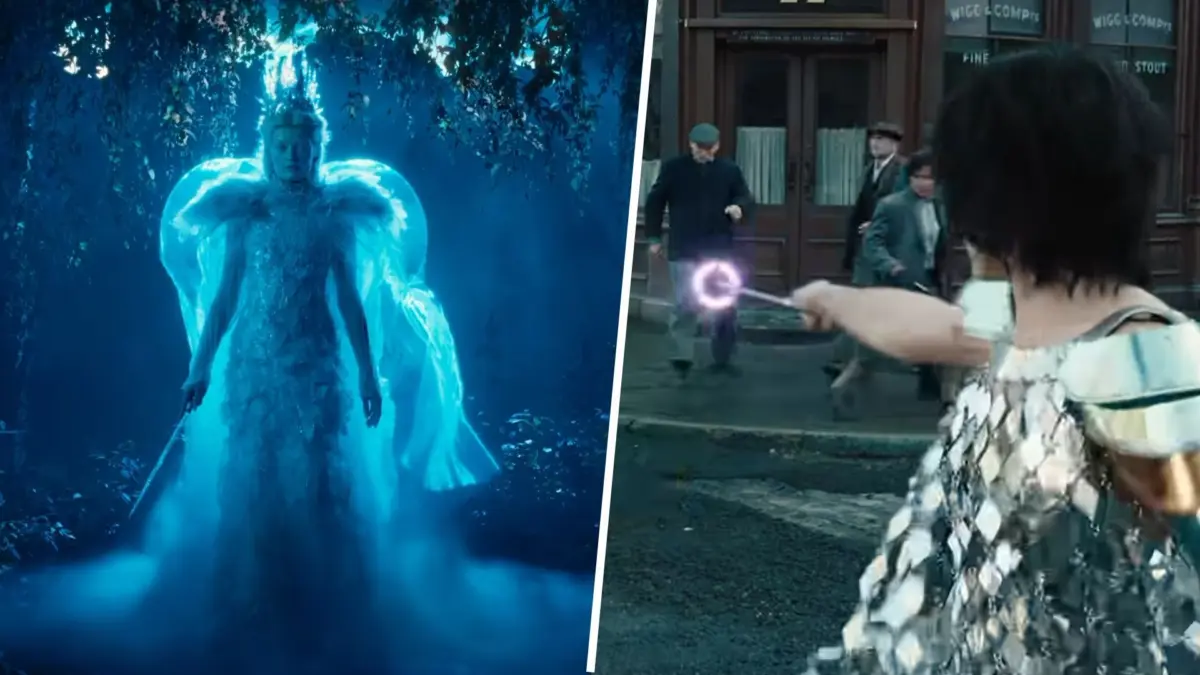
Despite the logic behind these creative choices, the emotional attachment fans hold for the source material remains a powerful force. "They deliberately chose to destroy Lewis and Tolkien’s favorite pub," one disgruntled fan complained on X. "She’s destroying his story, so why wouldn’t she destroy the pub that the Inklings met in?" The sentiment reflects a broader tension in modern cinema between the desire for faithful adaptation and the director’s prerogative to reinterpret classic texts for a new generation.
For Gerwig, the challenge lies in balancing these expectations. Her previous work has often dealt with the themes of girlhood, legacy, and the reclamation of historical narratives. In The Magician’s Nephew, she is dealing with a story that is, at its heart, about the transition from a dying world (Charn) to a nascent one (Narnia). The destruction of the old to make way for the new is a central motif of the book, which may explain why the director feels comfortable incorporating symbols of destruction into her visual language.
As the discussion continues to swirl around the trailer’s 1:48 mark, it is clear that Gerwig’s Narnia will not be a mere carbon copy of the text. Whether the destruction of The Eagle & Child is a calculated nod to the Inklings or a provocative statement of intent, it has succeeded in making the film one of the most talked-about projects in recent memory. The film appears to be grappling with the heavy weight of its own heritage, acknowledging the foundations laid by Lewis and Tolkien even as it seeks to dismantle and rebuild them.
In the end, the controversy may simply be a reflection of the creative process itself. As the trailer suggests, the act of bringing a new world to life often requires the unsettling of the old one. If the film truly intends to explore the nature of creativity, it must necessarily engage with the friction between an author’s intent and a filmmaker’s vision. As the famous adage often attributed to Pablo Picasso suggests, every act of creation is first of all an act of destruction. In Gerwig’s Narnia, that destruction appears to be both literal and symbolic, paving the way for a cosmic reimagining of a literary titan’s work.