The debut of the trailer for Greta Gerwig’s highly anticipated adaptation of The Magician’s Nephew has sent ripples through the global film community this week. Netflix’s foray into the world of Narnia, led by the visionary director behind Barbie and Little Women, appears to be anything but a traditional retelling of C.S. Lewis’s beloved children’s classic. Instead, the footage reveals a psychedelic, cosmic fantasy that recontextualizes the source material through the lens of the era in which it was written, rather than the period in which it was originally set.
The trailer has quickly become a focal point for intense analysis, with audiences dissecting everything from the high-concept visual effects to the philosophical underpinnings of the narrative. Among the most discussed elements is the depiction of Aslan, the Great Lion, whose character design has elicited a wide range of emotional responses from long-time fans. Beyond the aesthetic choices, there is a growing sense that Gerwig is using the novel’s creation myth—the story of how Narnia was sung into existence—as a vehicle to explore the profound act of creation itself and the complex nature of the creative spirit. However, amidst these grand thematic discussions, a segment of the Narnia fandom has fixed its attention on a minute background detail appearing at the 1:48 mark of the trailer, sparking a debate that touches upon literary history and the ethics of adaptation.
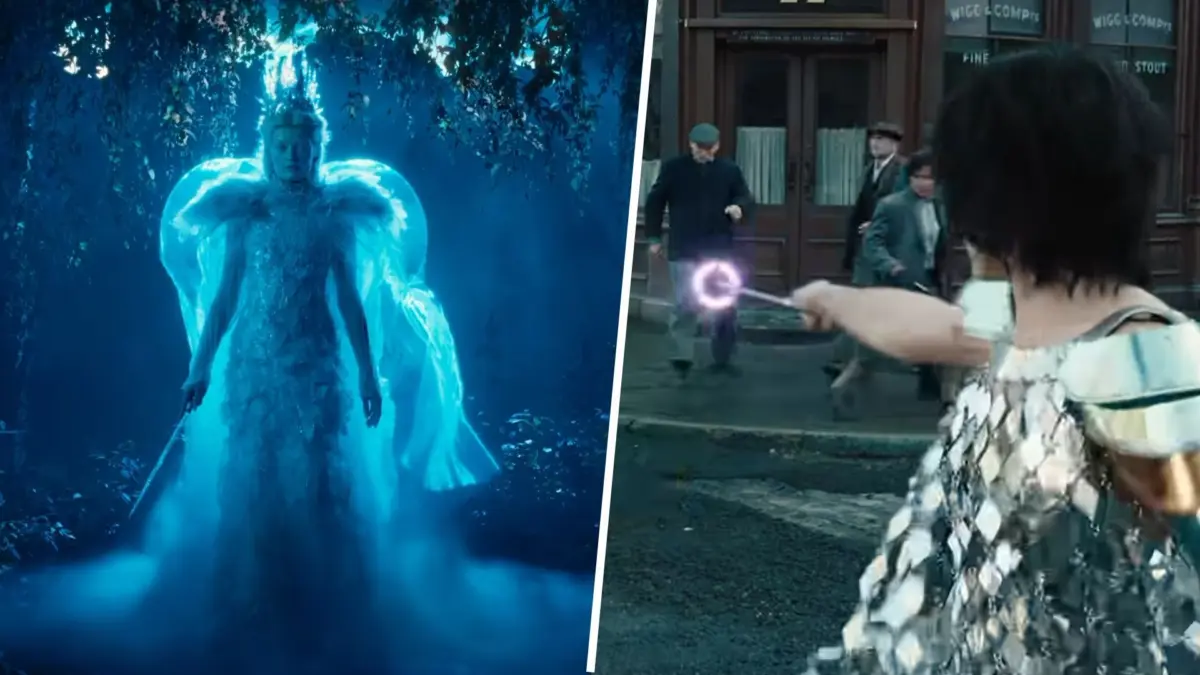
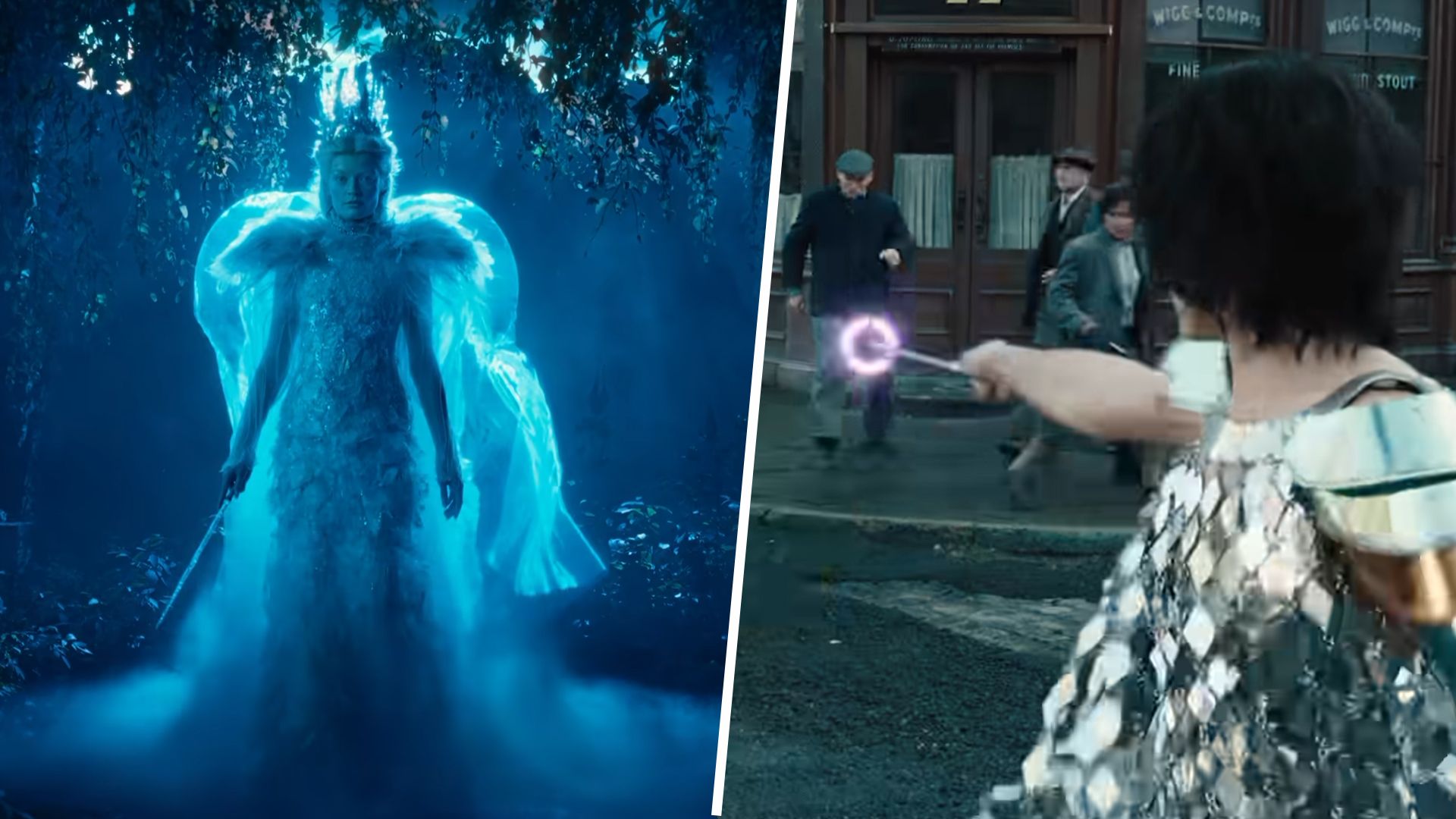
In a scene set toward the conclusion of the trailer, the character of Jadis, the White Witch, is shown appearing in the streets of London. In a significant departure from the mechanics of the original novel, she is seen actively wielding magic within the human world. In Lewis’s text, Jadis found her powers largely nullified or significantly weakened upon her arrival in our reality, relying instead on her formidable physical strength and intimidating stature. By allowing Jadis to use magic in London, Gerwig’s adaptation signals a fundamental shift in the stakes of the story. Yet, it is what Jadis does with that magic that has caused the most consternation among purists: she appears to be systematically destroying a streetscape that includes a very specific reference to C.S. Lewis’s personal life and literary circle.
The background of the scene features a pub prominently named "The Eagle & Child." For those familiar with the biography of C.S. Lewis and his contemporary J.R.R. Tolkien, the name is instantly recognizable. The Eagle & Child is the historic pub located on St Giles’ Boulevard in Oxford where the literary discussion group known as The Inklings would regularly meet. It was within those walls that Lewis, Tolkien, Charles Williams, and others shared drafts of their work, including early chapters of The Chronicles of Narnia and The Lord of the Rings. While the name is not unique—many pubs across England share the moniker—the context of the film makes a coincidental inclusion seem highly improbable. The scene is presumably set in London, not Oxford, which further suggests that the inclusion of the pub is an intentional "Easter egg" or a piece of meta-commentary.
This level of intentionality is consistent with other details scattered throughout the trailer. In one sequence, a logo on a removal van provides a clever premonition of Fledge, the winged horse that plays a pivotal role later in the narrative. Given such meticulous attention to detail, fans have begun to interpret the destruction of "The Eagle & Child" as a symbolic gesture on the part of the filmmakers. On social media platforms like X, the reaction has been polarized. Some viewers have labeled the choice "insanely disrespectful," viewing the literal destruction of Lewis’s favorite haunt as an affront to his legacy. One user noted that while it felt like a slight, it was "ironically accurate" that Jadis, a force of pure nihilism and destruction, would be the one to level the very place where the story was conceived.
The debate has led some critics and fans to suggest that the inclusion of the pub is a form of "cinematic confession." The theory posits that Gerwig and her creative team are using the image to signal to the audience that the movie will consciously break with the established canon of the novels. This approach has been compared to Stanley Kubrick’s famous use of a yellow Volkswagen Beetle in his adaptation of The Shining. In Stephen King’s original novel, the protagonist Jack Torrance drives a red Beetle. Kubrick changed the car’s color to yellow for the film and later included a shot of a crushed red Beetle in a highway accident—a visual cue that many interpreted as Kubrick’s way of informing the audience that his film was a different entity entirely from King’s book.
By showing Jadis destroying the spiritual home of the Inklings, Gerwig may be offering a similar disclaimer. The film’s setting itself reinforces this idea of a "meta" interpretation. While The Magician’s Nephew is chronologically set around the year 1900, the movie appears to have moved the timeline forward by approximately fifty years to the 1950s. This shift aligns the "real world" portions of the film with the period during which C.S. Lewis was actually writing the Narnia books. This chronological leap allows the film to function as a commentary on the act of writing and the mid-century environment that birthed these modern myths.
The shift to a 1950s aesthetic also informs the "psychedelic cosmic fantasy" style noted by many viewers. Rather than the grounded, Edwardian atmosphere of previous Narnia adaptations, Gerwig’s vision seems to draw from the burgeoning space-age anxieties and the surrealist artistic movements of the post-war era. This is particularly evident in the glimpses of the "Wood between the Worlds" and the birth of Narnia itself, where the visuals lean into a vibrant, almost hallucinogenic palette that emphasizes the otherworldly nature of Lewis’s cosmology.
Despite the logic behind these creative choices, the emotional attachment fans hold for the source material remains a powerful force. "They deliberately chose to destroy Lewis and Tolkien’s favorite pub," one disgruntled fan complained on X. "She’s destroying his story, so why wouldn’t she destroy the pub that the Inklings met in?" The sentiment reflects a broader tension in modern cinema between the desire for faithful adaptation and the director’s prerogative to reinterpret classic texts for a new generation.
For Gerwig, the challenge lies in balancing these expectations. Her previous work has often dealt with the themes of girlhood, legacy, and the reclamation of historical narratives. In The Magician’s Nephew, she is dealing with a story that is, at its heart, about the transition from a dying world (Charn) to a nascent one (Narnia). The destruction of the old to make way for the new is a central motif of the book, which may explain why the director feels comfortable incorporating symbols of destruction into her visual language.
As the discussion continues to swirl around the trailer’s 1:48 mark, it is clear that Gerwig’s Narnia will not be a mere carbon copy of the text. Whether the destruction of The Eagle & Child is a calculated nod to the Inklings or a provocative statement of intent, it has succeeded in making the film one of the most talked-about projects in recent memory. The film appears to be grappling with the heavy weight of its own heritage, acknowledging the foundations laid by Lewis and Tolkien even as it seeks to dismantle and rebuild them.
In the end, the controversy may simply be a reflection of the creative process itself. As the trailer suggests, the act of bringing a new world to life often requires the unsettling of the old one. If the film truly intends to explore the nature of creativity, it must necessarily engage with the friction between an author’s intent and a filmmaker’s vision. As the famous adage often attributed to Pablo Picasso suggests, every act of creation is first of all an act of destruction. In Gerwig’s Narnia, that destruction appears to be both literal and symbolic, paving the way for a cosmic reimagining of a literary titan’s work.