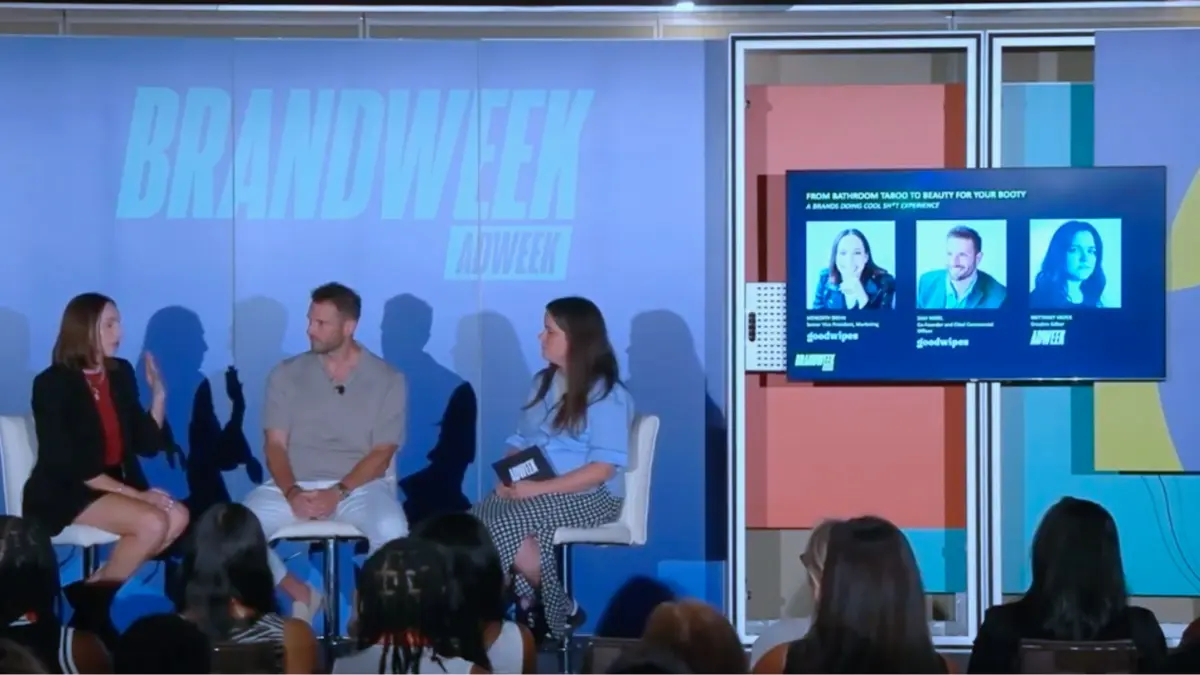
The journey of Goodwipes did not begin in a corporate boardroom, but rather on the campus of Florida State University. Founders Sam Nebel and Charlie Siciak launched their efforts as self-described "baby wipes evangelists" at a time when the topic of adult wiping habits was considered strictly taboo. Back then, the idea of using a wet wipe instead of traditional dry paper was often met with skepticism or silence. By positioning themselves as advocates for a better, more "civilized" bathroom experience, Nebel and Siciak began the slow process of normalizing a product that many consumers didn’t even realize they needed. This grassroots origin story remains a cornerstone of the brand’s identity, providing a foundation for their current status as a loud, proud disruptor in the personal care space.
At the Brandweek session, Meredith Diehn explained that the brand’s current marketing philosophy is built on two specific strategic pillars: fame and disruption. In a world where digital advertising is saturated and consumer attention spans are shorter than ever, Goodwipes aims to create moments that are impossible to ignore. This often involves a heavy dose of shock value, which Diehn notes is a deliberate entry point for the brand. The goal is to stop a consumer in their tracks, often through a moment of confusion or surprise, and then guide them toward the underlying logic of the product. According to Diehn, while a campaign might not necessarily make sense at first glance, that is often the entire point. The brand wants consumers to experience that initial "shock value," and then, as they peel back the layers of the joke or the partnership, realize that the message actually makes a great deal of sense.
One of the most prominent examples of this "fame and disruption" strategy is the brand’s recent collaboration with Liquid Death, the canned water company known for its own aggressive and irreverent approach to marketing. The two brands teamed up to create a limited-edition "sCREAM Soda-scented" wipe, a move that perfectly aligned their shared "Death to Dry" tagline. While Liquid Death uses the slogan to advocate for hydration and the "death" of plastic bottles, Goodwipes uses it to highlight the physical discomfort and inefficiency of using dry toilet paper. The partnership served as a masterclass in brand alignment between two companies that prioritize personality and counter-cultural messaging over traditional corporate aesthetics. By leaning into a shared mission of "hydration"—albeit in very different contexts—the collaboration managed to capture the attention of a demographic that typically tunes out standard household goods advertising.
Beyond the Liquid Death partnership, Goodwipes has also experimented with high-concept stunts designed to generate headlines and social media engagement. One such initiative was the "Buttler Sweepstakes," a campaign that promised the winning customer the services of a live-in "butt-wiper." It was an absurd, over-the-top premise that leaned heavily into the brand’s penchant for "crass" bathroom humor. However, underneath the ridiculousness was a serious point about the convenience and luxury of the Goodwipes experience compared to the standard, uninspired routine of using dry paper. This balance between the absurd and the practical is a hallmark of the brand’s creative output, which is managed by a lean marketing team that includes three in-house creatives working alongside external agencies for larger, more complex campaigns.
The brand’s ability to find common ground with other health-conscious but edgy brands was further demonstrated in a collaboration with Olipop, the prebiotic soda company. Initially launched as an April Fool’s prank, the partnership evolved into a campaign with a surprisingly clear and logical through-line. The collaboration featured a limited-edition wipe inspired by Olipop’s Peaches & Cream flavor, accompanied by the catchy tagline, "Treat your butt as good as your gut." Diehn noted that because Olipop focuses heavily on the importance of fiber and digestive health, the association with what happens next in the bathroom was a natural progression. The campaign successfully bridged the gap between "gut health" and "butt health," showing that the two are inextricably linked parts of a holistic wellness routine. It was a prime example of how Goodwipes uses humor to lower the barriers of a conversation that many people are still uncomfortable having.
This challenge of changing everyday behavior is something Diehn and her team think about constantly. Bathroom habits are among the most private and ingrained behaviors a human can have, and introducing a new product into that routine requires more than just a good sales pitch. It requires a shift in cultural permission. Diehn described this process as "ripping off the Band-Aid," explaining that the brand often needs to be the one to give people the permission to have the conversation about bathroom health in public. By being the first to crack the joke or address the discomfort, Goodwipes creates a space where consumers feel comfortable acknowledging that the traditional way of doing things might be outdated.
To find these opportunities for conversation, the brand often looks toward "mini-moments" and existing cultural trends. Diehn pointed to the "hot girls have IBS" trend on social media as a significant moment for the brand. This trend saw young women openly discussing their digestive struggles, effectively stripping away the shame and secrecy that had long surrounded irritable bowel syndrome and other gastrointestinal issues. Similarly, the brand has found a welcoming audience among the running community, where "pooping during races" is a well-known, if rarely advertised, reality of the sport. By tapping into these specific cohorts, Goodwipes is able to speak authentically to people who are already having these conversations. Rather than trying to create a brand-new dialogue from scratch, the company simply joins the ones that are already happening, offering a solution that is both practical and culturally relevant.
Even as the brand leans into humor and shock value, it does not ignore the technological landscape. Goodwipes recently used artificial intelligence to create a spoof of the OpenAI Astra advertisement, further proving its ability to move quickly and react to the current cultural zeitgeist. Whether it is parodying tech giants or creating soda-scented wipes, the brand’s agility is one of its greatest assets in the fight against "Big Toilet Paper." This agility allows them to stay relevant in a fast-moving digital economy while maintaining the irreverent voice that their core audience has come to expect.
Looking forward, the brand is preparing for its next major campaign, which is scheduled to run during the upcoming holiday season. While much of their marketing is focused on disruption and fame, the holiday push will lean into a more practical, though no less essential, aspect of the product: hospitality. The campaign will serve as a reminder for people to stock up on bathroom essentials before friends and family arrive for holiday visits. It is a moment where the brand’s mission of "Death to Dry" meets the very real desire to provide a comfortable and elevated experience for guests. Even in the context of the holidays, Goodwipes remains committed to its core belief that the bathroom experience is ripe for improvement.
As the personal care industry continues to evolve, Goodwipes stands as a testament to the power of a clear mission and a bold voice. From their humble beginnings at Florida State University to their high-profile sessions at Brandweek, Sam Nebel, Charlie Siciak, and Meredith Diehn have proven that you can take a "taboo" subject and turn it into a thriving business through the strategic use of humor, authenticity, and a refusal to follow the traditional rules of the industry. By continuing to challenge the dominance of dry paper and leaning into the "crass" but necessary conversations about health, the brand is not just selling wipes; they are leading a movement to change a fundamental human habit, one "mini-moment" at a time.