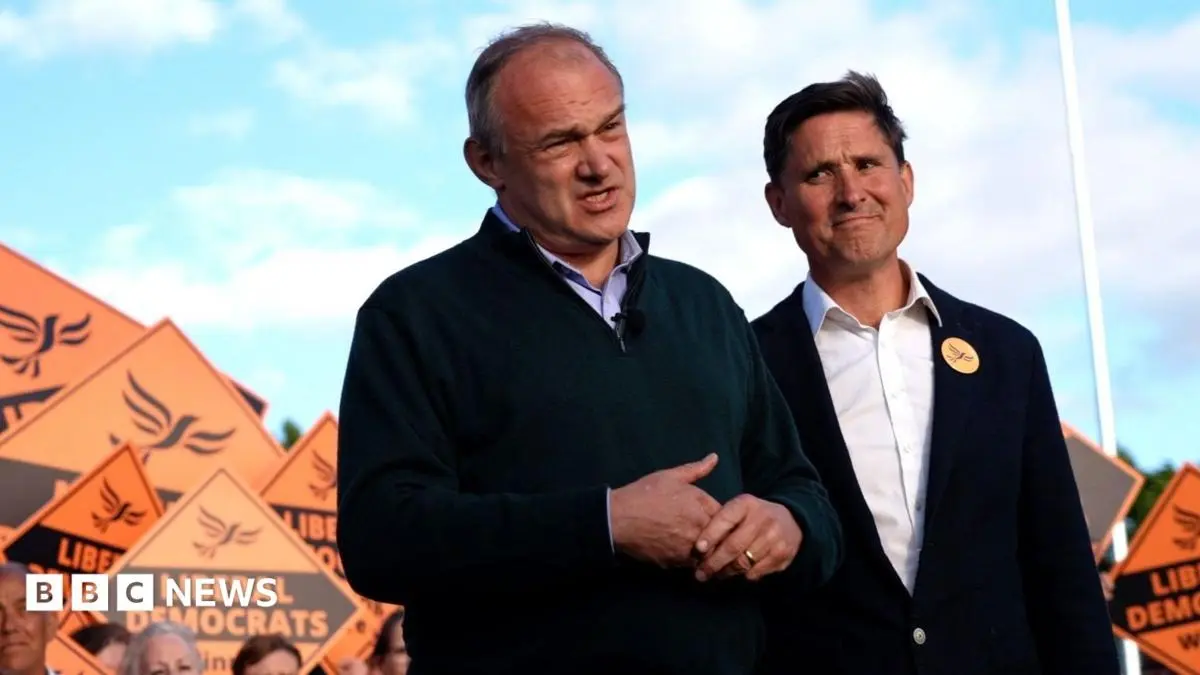
The prospect of a formal challenge to Sir Ed’s leadership remains a complex hurdle under the Liberal Democrats’ internal rules. According to the party’s constitution, a leadership contest cannot be triggered easily. It first requires a vote of no confidence in the leader to be passed by a majority of all the party’s sitting MPs. With the Liberal Democrats currently holding 72 seats in the House of Commons, a challenger would need to secure the support of at least 37 MPs to force Sir Ed from office. Furthermore, even if a vacancy occurs or a contest is triggered, any MP wishing to enter the leadership race must meet strict nomination criteria. A candidate must secure nominations from at least 10% of the parliamentary party, excluding themselves, which currently translates to at least seven other MPs. Additionally, they must obtain the backing of at least 200 party members spread across a minimum of 20 different local government parties. This high threshold is designed to prevent frivolous challenges and ensure that any potential leader has broad, demonstrable support across both the Westminster group and the wider grassroots membership.
Sir Ed has served as the leader of the Liberal Democrats for six years, navigating the party through a period of rebuilding following the difficult legacy of the post-coalition years. His tenure reached its high-water mark in the 2024 general election, where he led the party to its most successful electoral result in its history, securing 72 seats. The campaign was characterized by Sir Ed’s highly publicized and often eccentric stunts, ranging from paddleboarding to bungee jumping, which were designed to attract media attention to local issues such as water quality, sewage dumping, and social care.
However, despite this unprecedented parliamentary success, some within the party argue that the Liberal Democrats have struggled to capitalize on their expanded presence in the House of Commons. National opinion polling for the party has remained stuck at relatively low levels, failing to show a significant post-election bounce or a sustained rise in public support. This lack of upward movement has generated anxiety among some MPs who worry that the party is failing to establish a distinct national identity and is struggling to make its voice heard in a political landscape dominated by the Labour government and the Conservative opposition.
This anxiety has recently been exacerbated by public disagreements over key policy areas, most notably the future of the state pension triple lock. The triple lock is a highly sensitive political mechanism that guarantees the state pension increases each year in line with either inflation, average wage growth, or 2.5%, whichever of the three figures is the highest. While popular among older voters, the policy has faced growing criticism from economists and younger generations who argue it is financially unsustainable in the long term and exacerbates intergenerational inequality.