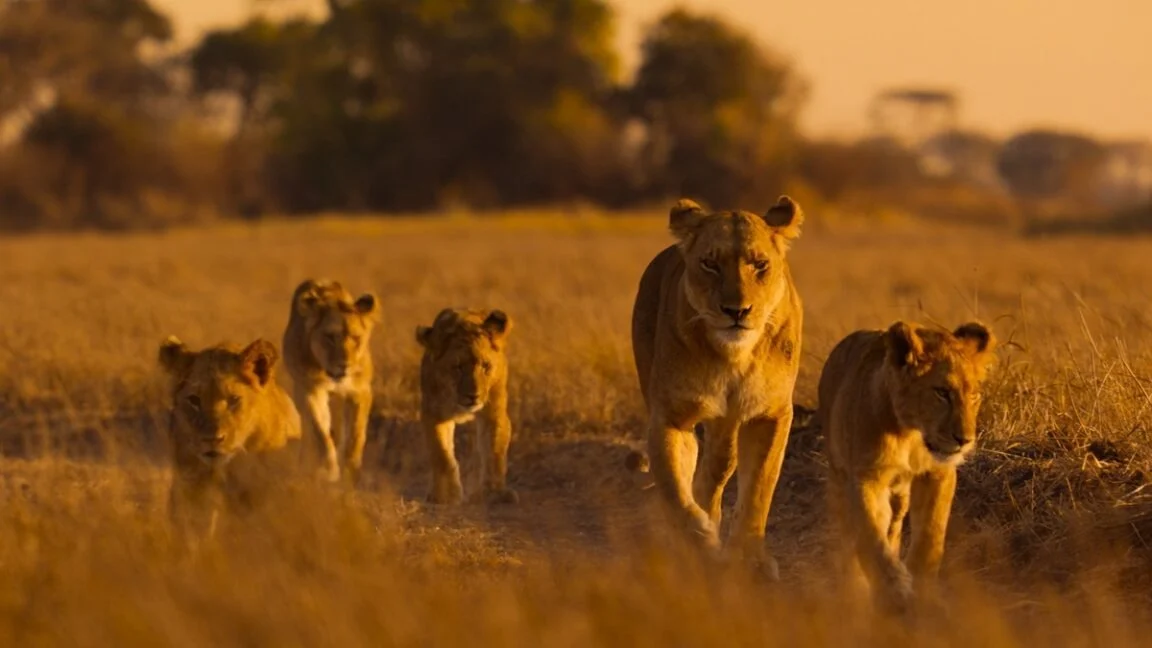

Achieving such intimate footage across varied and punishing terrain required significant technological innovation from the production team. The filmmakers relied heavily on custom-designed technology to capture perspectives that were previously impossible to record. Drones were used extensively throughout the four-year shoot to deliver dramatic, first-person point-of-view shots, placing viewers directly alongside animals in motion.
The crew also adapted high-end studio technology for harsh field conditions. A complex robotic camera arm—originally engineered for controlled indoor studio settings—was modified and deployed in the wild for the very first time, allowing technicians to execute long, pre-programmed, buttery-smooth cinematic takes in unpredictable wilderness settings.
To capture aquatic behaviors without disturbing the wildlife, the team constructed a specialized underwater "hippo cam" equipped with pan-and-tilt motorized heads. This camera setup allowed filmmakers to monitor sub-surface interactions, capturing rare footage of hippopotamuses receiving a natural "spa treatment" as schools of barbel fish pick away and consume dead skin from the massive mammals’ hides.
Filming in extreme indoor environments presented its own unique set of engineering hurdles. To document reclusive dwarf crocodiles hunting bats inside a pitch-black cave completely coated in guano, the production team created a custom, remotely operated fixed camera rig. The apparatus incorporated advanced low-light sensors, infrared imaging capabilities, and a remote zoom function that could be operated from a safe distance. To protect the sensitive electronic equipment from being damaged by falling bat droppings and environmental debris inside the cavern, technicians even fitted small protective umbrellas over the camera setups to effectively "bat-proof" the gear.
For Mosaku, contributing her voice to these technically sophisticated visual narratives required a grounded, deeply authentic approach. Rather than adopting a traditional, stylized, or distant voice-of-God broadcasting tone, she intentionally approached the narration as herself. She sought to express her genuine, unscripted emotional reactions to the footage as she viewed it, positioning herself as a fellow observer experiencing the wonders of the natural world alongside the audience.
By maintaining this personable and empathetic vocal style, Mosaku aimed to guide viewers through the series thoughtfully, fostering a sense of shared discovery without speaking down to the audience. She expressed hope that viewers watching Africa: Earth’s Wild Home will come away with a renewed appreciation for humanity’s intrinsic connection to the natural environment, recognizing that human actions directly impact wildlife, and that the health of the natural world fundamentally affects human survival.
In reflecting on the overarching message of the project, Mosaku emphasized that stripping away modern technology, artificial lighting, media, and daily distractions reveals a core truth shared by all living creatures. Whether considering a mother cheetah on a mountain ledge, a male rain frog calling in the mud, a tool-using chimpanzee, or a human family, the fundamental drives remain identical: the need to protect loved ones, secure sustenance, and endure. Through its rich storytelling and visual scope, the series ultimately seeks to foster greater understanding, empathy, and harmony between humanity and the diverse species that share the planet. Africa: Earth’s Wild Home is currently available for streaming on both Disney+ and Hulu.