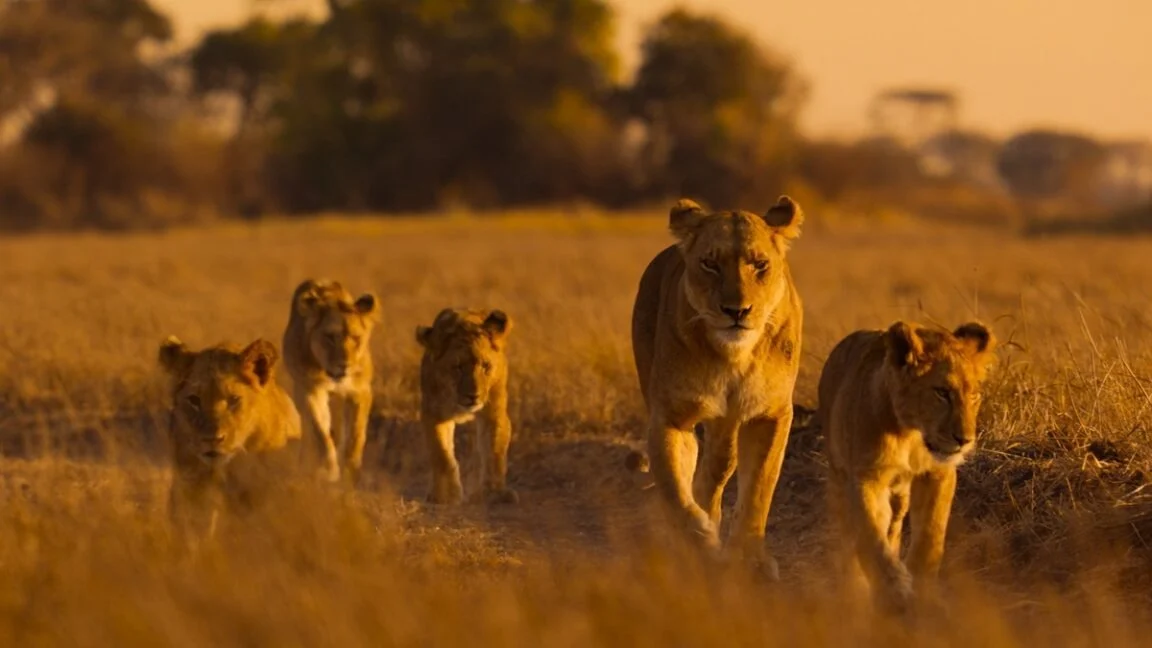
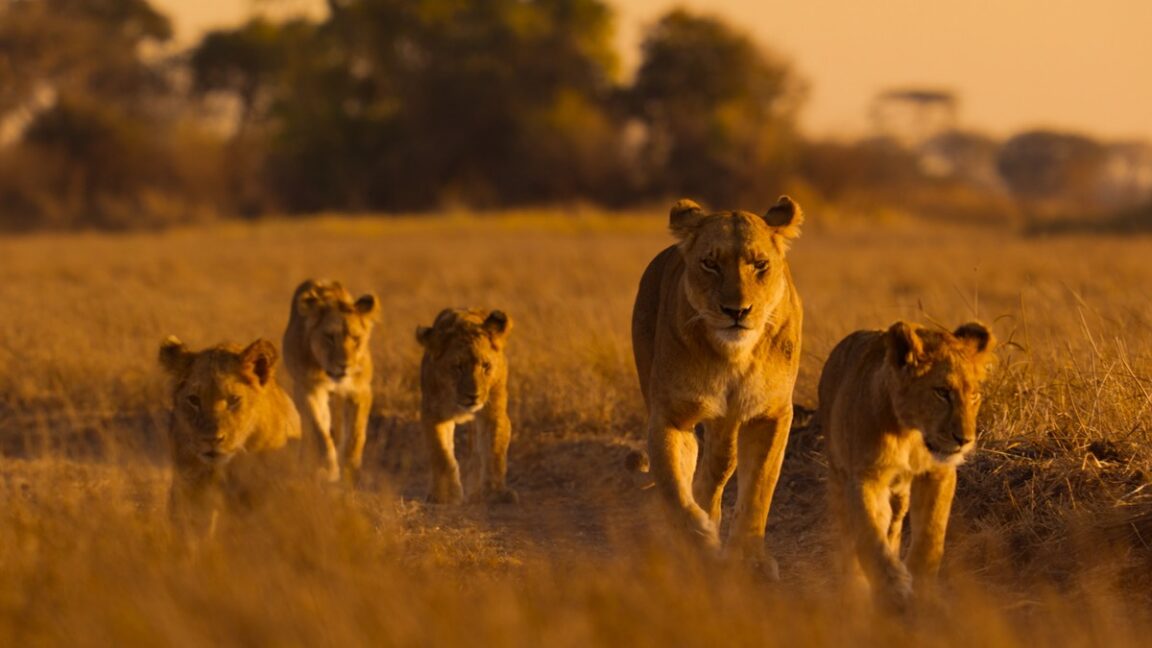
A wild African black panther prowls through the dark in search of prey. An orphaned baby pangolin carefully navigates its surroundings, attempting to learn how to climb without the guidance of a parent. On a remote shoreline, an exhausted green turtle struggles to return to the sea after laying her eggs, only to be lifted and carried to the water’s edge by compassionate local residents. These striking moments capture just a fraction of the vast, intricate animal life showcased in Africa: Earth’s Wild Home, a new documentary series from National Geographic now streaming on Disney+ and Hulu.
The seven-part natural history series marks the flagship launch of an ambitious new global franchise for National Geographic. The overarching project aims to systematically document the wildlife, ecosystems, and environmental dynamics of all seven continents in turn, devoting dedicated multi-part series to each region of the globe. By establishing this expansive blueprint, the network seeks to offer an unprecedented look at Earth’s biodiversity, beginning with one of the most ecologically diverse and physically challenging environments on the planet.
To bring the epic scope of the continent to life, the producers selected acclaimed actor Wunmi Mosaku to serve as the narrator for Africa: Earth’s Wild Home. Mosaku, known for her powerful performances in projects such as Sinners, Loki, and Lovecraft Country, brings a deeply personal perspective to the voiceover work. Born in Nigeria and raised in England, the actor viewed the opportunity as both a professional honor and a profound personal homecoming.
Mosaku expressed immense gratitude for the opportunity to partner with National Geographic on such an expansive endeavor. She noted that being invited to narrate the series held significant personal meaning, providing a rare chance to re-engage with her heritage while highlighting the natural magnificence of the land where she was born. For Mosaku, participating in the project was a way to celebrate a continent defined by extreme contrasts, endless resilience, breathtaking beauty, and immense biological diversity.
Although Mosaku was already familiar with several parts of the continent—having spent time in Nigeria and Ghana, and having worked professionally in Kenya and South Africa—she found that working on the documentary revealed a vast realm of natural phenomena she had never previously encountered. She observed that Africa possesses such an overwhelming depth of geographical and biological variety that an individual could spend an entire lifetime exploring it without uncovering all its secrets. Among the most startling discoveries for her was witnessing snow-covered mountain terrains within Africa, complete with resident monkey populations that have adapted to live and thrive in sub-zero, wintery conditions.
The physical scale of the production reflects the sheer vastness of its subject matter. Africa: Earth’s Wild Home required four years of continuous field production to complete. Over the course of those four years, camera crews and field researchers traveled across nearly 30 different African nations to record footage in some of the world’s most remote and inhospitable landscapes.
The resulting seven episodes are structured around specific ecological biomes, systematically examining life across Africa’s dense jungles, arid deserts, vast open plains, rugged mountain ranges, and isolated oceanic islands. Each episode presents a multi-faceted view of these habitats, combining intimate animal portraiture with broader ecological context.
In addition to documenting wildlife, every episode concludes by turning the lens onto the human elements behind the camera. The series explicitly spotlights the dedicated scientists, wildlife photographers, and National Geographic explorers whose tireless field work, logistical coordination, and technical expertise made the filming possible. The final episode of the series takes this focus a step further, placing special emphasis on local African conservation leaders and researchers who are actively working on the front lines to protect and preserve the continent’s fragile ecosystems for future generations.
Throughout its seven episodes, Africa: Earth’s Wild Home captures several natural history firsts and rarely documented animal behaviors. Among the highlights is the television debut of the black rain frog. Captured on film for the very first time for a broadcast series, a male black rain frog is shown emerging from beneath the soil to participate in his first breeding season. Despite its distinctive appearance—frequently likened to a "grumpy avocado"—the small amphibian possesses a striking "squeaky soprano" mating call, which the male uses to signal his presence and attract potential female partners.
The series also provides extraordinary footage of cognitive complexity in primates, featuring rare live recordings of chimpanzees utilizing rudimentary tools. In a clear display of learned environmental interaction, the chimps are filmed employing carefully chosen twigs and branches as tools to fish for edible algae situated at the bottom of a pond.
Adaptive behavior emerges as a central theme across the documentary’s narratives, emphasizing the creative strategies animals must deploy to overcome extreme environmental challenges. In one compelling sequence, a lone bachelor hyena that has gone without food for days is faced with the challenge of hunting flamingos in deep water. Because the water drastically hinders his movement and speed, making a direct chase impossible, the hyena devises a novel tactical solution. He systematically herds the flock of flamingos toward the shallower waters near the shore, increasing the density of the birds in a confined space and making it substantially easier to pull a bird from the crowded flock—a unique strategy never before documented for the species.
This moment of ingenuity builds a rare sense of viewer empathy for an animal that is often maligned in popular culture. However, the documentary balanced this sympathetic portrait with the stark, unvarnished realities of predator-prey dynamics. In a contrasting segment captured with specialized night-vision cameras, a organized pack of hyenas is shown launching a persistent group attack against a mother elephant and her young calf, nearly succeeding in killing the juvenile.
Mosaku noted that this sharp contrast in hyena behavior illustrates the emotional complexity of nature documentary storytelling. She recalled feeling an initial surge of sympathy for the solitary, struggling bachelor hyena trying to secure a meal, only to experience a sudden emotional reversal when watching the brutal reality of the pack attack on the elephant calf. For Mosaku, these contrasting scenes serve as a vivid reminder of the unforgiving realities of life in the wild, where survival often demands harsh trade-offs.
Another powerful narrative thread follows a mother cheetah tasked with raising three hungry cubs in a steep, rocky mountain environment. Known primarily as the fastest land mammal, the cheetah finds her primary survival asset—her explosive speed—rendered completely ineffective amidst the vertical cliffs and uneven terrain. To feed her offspring, she is forced to completely reinvent her hunting style, navigating dangerous precipices to stalk prey where a single misstep could prove fatal.
Mosaku found herself deeply moved by the cheetah’s plight, drawing a poignant connection between the animal’s struggle and human perseverance. She observed that watching the mother cheetah fight to feed her three cubs on terrain that stripped away her natural advantage felt strikingly human. It reminded Mosaku of her own mother’s efforts to raise three children in difficult, unfamiliar environments where traditional advantages were unavailable. To Mosaku, the sequence powerfully underscored the universal bonds that connect living beings across species boundaries, reflecting a shared desire to survive, protect loved ones, and provide a safe environment for the next generation.

Achieving such intimate footage across varied and punishing terrain required significant technological innovation from the production team. The filmmakers relied heavily on custom-designed technology to capture perspectives that were previously impossible to record. Drones were used extensively throughout the four-year shoot to deliver dramatic, first-person point-of-view shots, placing viewers directly alongside animals in motion.
The crew also adapted high-end studio technology for harsh field conditions. A complex robotic camera arm—originally engineered for controlled indoor studio settings—was modified and deployed in the wild for the very first time, allowing technicians to execute long, pre-programmed, buttery-smooth cinematic takes in unpredictable wilderness settings.
To capture aquatic behaviors without disturbing the wildlife, the team constructed a specialized underwater "hippo cam" equipped with pan-and-tilt motorized heads. This camera setup allowed filmmakers to monitor sub-surface interactions, capturing rare footage of hippopotamuses receiving a natural "spa treatment" as schools of barbel fish pick away and consume dead skin from the massive mammals’ hides.
Filming in extreme indoor environments presented its own unique set of engineering hurdles. To document reclusive dwarf crocodiles hunting bats inside a pitch-black cave completely coated in guano, the production team created a custom, remotely operated fixed camera rig. The apparatus incorporated advanced low-light sensors, infrared imaging capabilities, and a remote zoom function that could be operated from a safe distance. To protect the sensitive electronic equipment from being damaged by falling bat droppings and environmental debris inside the cavern, technicians even fitted small protective umbrellas over the camera setups to effectively "bat-proof" the gear.
For Mosaku, contributing her voice to these technically sophisticated visual narratives required a grounded, deeply authentic approach. Rather than adopting a traditional, stylized, or distant voice-of-God broadcasting tone, she intentionally approached the narration as herself. She sought to express her genuine, unscripted emotional reactions to the footage as she viewed it, positioning herself as a fellow observer experiencing the wonders of the natural world alongside the audience.
By maintaining this personable and empathetic vocal style, Mosaku aimed to guide viewers through the series thoughtfully, fostering a sense of shared discovery without speaking down to the audience. She expressed hope that viewers watching Africa: Earth’s Wild Home will come away with a renewed appreciation for humanity’s intrinsic connection to the natural environment, recognizing that human actions directly impact wildlife, and that the health of the natural world fundamentally affects human survival.
In reflecting on the overarching message of the project, Mosaku emphasized that stripping away modern technology, artificial lighting, media, and daily distractions reveals a core truth shared by all living creatures. Whether considering a mother cheetah on a mountain ledge, a male rain frog calling in the mud, a tool-using chimpanzee, or a human family, the fundamental drives remain identical: the need to protect loved ones, secure sustenance, and endure. Through its rich storytelling and visual scope, the series ultimately seeks to foster greater understanding, empathy, and harmony between humanity and the diverse species that share the planet. Africa: Earth’s Wild Home is currently available for streaming on both Disney+ and Hulu.