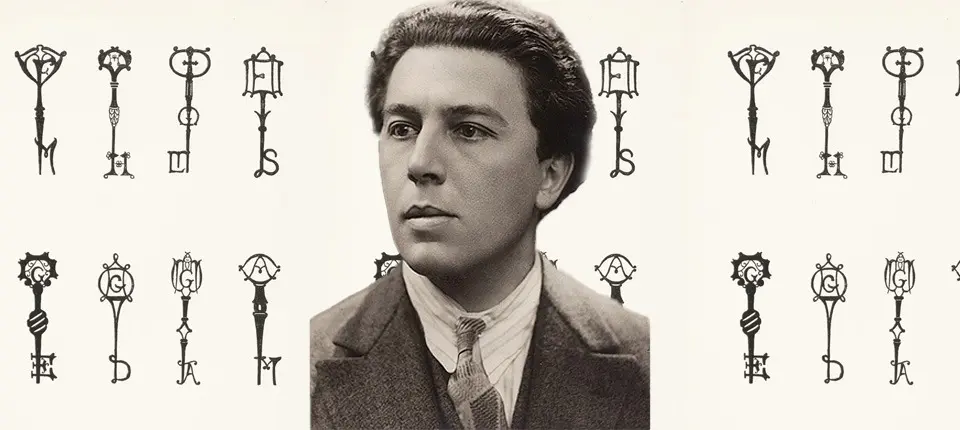
While Sartre’s focus on individual responsibility and "engagement" gained popularity, Breton remained steadfast in his belief in the power of the mythic and the irrational. He continued to organize international Surrealist exhibitions and publish new works, such as Arcane 17, written during a trip to the Gaspé Peninsula in Quebec. Though some critics in the 1950s and 60s viewed Surrealism as a relic of the past, Breton’s influence continued to permeate the culture, surfacing in the works of the Beat Generation in America and the Situationists in Europe.
In his final years, Breton lived in an apartment on the Rue Fontaine, surrounded by his massive collection of indigenous art, rare books, and "found objects." This collection was, in many ways, a physical manifestation of his mind—a curated chaos where the primitive and the modern, the natural and the manufactured, coexisted in a state of perpetual tension. Even as his physical world narrowed, his intellectual horizon remained vast. He continued to correspond with young poets and artists, proving that Surrealism was not a static dogma but a living, breathing method of engagement with the world.
The news of his death in 1966 sent shockwaves through the international arts community. Obituaries at the time described him as a man who had "given the world a new pair of eyes." In the decades since, his reputation has only grown. The digital age, with its rapid-fire juxtaposition of images and ideas, its algorithmic chance encounters, and its blurring of the boundaries between the real and the virtual, can often feel like a Surrealist dream brought to life. The "literary internet" of today owes a debt to Breton’s early experiments with collective creativity and the democratization of the imagination.
As we look back on the legacy of André Breton sixty years after his death, we see more than just a poet or a theorist. We see a man who understood that the greatest revolution is one that takes place within the human spirit. He taught us that the world is not merely what we see, but what we are capable of imagining. By championing the irrational, the accidental, and the marvelous, Breton ensured that the "best of the literary internet"—and the best of human creativity—would always remain a place of endless, convulsive possibility.
His funeral in 1966 was a quiet affair, but the silence was deceptive. The seeds he planted had already scattered across the globe, taking root in every corner of the human experience. Today, every time an artist trusts a gut instinct over a logical plan, every time a writer follows a strange thread of thought into the unknown, and every time a reader finds truth in the logic of a dream, the spirit of André Breton lives on. He remains the architect of our subconscious, reminding us that, even in the face of death, the imagination remains the only truly sovereign territory.