As we mark this anniversary, it is worth noting that Fahrenheit 451 has itself been a frequent target of the very censorship it warns against. Over the decades, various school boards and organizations have attempted to ban or redact the book, citing its language or its depictions of the very themes it seeks to critique. There is perhaps no greater irony in the literary world than the attempt to burn a book about the burning of books. Each time such an attempt is made, however, it only serves to prove Bradbury’s point: that ideas are dangerous to those who wish to control the narrative of a society.
The "Best of the Literary Internet" today serves as a digital monument to Bradbury’s vision. In a world where information is infinite but attention spans are shrinking, the call to return to the deep, slow engagement of reading is more radical than ever. Montag’s eventual flight from the city into the wilderness, where he joins the community of people who "become" the books they have memorized, offers a glimmer of hope. It suggests that as long as one person holds onto the memory of a story, the fire of human consciousness cannot be fully extinguished.
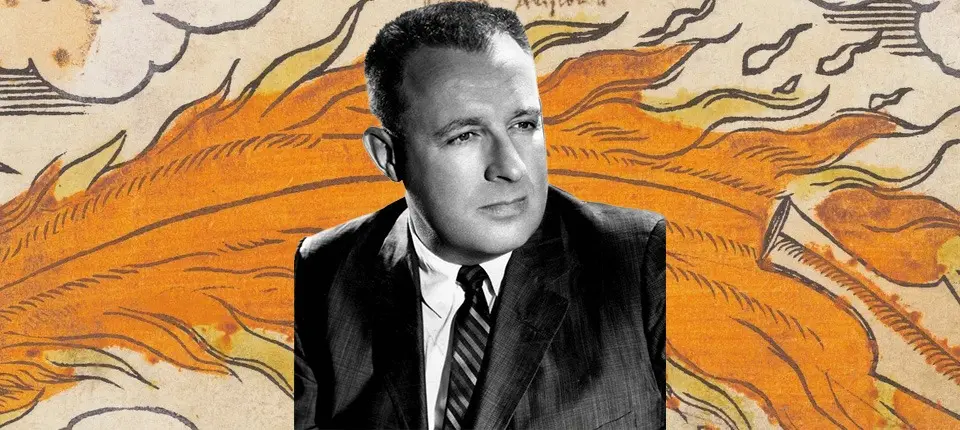
In the final pages of the novel, Bradbury invokes the image of the Phoenix, the mythical bird that consumes itself in fire only to be reborn from the ashes. He suggests that humanity is like the Phoenix, repeatedly destroying itself through its own ignorance and violence, but possessing the unique ability to remember its mistakes and strive for something better. Fahrenheit 451 remains an essential part of that memory. It is a mirror held up to society, asking us to look closely at what we value and what we are willing to lose.
As we celebrate the publication of this masterpiece on October 19, we are reminded that the work of a writer is often to be a "fireman" of a different sort—one who ignites the imagination and keeps the heat of inquiry alive. Ray Bradbury’s 1953 novel continues to burn brightly, not as a pile of discarded paper, but as a beacon for every reader who believes that a book is more than just ink and glue; it is a life lived, a world discovered, and a freedom preserved. The literary internet, in its best form, continues this tradition by ensuring that even in a world of screens, the story of Guy Montag and the "Book People" is never forgotten.