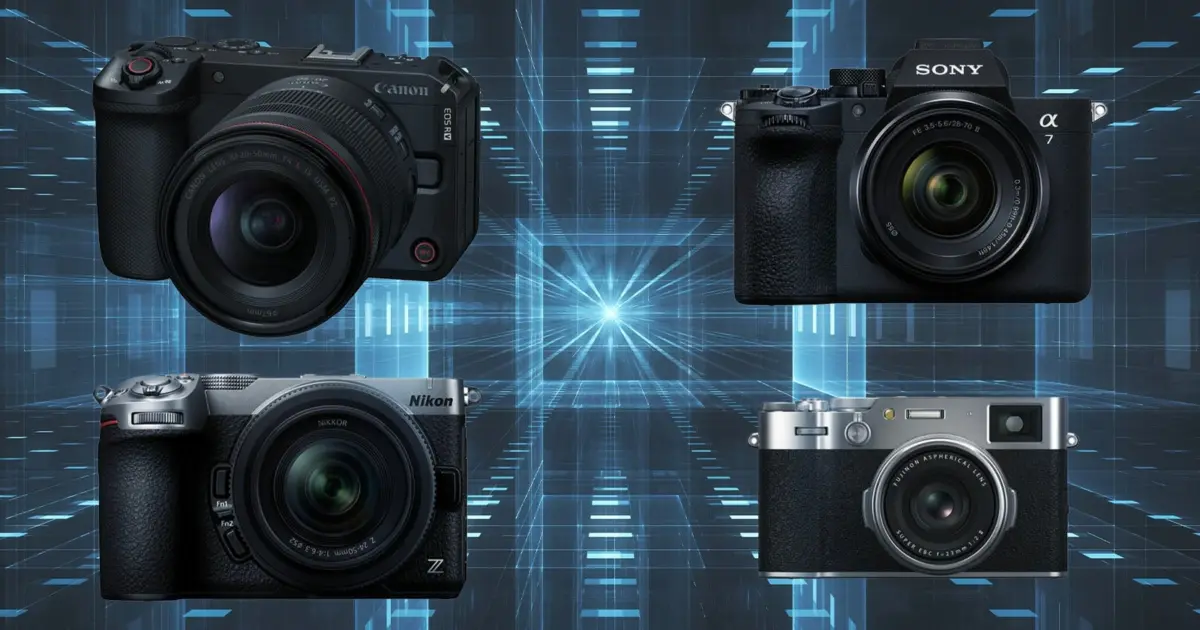
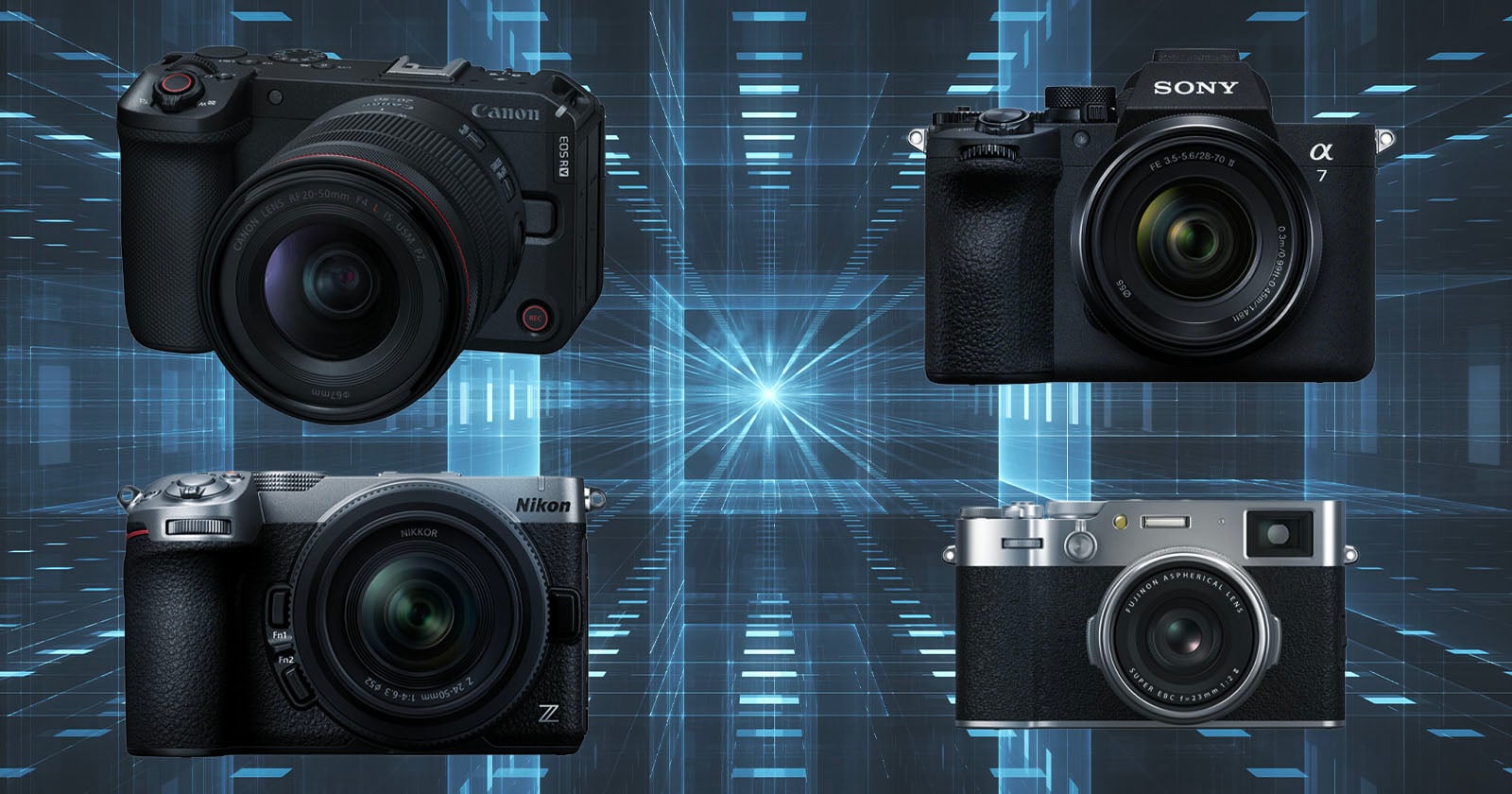
In a rapidly evolving technological landscape where artificial intelligence and smartphone ubiquity have fundamentally altered the way images are captured and consumed, the world’s leading camera manufacturers are charting distinct and often contrasting paths forward. A series of recent interviews conducted by the Japanese publication Nikkei has provided a rare, high-level glimpse into the strategic thinking of the industry’s four dominant players: Canon, Nikon, Sony, and Fujifilm. The conversations, featuring key executives Go Tokura of Canon, Hiroyuki Ikegami of Nikon, Kenji Tanaka of Sony, and Koji Matsumoto of Fujifilm, reveal an industry that is no longer moving in a single direction. Instead, each brand is leaning into a unique philosophy, ranging from the pursuit of "Spatial AI" and digital twins to a renewed focus on the tactile, analog-inspired joy of the shooting experience.
For decades, the competition between these companies was defined largely by a "spec war"—a race to produce the highest megapixel counts, the fastest burst rates, and the most robust autofocus systems. While performance remains a baseline requirement, the Nikkei interviews suggest that the industry has reached a point of maturation where raw power is no longer the sole differentiator. As the market stabilizes following years of contraction due to the rise of the smartphone, these manufacturers are now looking toward specialized niches, the shifting demographics of "creators," and the integration of advanced software to define their next decade of growth.
Canon, the long-standing market leader, is currently observing a significant shift in who is buying cameras and why. Go Tokura, the head of Canon’s Image Communication Business Operations, pointed out that the current resurgence in compact digital cameras is being driven not by veteran professionals, but by a younger generation. This demographic, often referred to as Gen Z, is gravitating toward dedicated cameras for reasons that defy traditional marketing logic. According to Tokura, these users aren’t necessarily seeking the highest technical image quality; rather, they are drawn to the experience of using a dedicated device.
Tokura noted that the "minor inconveniences" of a standalone camera—the physical act of carrying it, the deliberate nature of its controls, and the separation from the distractions of a smartphone—are actually part of the appeal. This has prompted Canon to rethink its product lineup. While the company has historically structured its offerings based on price and performance tiers, it is now attempting to "weave in elements of style and feel." This shift suggests that the aesthetic of the camera itself and the tactile feedback it provides are becoming as important as the sensor inside.
Furthermore, Canon is doubling down on its commitment to video. The company’s "V Series" of video-oriented cameras is slated for expansion, driven by the explosive growth of vlogging and social media content creation. Tokura emphasized that this expansion must be supported by a lens ecosystem that is truly hybrid. The goal is to develop lenses that can transition seamlessly between high-end video production and traditional still photography without compromising on the specific requirements of either medium. For Canon, the future is a blend of lifestyle-oriented design and a robust, video-first technical foundation.
Nikon’s strategy, as outlined by Hiroyuki Ikegami, the General Manager of Nikon’s Video Business Unit, focuses on a different set of priorities: the "cascade" of flagship technology and the "Smartphone + 1" philosophy. Nikon made waves in the industry with the release of the Z9, a flagship mirrorless camera that abandoned the mechanical shutter entirely. However, Ikegami acknowledged that the process of bringing those high-end features down to more affordable, entry-level, and mid-range models takes time. This "trickle-down" approach is essential for maintaining a healthy lineup, even as it exerts downward pressure on the average selling price of their products.
Nikon is currently in a transitional phase, heavily investing in next-generation image processing engines and sensors that will define their future cameras. But perhaps more interesting is Nikon’s view of the camera’s role in a smartphone-dominated world. Rather than trying to compete directly with the phone in a user’s pocket, Nikon sees its products as a "Smartphone + 1" device. This concept positions the camera as a necessary companion—a tool that provides superior optics and preserves the smartphone’s battery life during long days of shooting, while still appealing to a younger demographic that values high-quality output for social sharing. By focusing on the foundational hardware and the "next-gen" engine, Nikon aims to provide a professional-grade experience that feels like a natural extension of the mobile lifestyle.
While Canon and Nikon are focusing on the physical experience and the refinement of traditional imaging, Sony is looking toward a much more digital, software-driven horizon. Kenji Tanaka, Senior Vice President of Sony Corporation, introduced the concept of "Spatial AI" as the core pillar of the Alpha series’ future. Sony’s vision goes far beyond the traditional act of taking a photo; it involves using image sensors to capture the physical world and translate it into a "digital twin."
This approach treats the camera as a data-acquisition tool for the creation of immersive content. By creating a digital reproduction of reality, Sony believes creators can simulate different ways of presenting information and then turn those simulations back into content for the physical world. Tanaka explained that the term "Spatial AI" was born from the desire to expand the world of entertainment rather than just improving operational efficiency. For Sony, the Alpha camera is not just a standalone business; it is a gateway into a broader entertainment ecosystem.
This vision also involves a radical redefinition of who a "creator" is. In Sony’s view, a creator is anyone who inspires emotion through their work, including dancers, musicians, and athletes. By leveraging spatial recognition and advanced subject tracking, Sony wants to provide these individuals with tools that enhance their creativity in ways that traditional photography cannot. This moves the camera away from being a passive observer of a scene and toward being an active participant in the creation of personalized, high-tech digital experiences.
Fujifilm, by contrast, remains the most vocal proponent of the "joy of photography" and the importance of human subjectivity. Koji Matsumoto, a lead executive at Fujifilm, reiterated the company’s belief that the democratization of photography through smartphones has actually been a boon for the dedicated camera market. Because social media has given people a more discerning eye for aesthetics, there is a growing demand for tools that allow for deeper self-expression.
Fujifilm’s success in recent years, particularly with its X-series cameras, has been rooted in a rejection of clinical perfection. Instead, the company focuses on the "tactile, analog feel" of turning physical dials and the emotional resonance of its film simulation modes. Matsumoto argued that these features are only possible because of Fujifilm’s decades of experience in film chemistry and mechanical engineering. While he acknowledged the power of AI to generate images, he made a clear distinction between computer-generated content and human photography. According to Matsumoto, only humans possess the subjective sense of feeling that allows them to look at a photograph and say, "This is real."
Fujifilm’s marketing strategy is built around this emotional connection. By hosting hands-on shooting events and focusing on the "fun" aspect of the craft, they are targeting a segment of the market that views photography as a hobby or an art form rather than a purely technical task. For Fujifilm, the future is not about creating a digital twin of reality, but about preserving the human experience of capturing a moment in time.
The insights gathered from these four industry leaders paint a picture of a market that is successfully diversifying to survive. Canon is leaning into the lifestyle and video needs of a new generation; Nikon is focusing on the technical foundations and the synergy between cameras and mobile devices; Sony is pushing the boundaries of what a camera can be through the lens of spatial computing and AI; and Fujifilm is doubling down on the emotional and tactile heritage of the medium.
Despite their different approaches, a common thread runs through all four strategies: the recognition that the "traditional" camera buyer is changing. Whether through the integration of Spatial AI or the return to manual dials, these companies are moving away from the idea that a camera is a one-size-fits-all tool. Instead, they are crafting specialized identities that cater to the diverse ways in which modern society interacts with images. As the technology continues to advance, the gap between these philosophies may only widen, offering photographers and creators a more varied and specialized set of tools than ever before. In this new era, the "best" camera is no longer defined by a spec sheet, but by how well it aligns with the user’s personal vision of what photography should be.