Fujifilm, by contrast, remains the most vocal proponent of the "joy of photography" and the importance of human subjectivity. Koji Matsumoto, a lead executive at Fujifilm, reiterated the company’s belief that the democratization of photography through smartphones has actually been a boon for the dedicated camera market. Because social media has given people a more discerning eye for aesthetics, there is a growing demand for tools that allow for deeper self-expression.
Fujifilm’s success in recent years, particularly with its X-series cameras, has been rooted in a rejection of clinical perfection. Instead, the company focuses on the "tactile, analog feel" of turning physical dials and the emotional resonance of its film simulation modes. Matsumoto argued that these features are only possible because of Fujifilm’s decades of experience in film chemistry and mechanical engineering. While he acknowledged the power of AI to generate images, he made a clear distinction between computer-generated content and human photography. According to Matsumoto, only humans possess the subjective sense of feeling that allows them to look at a photograph and say, "This is real."
Fujifilm’s marketing strategy is built around this emotional connection. By hosting hands-on shooting events and focusing on the "fun" aspect of the craft, they are targeting a segment of the market that views photography as a hobby or an art form rather than a purely technical task. For Fujifilm, the future is not about creating a digital twin of reality, but about preserving the human experience of capturing a moment in time.
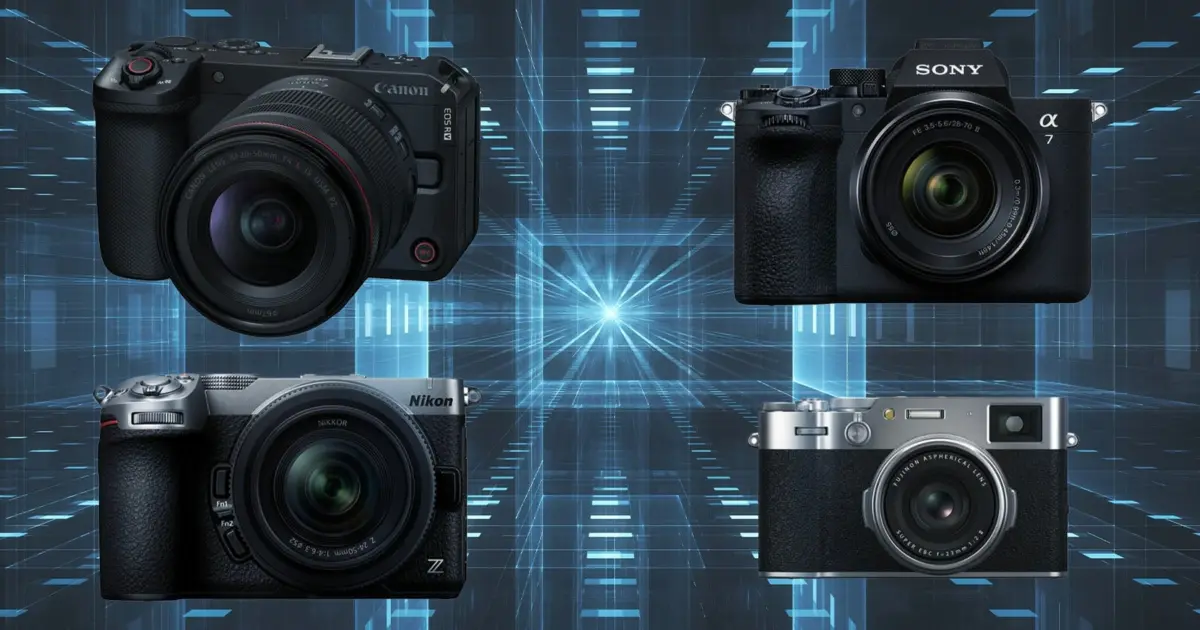
The insights gathered from these four industry leaders paint a picture of a market that is successfully diversifying to survive. Canon is leaning into the lifestyle and video needs of a new generation; Nikon is focusing on the technical foundations and the synergy between cameras and mobile devices; Sony is pushing the boundaries of what a camera can be through the lens of spatial computing and AI; and Fujifilm is doubling down on the emotional and tactile heritage of the medium.
Despite their different approaches, a common thread runs through all four strategies: the recognition that the "traditional" camera buyer is changing. Whether through the integration of Spatial AI or the return to manual dials, these companies are moving away from the idea that a camera is a one-size-fits-all tool. Instead, they are crafting specialized identities that cater to the diverse ways in which modern society interacts with images. As the technology continues to advance, the gap between these philosophies may only widen, offering photographers and creators a more varied and specialized set of tools than ever before. In this new era, the "best" camera is no longer defined by a spec sheet, but by how well it aligns with the user’s personal vision of what photography should be.