
Every single day across the globe, an estimated one billion workplace meetings take place. For chief executive officers, these gatherings dominate the working calendar, consuming nearly three-quarters of their operational hours. For managers, the burden is similarly heavy, with the task of planning and steering sessions eating up the majority of their workdays. Across much of the industrialized world, meetings serve as both the foundational tempo and one of the most pervasive sources of frustration in modern professional life.
Yet despite the immense investment of time and human energy poured into these gatherings, organizations have historically known remarkably little about what they actually accomplish or how to structure them for genuine effectiveness. For decades, meetings remained an elusive, understudied aspect of organizational life. That dynamic, however, has shifted. Driven in part by the widespread archive of virtual video calls and digital collaboration logs, "meeting science" has rapidly evolved from a niche academic pursuit into a prominent specialization within organizational and social psychology.
A landmark synthesis published in the Annual Review of Organizational Psychology and Organizational Behavior by Liana Kreamer of the Florida Institute of Technology, alongside Steven Rogelberg and Jon Gray of the University of North Carolina at Charlotte, reviews over three decades of research into modern meeting behavior. The authors note that meeting to talk fulfills fundamental human desires to connect, communicate, and cooperate—activities humans have conducted for millennia in caves, town squares, and marketplaces. In an organizational context, however, meeting scientists define their subject more specifically: gatherings of individuals structured around explicit goals or formal agendas.
As Kreamer realized during her doctoral studies, meetings offer an ideal lens through which to examine broad workplace dynamics, including leadership, teamwork, and interpersonal relationships. At their core, meetings represent a fundamental arena where social interaction and organizational structures intersect in real time.
To decode what makes these gatherings succeed or fail, meeting scientists primarily rely on two empirical approaches. The first involves traditional survey methodology, in which researchers ask employees to reflect retroactively on real or simulated meeting experiences. The second approach analyzes specific behavioral trends extracted directly from audio and video recordings of live sessions—a granular level of detail that Nale Lehmann-Willenbrock, an industrial and organizational psychologist who directs the Center for Better Work at the University of Hamburg in Germany, describes as "where the music is."
In one study, Lehmann-Willenbrock and her colleagues analyzed video recordings of team meetings to evaluate how leadership communication influences group decision-making. The researchers discovered that when meeting leaders practiced respectful, attentive inquiry—asking questions and genuinely absorbing the responses—team performance measurably improved. Conversely, performance stalled when leaders asked questions merely as a formality without actively listening to their team’s input.
Leading with Listening
While many empirical findings in meeting science sound intuitive, researchers emphasize that everyday management practices frequently depart from these basic principles. A central theme throughout the scientific literature is the paramount importance of active listening, which requires leaders to offer thoughtful, constructive feedback rather than passive nods or silent acquiescence.
The shift toward virtual work environments has introduced specific hurdles to this dynamic. Lehmann-Willenbrock points out that because remote participants routine mute their microphones when not speaking, the organic verbal and non-verbal cues that signal active listening are frequently eliminated entirely.
Furthermore, the balance between speaking and listening strongly shapes how participants perceive a meeting’s success. Studies consistently show that meeting leaders and regular attendees leave the same session with markedly different impressions. Because leaders typically dominate the talking time, they tend to rate their own meetings as highly productive, whereas subordinate attendees view them far less favorably. To correct this imbalance, Kreamer stresses that leaders must facilitate discussions without monopolizing them, actively monitoring their own speaking time to ensure a broader spectrum of voices can contribute.
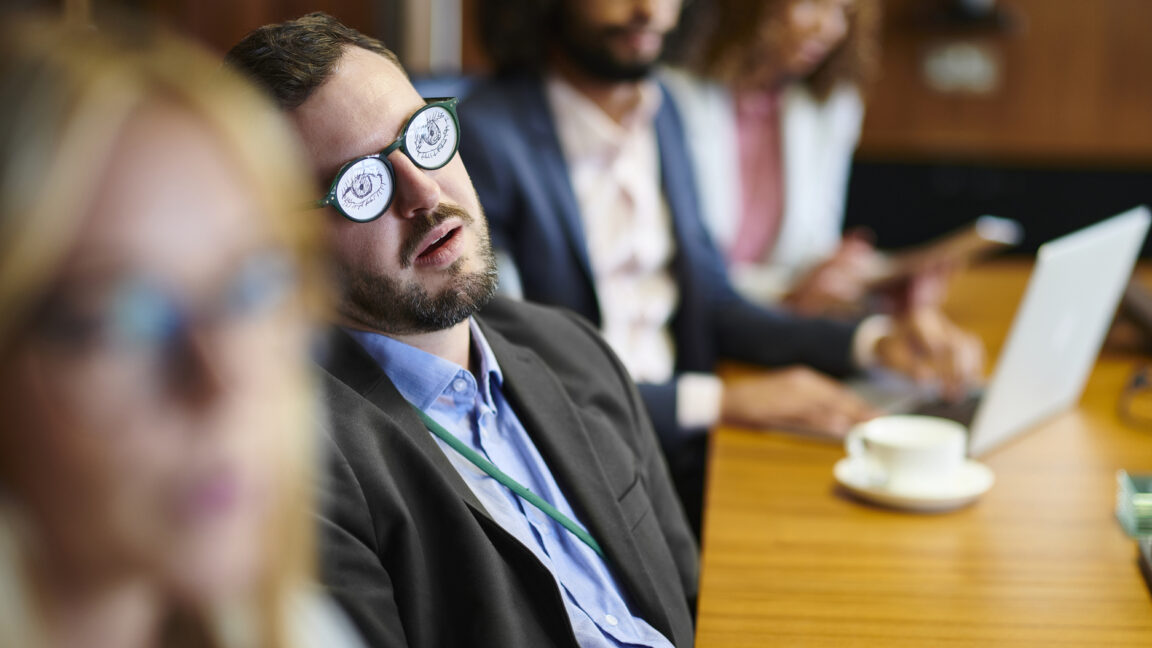
Organizational research also supports a practical checklist of operational steps leaders should take before, during, and after a meeting. Prior to calling a session, facilitators should select appropriate physical settings with adequate lighting and refreshments, invite only individuals whose presence is strictly necessary, publish a clear agenda, establish explicit goals, set strict start and end times, and allow a brief buffer for informal pre-meeting interaction.
Engaging Attendees and Fostering Inclusivity
Research indicates that allocating time for casual conversation before a meeting formally begins yields tangible operational benefits. Lehmann-Willenbrock’s studies on face-to-face meetings show that pre-meeting small talk serves as a strong predictor of overall meeting effectiveness. This informal warmup phase is particularly valuable for introverted or quieter team members, providing a comfortable entry point that encourages them to contribute more actively once formal business begins.
In virtual settings, however, spontaneous pre-meeting chatter rarely occurs naturally. To overcome this, researchers suggest establishing corporate norms where team members log in a few minutes early or reserving the initial minutes of a virtual call for a brief, informal check-in.
To ensure equitable participation during formal discussions, leaders can implement structured collaborative techniques such as "silent brainstorming"—sometimes referred to as "brainwriting." Rather than opening the floor to immediate verbal contributions, which often favors the loudest voices, silent brainstorming involves opening a shared digital document or chat workspace where all participants type their ideas simultaneously and quietly.
A 2009 study cited by Kreamer demonstrated that brainwriting generates higher-quality ideas than traditional spoken brainstorming. Kreamer frequently uses this approach with her research students, noting that it allows quieter participants to share suggestions without fearing interruption or struggling for floor time. After a ten-minute typing period, the group collectively reviews and evaluates the written contributions.
Inclusivity in meeting design also encompasses accommodating neurodiverse workers. Zofia Walters, a doctoral researcher in industrial-organizational psychology at Florida Tech working alongside Kreamer, has investigated the specific meeting needs of employees with Attention-Deficit/Hyperactivity Disorder (ADHD).
In a survey of 147 professionals across various sectors, Walters evaluated how factors such as video camera usage, multitasking behavior, post-meeting fatigue, and emotional states affected remote attendees. Her preliminary findings indicate that employees with ADHD experience significantly higher meeting fatigue and worse emotional states than their non-ADHD peers, particularly when required to keep their video cameras on for extended periods. Interestingly, the data also suggests that secondary activities during meetings—such as answering emails—may help individuals with ADHD manage feelings of boredom and hyperactivity.
Effective meeting management extends beyond the moment of adjournment. Research published by Lehmann-Willenbrock and colleagues in Organizational Dynamics demonstrates that post-meeting follow-through is critical. Leaders must clearly communicate assigned action items, execute the tasks agreed upon during the session, and periodically measure overall employee satisfaction and meeting effectiveness.
Weighing the Costs and Benefits of Meetings
The sheer volume of workplace meetings carries a documented cognitive and economic cost. Research confirms that employees anticipate feeling less productive and emotionally drained when their working days are fragmented by back-to-back sessions, particularly when attempting to execute complex, focus-intensive tasks.

Ava Scott, a cognitive scientist at the University of Copenhagen, notes that meetings are frequently treated as a default organizational reflex without clear intention. This lack of explicit purpose leaves many sessions feeling aimless to participants. Scott’s research examining corporate employees at Microsoft revealed that recurring meetings are the primary drivers of user frustration, with participants describing successive sessions as almost indistinguishable in content. When a meeting lacks a clear objective, taking up employee time is counterproductive. Recognizing this inefficiency, several major corporations, including e-commerce platform Shopify, have moved to eliminate recurring meetings from company calendars.
Despite these drawbacks, empirical data suggests that meetings still provide substantial long-term value when managed correctly. A 2026 working paper published by the National Bureau of Economic Research (NBER) offers a counterweight to blanket anti-meeting sentiments. Led by Harvard economist David Deming and utilizing survey data from over 9,000 Norwegian workers gathered by research firm Norstat, the study identified a positive association between high meeting density, long-term wage growth, and on-the-job skill acquisition.
The researchers hypothesize that high-frequency meeting environments provide junior workers with invaluable exposure to senior leadership, facilitating the tacit transmission of institutional knowledge, expertise, and professional skills. Although the study’s correlational nature precludes proving direct causality, the authors conclude that despite their immediate friction, meetings ultimately serve a vital purpose, describing them as the "broccoli of work—widely disliked, but probably good for us anyway."
Strategic Timing, Humor, and Cultural Context
Optimizing meeting outcomes also requires an understanding of social dynamics, human biological rhythms, and cultural norms. For example, the strategic deployment of humor can spark creative problem-solving and enhance team performance, provided the humor is authentic, supportive, and positive rather than mean-spirited. Lehmann-Willenbrock’s research analyzing corporate video archives revealed that humor is most effective when meeting participants already know each other well enough to feel psychologically safe.
However, the freedom to use humor in meetings is not always evenly distributed across workplace hierarchies. Vita Stout, a science educator and comedian at Sierra College, studied humor usage by analyzing speaker interactions at the 2022 International Congress for Bat Research in Austin, Texas. Her findings, published in Proceedings of the Royal Society B, showed that while well-timed humor successfully builds community, it was deployed far more frequently by established, senior male scientists than by early-career researchers or scientists from underrepresented groups.
Timing is another essential factor supported by organizational research. Meeting organizers should align schedules with human circadian rhythms, explicitly avoiding the post-lunch energy drop when cognitive capacity naturally wanes. Furthermore, meeting times must respect workers’ personal lives and family obligations. Lehmann-Willenbrock notes the frustration caused when internal sessions—especially those regarding diversity or work-life balance—are scheduled late in the afternoon, directly conflicting with employee childcare responsibilities.
Finally, cultural background plays a substantial role in shaping expectations around meeting etiquette. A cross-cultural study led by Lehmann-Willenbrock surveyed 1,432 workers across six nations to measure responses to lateness. Participants from the United States and the Netherlands expressed high levels of irritation and frustration when leaders or peers arrived 5, 10, or 15 minutes late. In contrast, respondents from China and Chile exhibited significantly higher tolerance for identical delays.
Kreamer stresses that expanding cross-cultural research remains a critical priority for meeting science. Because the vast majority of existing data has been gathered within North America and Europe, further global studies are required to determine whether standard meeting best practices hold true across different international business cultures. Until those empirical insights are fully realized, organizations will continue meeting to figure them out.