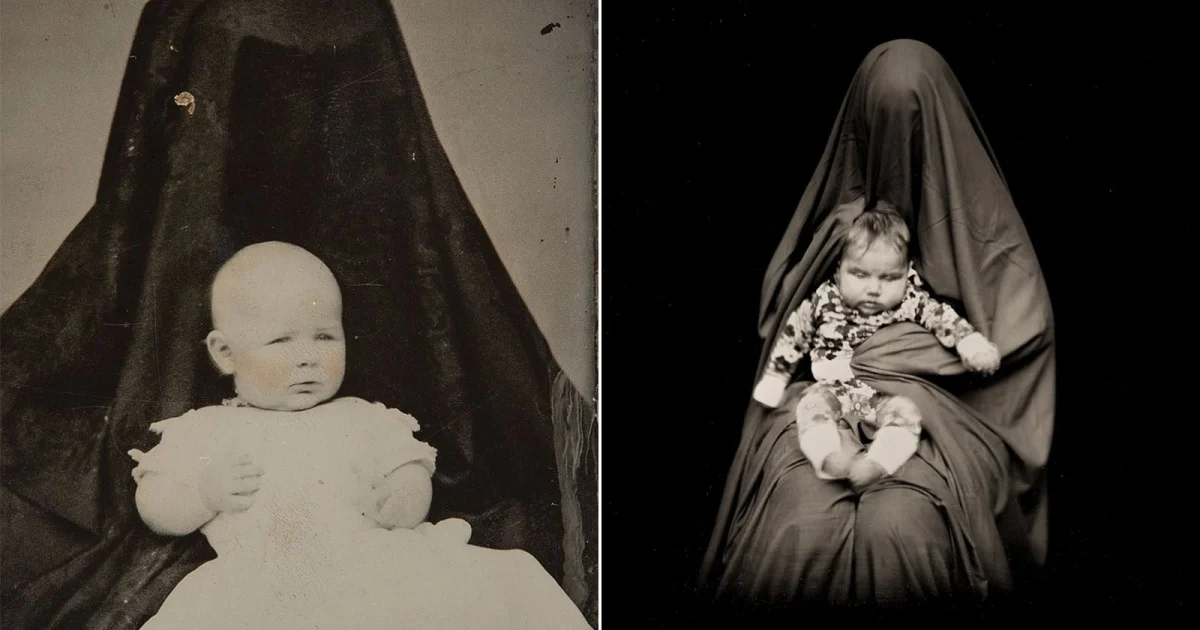
In his natural light studio, Balkowitsch notes that a typical exposure ranges between six and twelve seconds, depending on the season and the strength of the North Dakota sun. While six seconds may sound brief in a world of instant gratification, it feels like an eternity when one is required to remain absolutely motionless. When the subject is a baby, those seconds are an architectural challenge. This led Balkowitsch to pay homage to the Hidden Mother technique by attempting a modern recreation with a friend’s newborn daughter, Mazie.
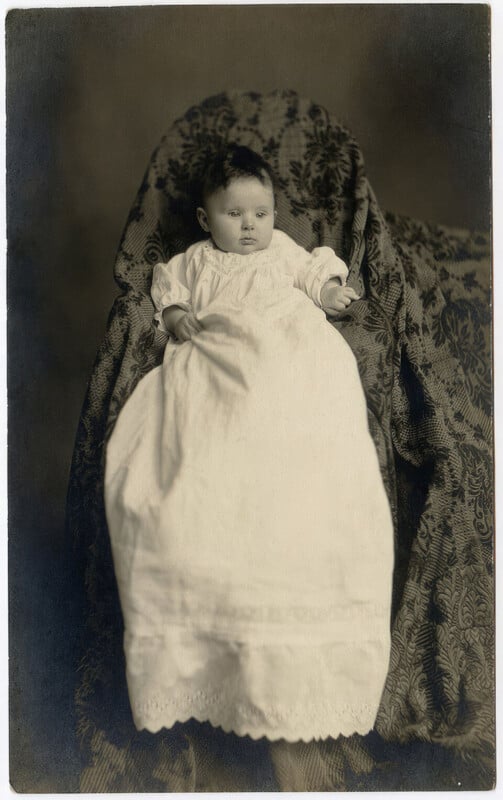
The session provided a firsthand look at why the technique was so effective beyond mere physical stabilization. For the child, the experience of a photographic studio—with its large, intimidating cameras and chemical smells—can be frightening. By having her mother, Dana, present under the shroud, the infant remained calm. Mazie could still feel her mother’s touch and hear her comforting voice, providing a sense of security that allowed her to remain still enough for the silver to settle on the glass. The presence of Mazie’s father, Chris, just outside the frame with a favorite rattle, provided a "safe" focal point for the baby to watch.
The result of the session was "Mazie’s Hidden Mother," an 8×10-inch black glass ambrotype. Using an Alessandro Gibellini large format camera and a Carl Zeiss Tessar 250mm lens at f/4.5, Balkowitsch captured a sharp, hauntingly beautiful image. Despite the careful planning, the reality of working with children left its mark: Mazie kicked her legs in the final two seconds of the eight-second exposure, leaving a slight, ghostly blur at the bottom of the plate—a characteristic "artifact" that connects this modern plate to its 19th-century ancestors.
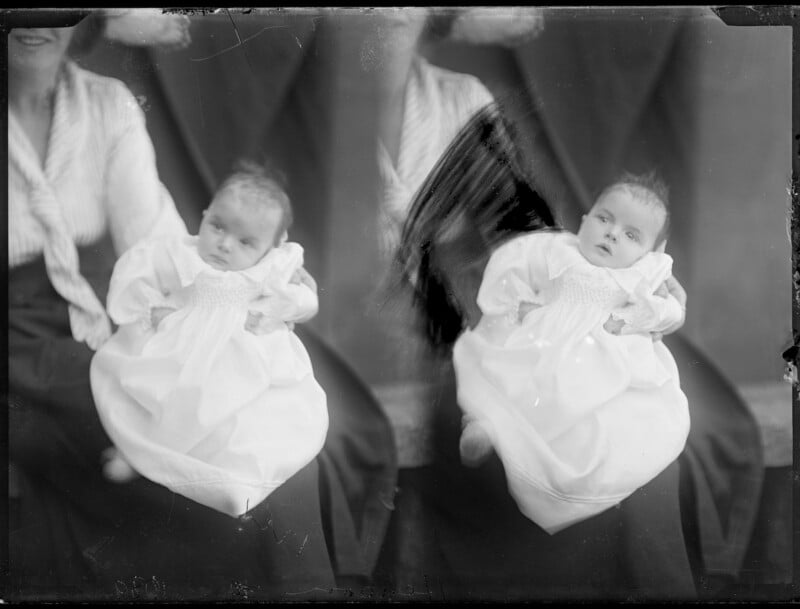
Beyond the use of shrouded mothers, the Victorian era employed other, more mechanical means of stabilization. Adults, too, struggled with the "eternal" wait of the lens. To assist them, photographers utilized posing stands or headbraces—heavy iron pedestals with adjustable clamps designed to cradled the back of a sitter’s skull. These devices allowed the subject to lean back slightly, taking the strain off their neck muscles and preventing the micro-sways that would ruin a portrait’s sharpness.
Today, these posing stands are the source of one of the most persistent myths in photographic history: the idea that they were used to prop up the deceased for "post-mortem" photography. Balkowitsch is quick to debunk this misconception. "The term ‘dead weight’ has a meaning, and there is no way that one of these metal stands could hold up someone deceased," he says. The stands were tools for the living, intended to help a breathing, pulsing human mimic the stillness of a statue. While post-mortem photography certainly existed in the 19th century as a way to grieve, the subjects were almost always photographed lying down or in natural, reclining positions, never bolted upright in a posing stand.