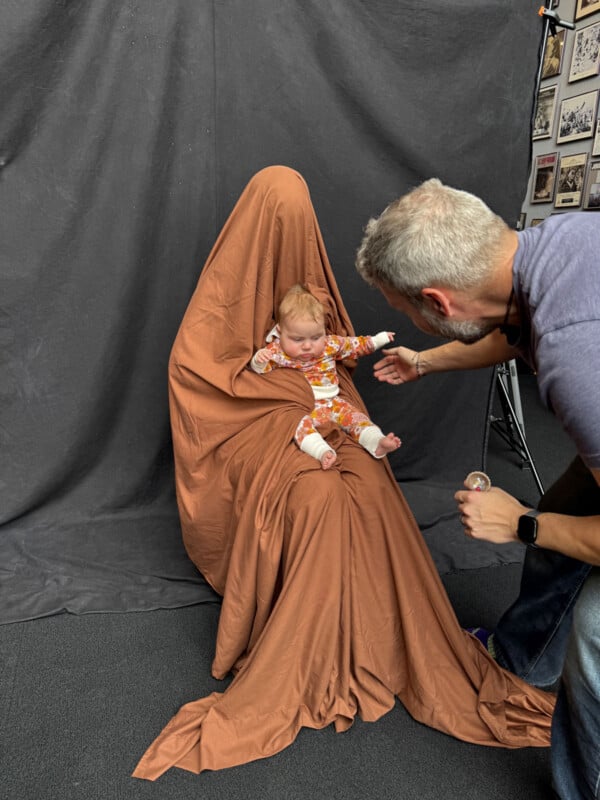
The scarcity of these original tools speaks to how quickly they became obsolete once photographic technology advanced. By the 1920s, faster lenses and more sensitive film stocks reduced exposure times to fractions of a second, rendering the Hidden Mother and the headbrace unnecessary. Original posing stands are now rare collector’s items, sometimes fetching upwards of $10,000 at auction. Balkowitsch himself uses a replica, cast at a modern foundry from a historical original, to ensure his sitters can withstand the rigors of his ten-second exposures.
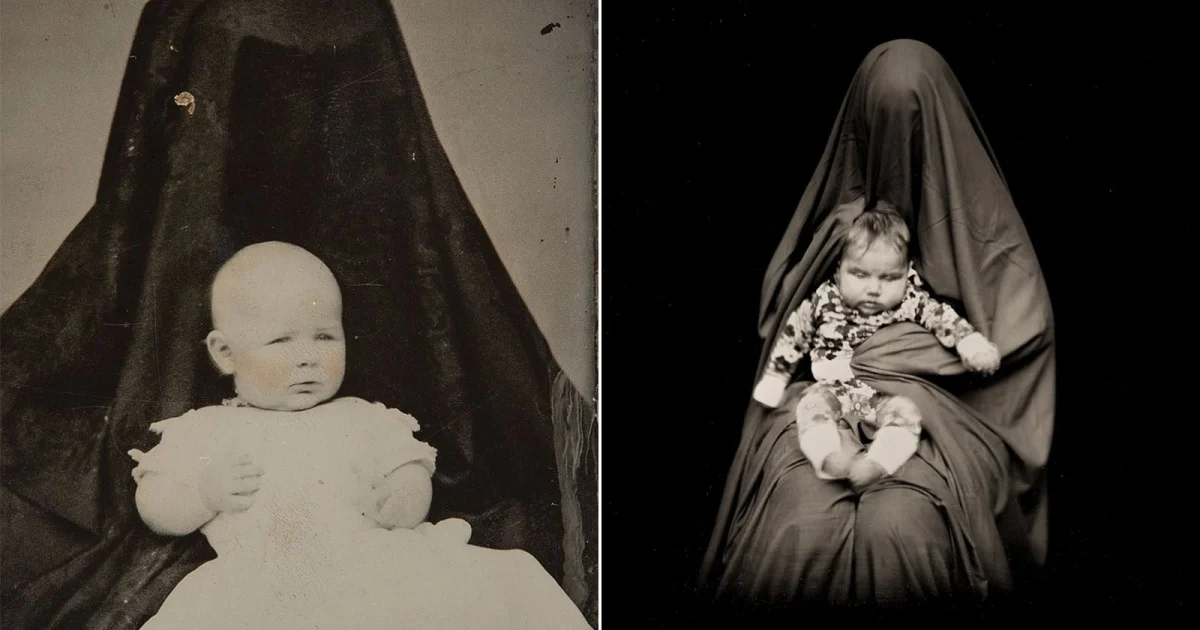
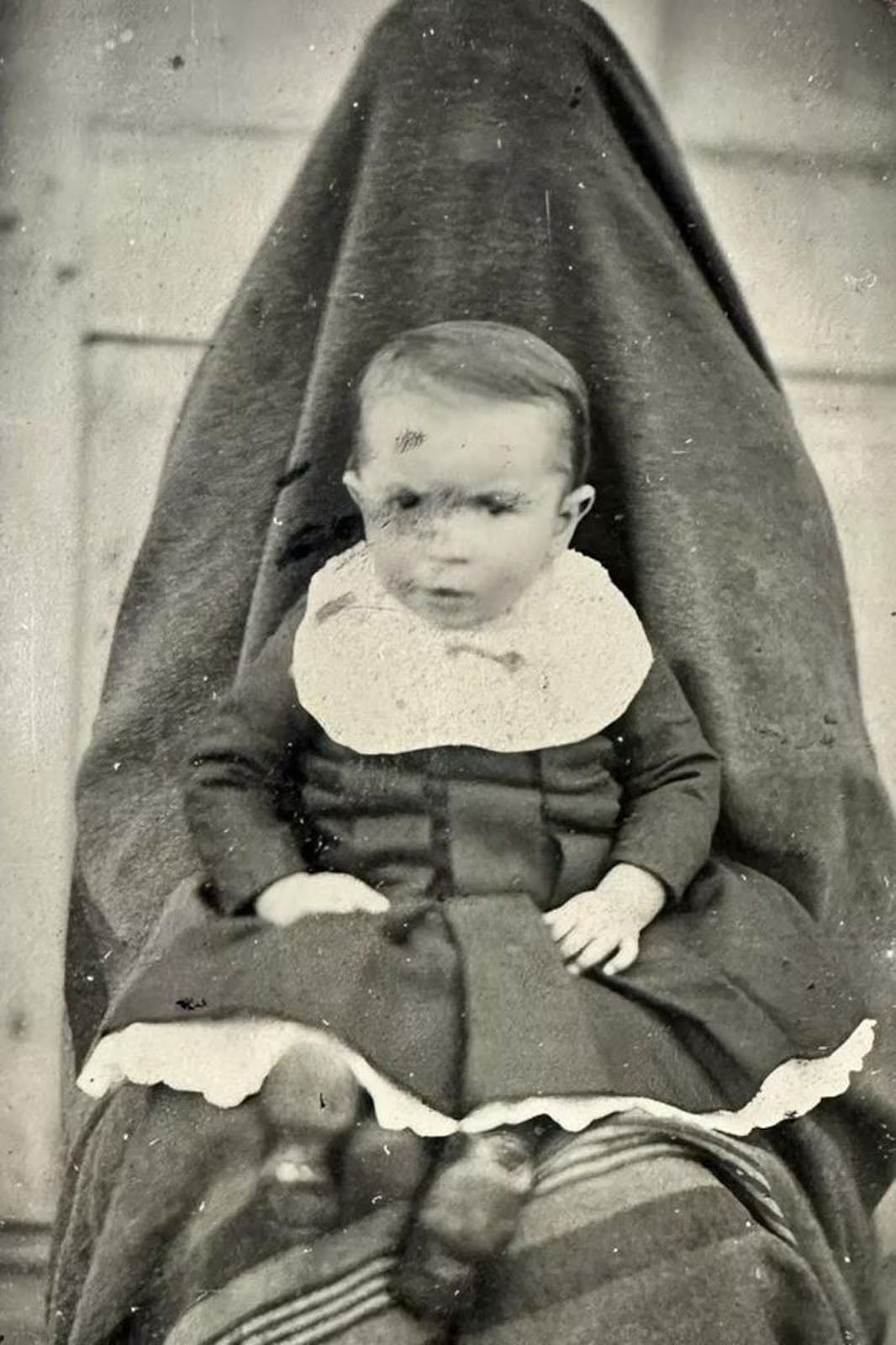
The fascination with the Hidden Mother genre has only grown in the 21st century, fueled by a modern obsession with "creepypasta" aesthetics and the uncanny. This interest has translated into significant market value. In 2013, artist Linda Fregni Nagler published The Hidden Mother, a comprehensive volume featuring over 1,000 examples of the genre. The book has since become a cult classic, with rare copies now listed for nearly $2,000 on secondary markets. These photographs, once utilitarian solutions to a technical problem, are now viewed as significant pieces of folk art and social history.
As Balkowitsch reflects on his work and the history of the medium, he raises a poignant question about the future of our current photographic era. The wet plates he produces are made of silver on glass; they are chemically stable and, barring physical breakage, are designed to last for a thousand years. They require no software to "read" and no electricity to view. They are physical objects that occupy space in the real world.
In contrast, the vast majority of the billions of digital photographs taken today exist only as strings of binary code on volatile servers. "We must ask ourselves: will all the digital photographs we are taking today make it into the future?" Balkowitsch muses. "Surely the software and hardware these photographs rely on will become obsolete and be forgotten. A very small portion, far less than 1% of the digital photographs of today, are ever printed and brought into the real world."

The Hidden Mother photographs, for all their perceived eeriness, represent a period when a single image was a monumental achievement. They are the record of a time when a mother would literally disappear into the shadows so that her child could be seen by the future. In an age of disposable digital imagery, there is a profound irony in the fact that these "ghoulish" Victorian plates—created with such struggle and agony—will likely outlast the pristine, effortless pixels of the 21st century. Until then, we are left to peer into the past, seeking out these shrouded figures and appreciating the lengths to which our ancestors went to capture a moment in time.