The report also shed light on a widening divide within the creative community. According to the survey, large-scale agencies are currently leading the charge in AI adoption, benefiting from the resources and dedicated innovation departments necessary to weather the "churn" phase. In contrast, freelancers are lagging behind. For independent creators, the cost of entry—both in terms of subscription fees and the time required to master complex new interfaces—often outweighs the immediate benefits, creating a potential competitive disadvantage in a rapidly evolving market.
Furthermore, the study broke down the specific types of content being generated. Written copy and static image creation remain the dominant use cases, significantly outpacing video production. This discrepancy is largely due to the technical barriers inherent in motion graphics. “Video is harder to produce,” Madansky noted simply. While text and images have reached a level of high-fidelity consistency, AI-generated video still faces challenges regarding temporal coherence and the sheer computational power required for professional-grade output.
Powering creative decisions
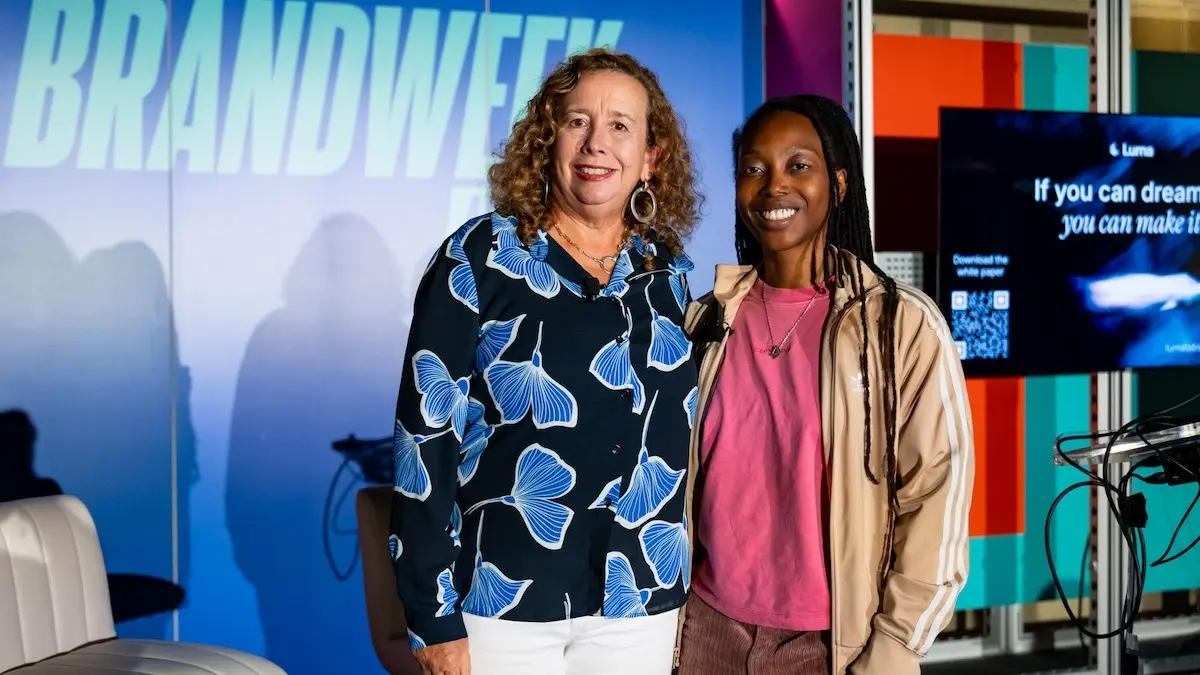
Following the data-heavy insights from the MMC report, Alexia Adana took the stage to demonstrate how these theoretical challenges are being solved in practice. Using Luma’s creative platform, Adana showcased a real-world application of AI agents designed to streamline the creative workflow for one of the world’s most recognizable brands: Oakley.
Oakley, the eyewear giant owned by Luxottica, served as the primary case study for the workshop. Adana demonstrated how a marketer can interact with a Luma AI agent via a simple chat interface, effectively removing the technical barriers that have historically slowed down the creative process.
“Think of the agent as this very powerful, pretrained tool that speaks to the generative AI models on your behalf,” Adana told the workshop attendees. “The implication here is profound: you do not need to be a technical prompter anymore to create these high-fidelity assets. You just need to be somebody with a great idea and really solid direction to give that agent to go execute.”
This shift from "technical prompting" to "creative direction" is a central theme of the 2026 landscape. It suggests a future where the creative professional’s value is rooted in their taste, vision, and ability to manage an "agentic" workforce, rather than their ability to navigate complex software menus or master the specific syntax of a prompt.
The demonstration highlighted a feature Luma calls “Brand DNA.” This process involves uploading a brand’s specific guidelines, including typefaces, color palettes, and logos, into the system. Furthermore, past successful campaigns can be uploaded, allowing the AI to learn the specific aesthetic and emotional resonance that has worked for the brand in the past. This ensures that the generated content isn’t just high-quality, but is fundamentally "on-brand."