As the advertising industry descends upon Midtown for the 2026 edition of ADWEEK House, the atmosphere is charged with a mix of technological optimism and practical skepticism. The four-day event, established as a premier headquarters for the people shaping the future of commerce and media, has become a crucible for unscripted conversations regarding the next phase of the digital revolution. While the previous few years were defined by the speculative potential of artificial intelligence, the current discourse has shifted toward a more grounded reality: the struggle for true integration.
The central question haunting the hallways of Brandweek 2026 is no longer whether marketers are using AI—the consensus is that nearly everyone is—but rather how they can use these tools with genuine efficiency. Despite the ubiquity of generative platforms, a steep learning curve persists, leaving many organizations caught between the desire for innovation and the friction of implementation.
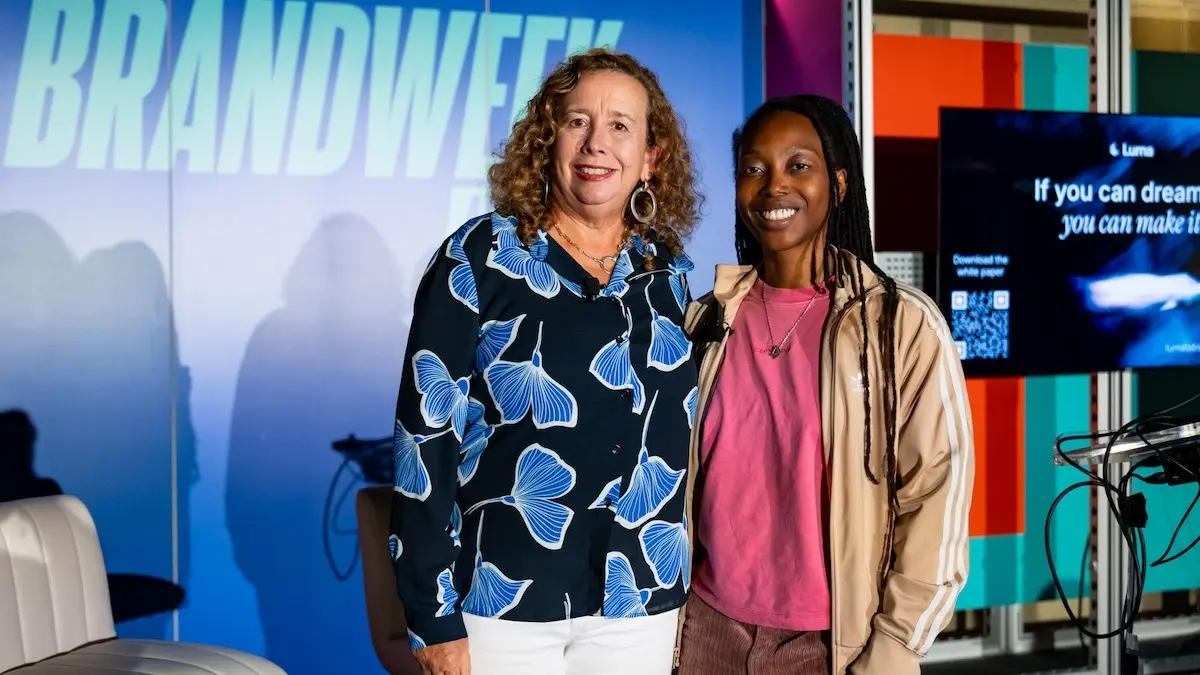
During a specialized Brandweek workshop co-hosted by Luma, industry veterans gathered to dissect these challenges. Michele Madansky, a seasoned marketing research consultant at Michele Madansky Consulting (MMC), joined forces with Alexia Adana, the forward deployed creative lead at Luma, to bridge the gap between data-driven insights and creative execution. Their presentation sought to demystify the current state of the industry while offering a glimpse into a future powered by sophisticated AI agents and integrated creative platforms.
How creatives are using AI today
To set the stage for the discussion, Madansky unveiled the findings of Luma’s first-ever annual report, titled “State of Creative Professionals and AI: 2026.” The study, which surveyed 760 creative professionals across various sectors, provides a comprehensive look at how the workforce is adapting to an automated landscape.
The headline figure from the report is staggering: 81% of creative professionals are now using AI to create and release content. On the surface, this suggests a total market takeover. However, Madansky was quick to point out that high adoption does not necessarily equate to seamless integration. The data reveals a period of intense experimentation characterized by what Madansky describes as "churn."
“On average, creative organizations evaluated 6.1 tools, adopted 4.3, and stopped using three,” Madansky explained to the audience. “This is churn. It indicates a heavy trial phase where professionals are desperately searching for the right fit, with the understanding that not every tool will work or provide a lasting impact on their specific workflow.”
This cycle of trial and error highlights a significant pain point for agencies and brands alike. The time spent onboarding, testing, and eventually discarding tools represents a hidden cost of the AI revolution. It suggests that while the industry is eager to move forward, it is still struggling to identify which technologies offer substantive value versus those that are merely flashy novelties.
The report also shed light on a widening divide within the creative community. According to the survey, large-scale agencies are currently leading the charge in AI adoption, benefiting from the resources and dedicated innovation departments necessary to weather the "churn" phase. In contrast, freelancers are lagging behind. For independent creators, the cost of entry—both in terms of subscription fees and the time required to master complex new interfaces—often outweighs the immediate benefits, creating a potential competitive disadvantage in a rapidly evolving market.
Furthermore, the study broke down the specific types of content being generated. Written copy and static image creation remain the dominant use cases, significantly outpacing video production. This discrepancy is largely due to the technical barriers inherent in motion graphics. “Video is harder to produce,” Madansky noted simply. While text and images have reached a level of high-fidelity consistency, AI-generated video still faces challenges regarding temporal coherence and the sheer computational power required for professional-grade output.
Powering creative decisions
Following the data-heavy insights from the MMC report, Alexia Adana took the stage to demonstrate how these theoretical challenges are being solved in practice. Using Luma’s creative platform, Adana showcased a real-world application of AI agents designed to streamline the creative workflow for one of the world’s most recognizable brands: Oakley.
Oakley, the eyewear giant owned by Luxottica, served as the primary case study for the workshop. Adana demonstrated how a marketer can interact with a Luma AI agent via a simple chat interface, effectively removing the technical barriers that have historically slowed down the creative process.
“Think of the agent as this very powerful, pretrained tool that speaks to the generative AI models on your behalf,” Adana told the workshop attendees. “The implication here is profound: you do not need to be a technical prompter anymore to create these high-fidelity assets. You just need to be somebody with a great idea and really solid direction to give that agent to go execute.”
This shift from "technical prompting" to "creative direction" is a central theme of the 2026 landscape. It suggests a future where the creative professional’s value is rooted in their taste, vision, and ability to manage an "agentic" workforce, rather than their ability to navigate complex software menus or master the specific syntax of a prompt.
The demonstration highlighted a feature Luma calls “Brand DNA.” This process involves uploading a brand’s specific guidelines, including typefaces, color palettes, and logos, into the system. Furthermore, past successful campaigns can be uploaded, allowing the AI to learn the specific aesthetic and emotional resonance that has worked for the brand in the past. This ensures that the generated content isn’t just high-quality, but is fundamentally "on-brand."
Once the Brand DNA is established, the creative process can move at an unprecedented pace. Adana showed how Luma utilizes “digital twins”—highly detailed, AI-rendered versions of real-life models who have been photographed and digitized. By combining these digital twins with images of the brand’s actual products, a marketer can move from a creative brief to a fully realized mood board in a matter of minutes.
During the live demo, Adana took an Oakley test case and altered the creative direction in real-time. By interacting with the agent, she was able to swap environments, adjust lighting, and iterate on the model’s positioning without the need for a costly or time-consuming reshoot. This hybrid production model—which blends traditional photography with AI-driven manipulation—dramatically speeds up the workflow while maintaining a level of quality that satisfies the demands of a premium brand like Luxottica.
However, throughout the demonstration, Adana was careful to emphasize that the technology is not intended to replace the creative professional. Instead, it is designed to empower them.
“This is all rooted in human authorship,” Adana stated firmly. “The assets are rooted in real photography and are moving through a hybrid workflow. The AI is the engine, but the human is the driver, providing the soul and the strategic intent behind every frame.”
As the workshop concluded, the takeaway for the attendees at Brandweek was clear: the era of "AI for the sake of AI" is ending. In its place, a more mature era of integration is beginning—one defined by specialized agents that understand brand identity and platforms that prioritize the human creator’s vision.
The 81% adoption rate cited by Madansky may be the current headline, but the real story lies in how brands like Oakley are moving past the "churn" to build a sustainable, high-velocity creative future. For the professionals gathered in Midtown this week, the message was one of cautious empowerment: the tools are here, the learning curve is steep, but for those who can master the role of the creative director in an automated age, the possibilities for storytelling are virtually limitless.