
Across the global economy, close to one billion workplace meetings take place every day. For senior executives, these gatherings consume the vast majority of the working day, with chief executive officers spending nearly three-quarters of their working hours in meetings. Planning, preparing for, and leading these sessions similarly absorbs the lion’s share of time for mid-level managers. Throughout the industrialized world, meetings function as both the metronomes that pace professional life and the persistent menaces that strain employee productivity.
Despite the vast amount of time consumed by workplace gatherings, organizational leaders long lacked a clear, evidence-based understanding of what these sessions truly accomplish or how to maximize their utility. For decades, meetings were notoriously difficult to study in a systematic manner. That dynamic has changed dramatically in recent years. Once a narrow research niche, "meeting science" has emerged as a rapidly growing subfield among organizational and social psychologists. The discipline has accelerated significantly as archived virtual meetings provide researchers with vast volumes of observable interaction data, offering an unprecedented window into fundamental human workplace behaviors.
At their core, workplace gatherings address deep-seated human needs to connect, communicate, and collaborate. Throughout history, people have assembled in caves, open fields, market squares, and town halls to coordinate labor, exchange ideas, establish consensus, or simply converse. However, meeting scientists define their subject of study specifically as gatherings of people structured around a deliberate goal or formal format, according to Liana Kreamer, an organizational psychologist at the Florida Institute of Technology. Kreamer coauthored a comprehensive review spanning more than three decades of meeting science published in the 2026 Annual Review of Organizational Psychology and Organizational Behavior.
Kreamer’s initial academic focus as a graduate student centered on teamwork, leadership dynamics, and professional relationships. While completing her doctorate under meeting scientist Steven Rogelberg, she recognized that workplace meetings provided an ideal environment to observe all of these phenomena simultaneously. Meetings function as a natural stage to investigate virtually any aspect of workplace interaction because they represent a fundamental mechanism through which human beings organize and socialize, as Kreamer, Rogelberg, and coauthor Jon Gray of the University of North Carolina at Charlotte noted in their review.
To evaluate what makes meetings succeed or fail, behavioral scientists rely primarily on two empirical methodologies. The first involves traditional retrospective surveys, where employees report on their experiences in real or simulated meetings. The second, increasingly popular method relies on direct observational analysis, where researchers code specific verbal and nonverbal behaviors from audio and video recordings. Analyzing these detailed behavioral interactions provides the most direct insight into group dynamics, according to Nale Lehmann-Willenbrock, an industrial and organizational psychologist who directs the Center for Better Work at the University of Hamburg in Germany.
Leading with Listening
In one observational study led by Lehmann-Willenbrock, researchers analyzed video footage of workplace meetings to examine how managerial communication styles influence team decision-making. The investigation revealed that when leaders engaged in respectful, attentive inquiry—asking questions and genuinely listening to the answers—team performance improved markedly. Conversely, performance suffered when leaders went through the motions of asking questions without paying meaningful attention to the responses.
While many empirical findings in meeting science align with common sense, researchers emphasize that daily workplace practices routinely diverge from these theoretical ideals. Studies consistently highlight active listening as a primary determinant of meeting effectiveness. Active listening requires more than passive nod-and-smile agreement; it demands that listeners provide thoughtful, constructive feedback. The shift toward virtual meetings has compromised this dynamic, as widespread muting norms often stifle the spontaneous verbal and nonverbal cues that signal active engagement.
The balance of talking time between leaders and subordinates also exerts a profound influence on meeting quality. Meeting managers and participants frequently leave the same room with starkly opposing assessments of whether a session was successful. Leaders typically speak more than anyone else in the room, which often leads them to overestimate the value and quality of the gathering. To counteract this bias, organizational experts advise leaders to actively monitor their total speaking time to ensure a wider range of voices can contribute.
A robust body of research supports a practical checklist of operational steps leaders can execute before, during, and after a meeting to ensure success. Before a session begins, organizers should carefully select appropriate physical settings, ensuring proper lighting and seating, invite only essential personnel, establish clear start and stop times, circulate an agenda in advance, define concrete goals, and preserve time for informal conversation before diving into formal topics.
Engaging Attendees
Incorporating brief periods of informal social interaction at the start of a meeting, particularly in remote settings, yields measurable performance benefits. Research conducted by Lehmann-Willenbrock demonstrates that a warm-up phase lowers social barriers for quieter and more introverted participants, enabling them to speak up and contribute more effectively once formal discussions begin.
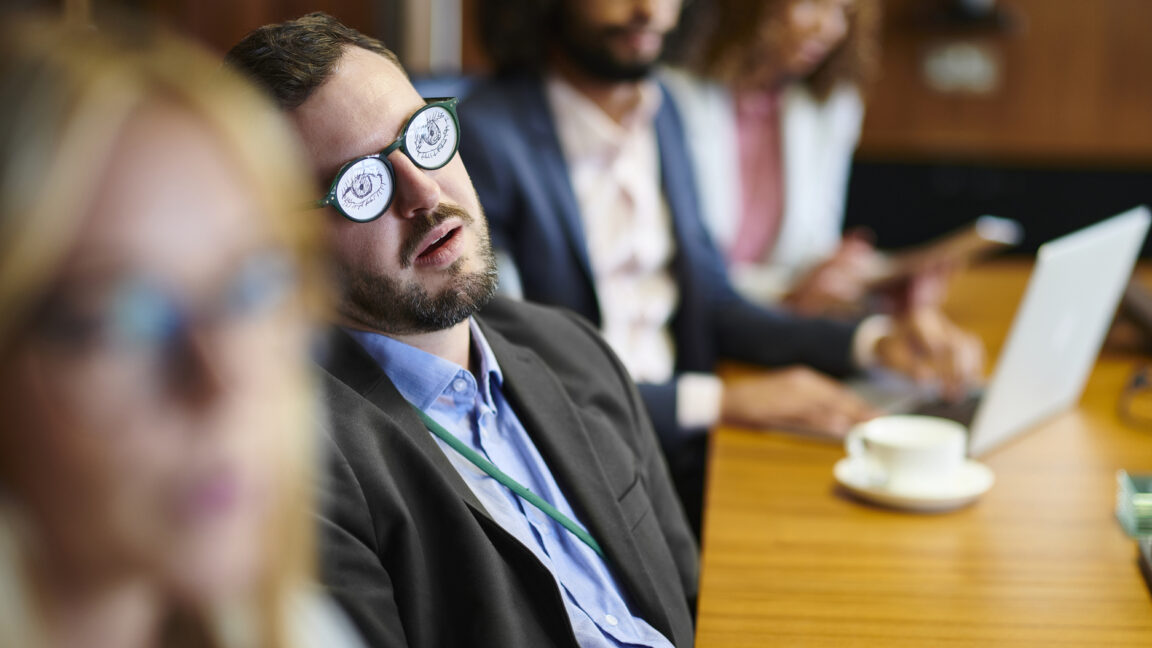
While informal pre-meeting small talk naturally occurs in physical conference rooms, it is rarely observed in virtual meeting environments. To capture these benefits remotely, researchers suggest establishing organizational norms where team members log on a few minutes early or dedicate the opening minutes of a video call to an informal check-in.
Meeting facilitators can further enhance engagement by employing structured participation techniques. Kreamer advocates for an approach known as silent brainstorming, or "brainwriting," to gather input from hesitant or shy attendees. Rather than relying on traditional verbal open-floor discussions, participants log into a shared digital space—such as a collaborative document or chat interface—and record their ideas simultaneously in silence.
A 2009 study comparing brainstorming techniques found that silent, written idea generation consistently yielded superior results compared to traditional open verbal sessions. Kreamer routinely uses this strategy in academic settings, noting that it eliminates the pressure to interrupt others or speak on the spot. After a short period of silent writing, the group collectively reviews and evaluates the compiled ideas.
Recent meeting science research has also turned its attention toward supporting neurodiverse workplace participants. Zofia Walters, a doctoral researcher working alongside Kreamer at the Florida Institute of Technology, has focused on identifying how meeting formats affect employees with Attention-Deficit/Hyperactivity Disorder (ADHD). Practices such as reducing sensory distractions, providing written agendas, utilizing shared calendars, and instituting regular check-ins benefit the workforce broadly, but they are particularly critical for neurodivergent staff.
In a study examining 147 workers across various industries, Walters evaluated participant experiences following their most recent virtual meeting. Her survey tracked perceived meeting effectiveness, post-meeting fatigue, emotional state, camera usage duration, and self-reported multitasking habits, alongside formal or informal ADHD diagnoses.
Walters found that participants with ADHD reported significantly higher levels of meeting-induced fatigue and worse emotional states than their non-ADHD peers, particularly when required to keep their video cameras on for extended periods. Notably, the data suggested that secondary tasks—such as responding to emails during a presentation—may serve as an active coping mechanism that helps individuals with ADHD manage boredom and physical restlessness during lengthy calls.
Sustaining the benefits of a meeting requires systematic follow-through once the call ends. Research published by Lehmann-Willenbrock and colleagues in Organizational Dynamics highlights that leaders must clearly assign action items, execute concrete implementation steps, and periodically evaluate employee satisfaction and meeting efficacy to ensure that group discussions translate into tangible organizational outcomes.
The Downsides—and Upsides
The cumulative weight of poorly managed meetings imposes a clear psychological and operational burden on employees. Studies show that workers anticipate feeling less productive and more emotionally drained on days heavily saturated with back-to-back meetings, particularly when their workload requires deep, complex focus.
A central driver of meeting fatigue is the lack of explicit intent. Ava Scott, a cognitive scientist at the University of Copenhagen who studied workplace habits among Microsoft employees, notes that meetings are frequently treated as a default mechanism for task management without clear operational targets, leaving participants feeling adrift.
Recurring status meetings are particularly prone to losing focus over time. In Scott’s research, workers frequently described successive recurring calls as blurred and repetitive. When a recurring session lacks a distinct goal and competes with pressing deadlines, maintaining it on the calendar becomes counterproductive. In response to these findings, several major corporations, including the e-commerce company Shopify, have taken the step of systematically clearing all recurring meetings from internal employee calendars.

Despite these drawbacks, meetings remain an indispensable instrument for professional advancement and knowledge transfer. A 2026 study of more than 9,000 Norwegian workers led by Harvard University economist David Deming and published by the National Bureau of Economic Research (NBER) evaluated the economic trade-offs of corporate gatherings. Utilizing data collected by the research firm Norstat, the study revealed that higher meeting intensity was positively correlated with subsequent wage growth and accelerated on-the-job skill acquisition.
While the correlational nature of the NBER study prevents establishing direct causation, the findings suggest that meetings offer crucial opportunities for junior employees to observe, interact with, and learn from senior colleagues. Although the immediate operational cost of pulling highly paid staff into meetings is significant, the long-term benefits of organizational learning may outweigh those expenses. As the study’s authors framed it, meetings act as the "broccoli of work"—frequently disliked by employees, yet fundamentally beneficial for long-term career development.
Strategies for Success
To optimize meeting performance, researchers have identified several nuanced tactical adjustments, including the strategic use of humor. Authentic, supportive, and positive humor can foster creative problem-solving and bolster team cohesion. However, video analysis of corporate meetings in Germany conducted by Lehmann-Willenbrock indicates that humor is effective primarily when team members already possess established, trusting relationships that make lighthearted banter feel psychologically safe.
When humor is introduced in formal or unfamiliar environments, social hierarchies significantly influence who feels comfortable making jokes. Science educator and comedian Vita Stout investigated this dynamic during the 2022 International Congress for Bat Research in Austin, Texas. Stout transcribed the timing, exact quotes, and audience reactions to jokes delivered during research presentations.
The study, coauthored with bat researchers and published in Proceedings of Biological Sciences B, concluded that while well-timed humor builds community in academic settings, joke-telling was disproportionately dominated by established, senior male scientists. Early-career researchers and individuals from underrepresented demographic groups were far less likely to use humor during formal presentations.
Timing and scheduling represent another critical component of meeting design. Meeting planners must account for basic human circadian rhythms and avoid scheduling intensive collaborative work during the post-lunch dip in physiological energy. Lehmann-Willenbrock notes that academic and corporate environments frequently violate this principle by slating complex policy or administrative discussions for early afternoon hours when participants experience peak fatigue.
Scheduling practices must also accommodate personal and family commitments outside of work. Session organizers who schedule mandatory late-afternoon gatherings—such as scheduling inclusion committees at 5:00 p.m.—risk alienating employees with caregiving responsibilities.
Finally, organizational leaders must navigate cultural variations in meeting norms, particularly regarding punctuality. In a cross-cultural survey of 1,432 professionals across six nations, Lehmann-Willenbrock and her collaborators analyzed worker reactions to meeting leaders arriving 5, 10, or 15 minutes late. Participants from the United States and the Netherlands reported high levels of frustration and irritation when leaders were tardy. In contrast, respondents from China and Chile demonstrated significantly greater tolerance for late arrivals under identical conditions.
Despite thirty years of accumulated data, the vast majority of meeting science literature remains centered on North American and European corporate environments. Researchers like Kreamer emphasize that expanding empirical studies into broader international contexts remains an essential next step for the field, ensuring that management best practices can be adapted accurately across a globalized workforce.