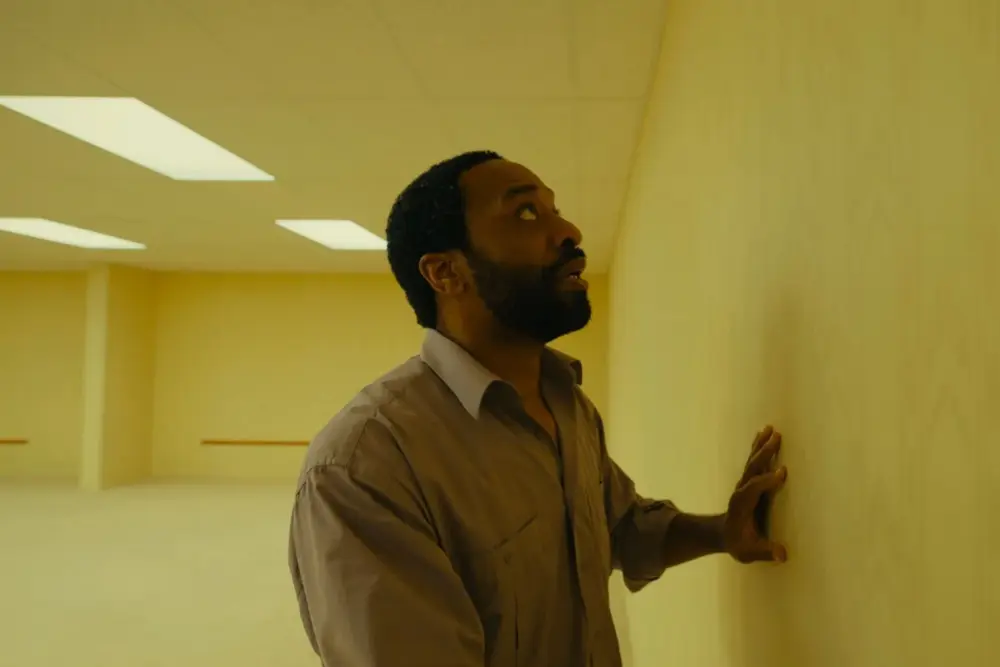
ZURICH — In the rapidly evolving landscape of global cinema, the traditional barriers between digital content creation and silver-screen prestige are not just thinning; they are being dismantled by a new generation of filmmakers. Over the past three months, the corridors of every major film festival and industry gathering have echoed with two names that have become synonymous with a seismic shift in audience behavior: Kane Parsons and Curry Barker. Their respective projects, "The Backrooms" and "Obsession," have done more than just turn a profit—they have fundamentally challenged the industry’s understanding of how to engage the elusive Gen Z demographic.
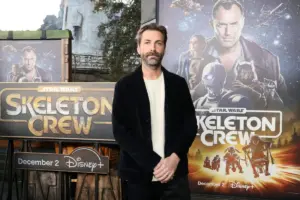
At the Zurich Summit on Saturday, the air was thick with the realization that the "YouTube-to-Cinema" pipeline is no longer a theoretical experiment but a proven economic engine. Parsons, the 20-something visionary behind the "Backrooms" phenomenon, sat as a central figure on a panel that featured some of the most influential titans in the business. Alongside him were Robbie Brenner, President and Chief Content Officer at Mattel Studios; Michael Barker, Co-President of Sony Pictures Classics; and Bill Kramer, CEO of the Academy of Motion Picture Arts and Sciences. The discussion served as a post-mortem for a summer that saw Parsons’ A24-produced adaptation of his analog web series gross an astounding $400 million, a figure that has sent shockwaves through studio boardrooms.
Despite the massive commercial success of "The Backrooms" as a tentpole of modern horror, Parsons himself remains skeptical of the very labels used to sell his work. As he prepares for the sequel to his record-breaking debut, Parsons revealed to the Zurich audience that his creative process is far removed from the tropes of the genre.
"I don’t view it as a horror project," Parsons stated, addressing the industry insiders. "I think that’s just naturally in the path of least resistance from a marketing perspective and is what seems comfortable to people as a framing device."
For Parsons, the "horror" tag is a reductive tool used by distributors to categorize a complex, atmospheric narrative that grew out of a "decentralized IP presence online." He expressed a desire to move beyond these industry-imposed structures in his future work. "I’m gonna try to stay as oblivious to those labels as possible," he added. "I think I have more creative control now with future projects. So those sort of structures will probably be a little less forceful, I think, in the future."
The success of Parsons and Curry Barker has provided a much-needed lifeline to the theatrical experience, which many feared was losing its grip on younger viewers. Bill Kramer noted that the transition of fandoms from YouTube to the cinema is a landmark moment in film history. He emphasized that the "Backrooms" phenomenon proved that online communities are not just passive consumers of short-form clips but are willing to migrate in droves to the communal setting of a dark theater.
"Young people want to go back to movie theaters," Kramer said, reflecting on the summer’s data. "Fandoms shift; theatrical can inform a fandom, YouTube can inform a theatrical fandom. It’s all connected in a way that I don’t think we thought was possible. And that, for me, was a big takeaway of this summer. It gives me great hope for the film industry because we’re seeing young people come back to the movies, and that’s really key."
The conversation at the summit frequently touched upon the psychological relationship Gen Z has with digital media. While there is a common industry assumption that younger audiences have been conditioned by "algorithmically incentivized" short-form content to have shorter attention spans, Parsons offered a more nuanced—and perhaps more hopeful—perspective. He suggested that the constant barrage of "weaponized" algorithms has created a counter-desire for the focused, immersive experience that only a cinema can provide.
"I feel like the sentiment is more that this is weaponized," Parsons said, referring to the way social media platforms compete for attention. "This algorithmically incentivized reality is not really something I think most people enjoy about their own wiring. They don’t love that their attention spans are being sucked into the spiral of mostly consuming stuff that is that short. Going into a closed room without outsider interference lowers the tempo in a way that is refreshing."
This sentiment was echoed by Michael Barker of Sony Pictures Classics, who drew a historical parallel between the current moment and the late 1960s. He compared the impact of "Obsession" and "The Backrooms" to the cultural disruption caused by Dennis Hopper’s "Easy Rider" in 1969.
"’Easy Rider’ came out in the middle of the Vietnam War, in the middle of a right-wing presidency," Barker observed. "It spoke to young people; they responded in huge numbers, and it affected the movies that were gonna be made afterwards. I think this is that moment, this summer with ‘Obsession’ and ‘Backrooms.’"
Barker’s comparison suggests that the industry is at the precipice of a "New Hollywood" era, where the traditional gatekeepers must make room for creators who have built their own audiences from the ground up, independent of the studio system. These creators are bringing with them a "newness" and a "detachment from more cyclical cultural icons that keep eating themselves," as Parsons described it.
While the focus remained on the rising stars of the digital age, the panel did not ignore the traditional blockbusters that continue to anchor the industry. Robbie Brenner was asked about the future of the "Barbie" franchise following Greta Gerwig’s massive success. Brenner’s response was a reminder that while the industry is looking for new IP, it is also eager to sustain its current hits.
"Look, we all wanna have a ‘Barbie’ sequel," Brenner said. "I mean, who doesn’t wanna see the sequel to ‘Barbie’? And I’m sure at some point in time there will be one. We all want it to happen. We’ll see."
The intersection of traditional institutions and new-age platforms was further highlighted when Bill Kramer discussed the Academy’s future. In a move that mirrors the shifting tides of media consumption, the Academy of Motion Picture Arts and Sciences has secured a multi-year agreement with YouTube. Starting in 2029 and running through 2033, the deal grants YouTube exclusive global rights to stream the Oscars live and free worldwide.
Kramer, who described the agreement as "a very good deal," noted the importance of such partnerships for the Academy’s longevity. "We are a nonprofit, so this also allows us to sustain our great work," he added, smiling. This partnership underscores a broader trend: even the most venerable institutions in Hollywood are recognizing that their survival depends on meeting the audience where they live—on platforms like YouTube.
As the Zurich Summit concluded, the prevailing message was one of cautious optimism and necessary adaptation. The industry is no longer just "capitalizing on momentum"; it is witnessing a fundamental change in the DNA of cinema. The success of Kane Parsons has demonstrated that the next generation of filmmakers is not waiting for permission to create. They are building their worlds in the decentralized spaces of the internet and bringing their audiences with them when they finally decide to step into the "closed room" of the movie theater.
For Parsons, the goal remains the preservation of creative integrity amidst the noise of marketing and genre expectations. As he navigates the high-stakes world of $400 million sequels and panels with industry titans, he remains a spokesperson for a generation that is tired of the "spiral" and hungry for something that feels genuinely new. Whether the industry can keep up with this shift remains to be seen, but for now, the path forward seems to lead directly through the digital landscapes that creators like Parsons have spent years cultivating.