"Young people want to go back to movie theaters," Kramer said, reflecting on the summer’s data. "Fandoms shift; theatrical can inform a fandom, YouTube can inform a theatrical fandom. It’s all connected in a way that I don’t think we thought was possible. And that, for me, was a big takeaway of this summer. It gives me great hope for the film industry because we’re seeing young people come back to the movies, and that’s really key."
The conversation at the summit frequently touched upon the psychological relationship Gen Z has with digital media. While there is a common industry assumption that younger audiences have been conditioned by "algorithmically incentivized" short-form content to have shorter attention spans, Parsons offered a more nuanced—and perhaps more hopeful—perspective. He suggested that the constant barrage of "weaponized" algorithms has created a counter-desire for the focused, immersive experience that only a cinema can provide.
"I feel like the sentiment is more that this is weaponized," Parsons said, referring to the way social media platforms compete for attention. "This algorithmically incentivized reality is not really something I think most people enjoy about their own wiring. They don’t love that their attention spans are being sucked into the spiral of mostly consuming stuff that is that short. Going into a closed room without outsider interference lowers the tempo in a way that is refreshing."
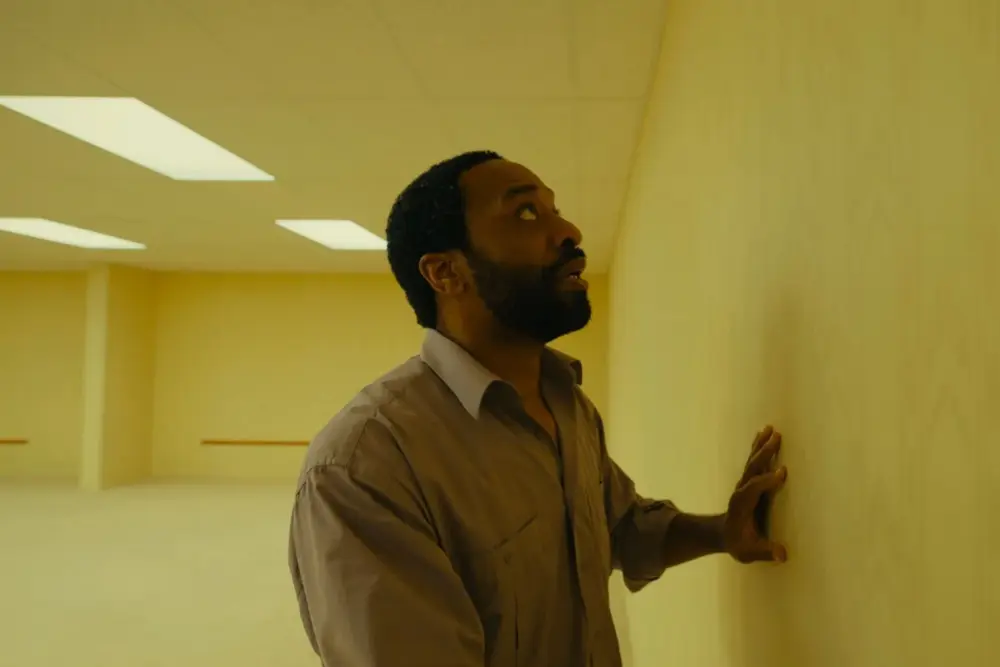
This sentiment was echoed by Michael Barker of Sony Pictures Classics, who drew a historical parallel between the current moment and the late 1960s. He compared the impact of "Obsession" and "The Backrooms" to the cultural disruption caused by Dennis Hopper’s "Easy Rider" in 1969.
"’Easy Rider’ came out in the middle of the Vietnam War, in the middle of a right-wing presidency," Barker observed. "It spoke to young people; they responded in huge numbers, and it affected the movies that were gonna be made afterwards. I think this is that moment, this summer with ‘Obsession’ and ‘Backrooms.’"
Barker’s comparison suggests that the industry is at the precipice of a "New Hollywood" era, where the traditional gatekeepers must make room for creators who have built their own audiences from the ground up, independent of the studio system. These creators are bringing with them a "newness" and a "detachment from more cyclical cultural icons that keep eating themselves," as Parsons described it.