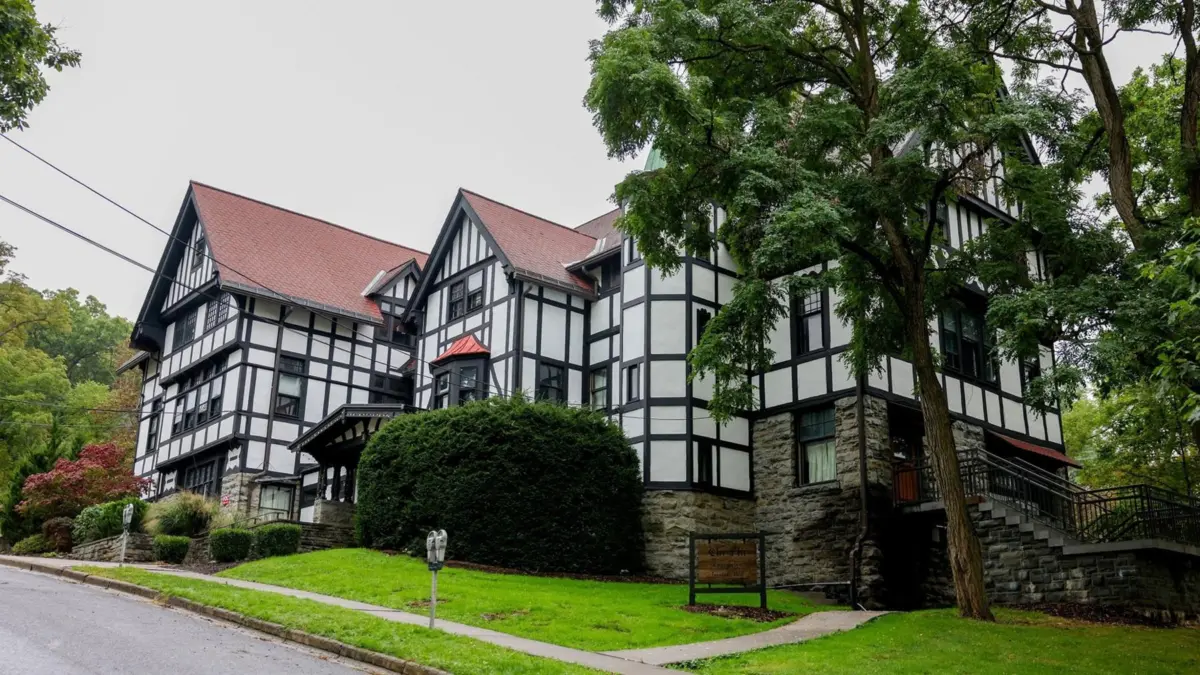
In a major legal development that has reignited campus outrage and drawn national attention to the Ivy League, New York state prosecutors have officially reopened a criminal investigation into the alleged gang rape of a female student at a Cornell University fraternity house. The decision by local authorities follows the filing of a highly publicized civil lawsuit by the survivor, identified in court documents as Jane Doe, who accuses the university of failing to protect her and failing to adequately discipline the men involved.
The case, which centers on events that took place in October 2024, has sparked intense public scrutiny, student protests, and a fierce debate over institutional accountability. Tompkins County District Attorney Matthew Van Houten announced that his office would convene a grand jury to review the evidence and determine whether criminal charges are warranted. This represents a significant reversal from the prosecutor’s initial assessment two years ago, when authorities concluded there was insufficient evidence to pursue criminal charges.
The reopening of the case comes after Jane Doe filed a sweeping, 101-page civil lawsuit on September 16, detailing a harrowing account of being drugged and assaulted by multiple members of the university’s Chi Phi fraternity. The civil suit names Cornell University, the national fraternity organization, the local chapter, and the individual men involved—who have been referred to publicly and in campus discourse as the "Cornell Seven."
For its part, Cornell University has stated that it supports presenting the case to a grand jury, while simultaneously rejecting claims that it failed to punish those involved as "false."
What does the woman allege?
According to the civil complaint, the incident occurred on the night of October 19, 2024, when Jane Doe, then a 20-year-old undergraduate student at Cornell, was allegedly subjected to an hours-long assault at the Chi Phi fraternity house in Ithaca, New York. The lawsuit alleges that Doe was heavily intoxicated and under the influence of both alcohol and the drug ketamine, leaving her physically incapacitated and entirely unable to provide legal consent.
On the evening in question, Doe had reportedly been socializing with her sorority sisters. After consuming alcohol, she became separated from her friends and, according to the lawsuit, "stumbled alone" to the nearby Chi Phi fraternity house to visit a male acquaintance. It was there, the lawsuit claims, that she was targeted and repeatedly assaulted by seven members of the fraternity.
The legal action alleges multiple causes of action, including sexual assault and battery, negligence, breach of contract, and violations of New York’s Human Rights Law. Doe’s legal team contends that the university was negligent in its duty of care to its students and breached its contractual obligations by failing to maintain a safe campus environment and failing to properly handle the reporting and disciplinary process.
The lawsuit also details the severe psychological toll the incident took on the young woman. Her attorney stated that in the immediate aftermath of the assault, Doe was "traumatised, numb and unable to function or accept the horror of what had happened." It was not until November 8, 2024, nearly three weeks after the night of the incident, that she felt able to formally report the assault to the Cornell University Police Department.
Public anger surrounding the case intensified following allegations in the lawsuit regarding how the university disciplined the accused students. According to the complaint, some of the men involved were "afforded the opportunity to mitigate their conduct by submitting essays" as part of their disciplinary process. While Doe’s attorney confirmed that two of the students were eventually expelled from the university, the perception that others received lenient, academic-style punishments fueled widespread outrage.
This outrage culminated on September 21, when the editorial board of Cornell’s student newspaper took the extraordinary step of publishing the names of the individual defendants listed in the civil lawsuit. In a scathing editorial titled "Cornell Won’t, We Will," the student journalists argued that the university’s administrative handling of the case lacked transparency and failed to hold the perpetrators publicly accountable. The publication of the names triggered a massive social media outcry and renewed pressure on both university officials and local law enforcement to take further action.

What was in the fraternity Snapchat and text messages?
Central to both the civil lawsuit and the renewed criminal investigation is a trail of digital evidence, including group chat logs and subsequent text messages exchanged between the parties.
Among the evidence provided to prosecutors by the Cornell University Police Department in November 2024 was an image of a Snapchat group chat titled "Chi Phi Actives." In this chat, which occurred just before 2:00 a.m. local time on October 20, 2024—the night of the alleged assault—fraternity members can be seen discussing Jane Doe. Using highly vulgar and derogatory language, members of the chat alerted one another to the potential for a sexual encounter with Doe, describing it as "free."
In addition to the Snapchat logs, public attention has focused on a series of text messages reportedly exchanged between Jane Doe and one of the defendants two days after the incident. These messages, which were obtained and published by CBS News New York, paint a complex picture of the immediate aftermath.
In the text exchange, the male student appeared to apologize to Doe for the events of that night, writing that he was sorry for "how things went down." He noted that his own memory of the evening was "kinda fuzzy," adding that both he and another fraternity member felt guilty for being too intoxicated to "shut it down and kick people out before it got way out of hand."
Jane Doe’s response in the text chain reflected her own state of confusion and intoxication at the time. She replied that her memory of the night was also "super clouded" and acknowledged that they had all been highly intoxicated. In the message, she wrote that "non(e) of the sexual stuff was illegal" and indicated that she had enjoyed spending time with him and the other student. However, she also explicitly referenced the presence of other men and drugs, suggesting that they smoke together again in the future but "leave out" what she described as "the extra 5 billion men and ketamine."
How did Cornell respond?
Following Jane Doe’s initial report to campus police in November 2024, Cornell University released a public statement acknowledging "serious and deeply disturbing allegations of drug abuse and sexual violence at the Chi Phi fraternity house." The university announced the immediate suspension of the local Chi Phi chapter, as well as the temporary suspension of several individual students pending further investigation.
In tandem with the campus police investigation, Cornell initiated an internal disciplinary review and a formal civil rights inquiry under Title IX—the federal law that prohibits sex discrimination and sexual misconduct in educational institutions receiving federal funding.
In the wake of the newly filed civil lawsuit, Cornell University has vigorously defended its administrative response, rejecting claims that it failed to adequately investigate the matter or punish those responsible. In a public statement, the university called the allegations that it ignored or brushed aside the assault "false."
According to the university, the case was referred to a "panel of trained faculty and staff" tasked with adjudicating student conduct violations. Cornell stated that this panel issued "a range of sanctions, which included expulsions and suspensions from Cornell."
Addressing the highly controversial claim that the accused students were allowed to write essays to mitigate their punishments, Cornell did not deny that writing assignments were part of the disciplinary outcomes. However, the administration clarified that "none of the individuals charged were offered the opportunity to write essays as a sole consequence of their involvement."

In a follow-up statement, Cornell reiterated that "temporary suspensions and other restrictive measures" were implemented immediately upon receiving the report in 2024. The university described the events of 2024 as "appalling then and remain so now," adding, "We are doing all we can to foster a culture where sexual misconduct is never tolerated."
As a permanent consequence of the investigation, the Xi Chapter of the Chi Phi fraternity was officially closed in 2024 and remains permanently barred from operating on the Cornell campus.
Why is the case being reopened?
The decision to reopen the criminal investigation marks a dramatic shift in the legal trajectory of the case. Tompkins County District Attorney Matthew Van Houten announced that his office would conduct a thorough review of the case file to determine the appropriate criminal charges, which will then be presented to a grand jury.
Under the United States legal system, a grand jury is convened by prosecutors to examine evidence, hear witness testimony, and decide whether there is probable cause to bring formal criminal charges against individuals. Van Houten emphasized that the prosecution would proceed in "the most objective and impartial means possible."
Explaining why his office did not pursue criminal charges when the assault was first reported two years ago, Van Houten stated that the evidence available at the time, specifically the initial statements provided by the victim, did not meet the high legal standard required to secure a conviction.
To prepare for the grand jury presentation, the District Attorney’s office has reached out to Jane Doe and her legal representatives to request additional information and clarify discrepancies between her initial police statements and the allegations detailed in the recent civil lawsuit.
In a public statement detailing the decision, Van Houten highlighted what he described as significant differences between Doe’s original account to campus police and the claims in her 101-page civil complaint. "Jane Doe’s sworn statement in November of 2024 did not allege that she was drugged against her will or gang raped," Van Houten said. "On the contrary, Jane Doe’s statement described her participation in drug use and sexual conduct as voluntary, conscious, and consensual."
However, this characterization of Doe’s initial reporting has been challenged by newly revealed details. CBS News New York reported that it obtained a full transcript of the audio-recorded interviews conducted by the Cornell University Police Department, which began on November 14, 2024—more than three weeks after the incident.
According to the transcript, Doe did initially tell investigators, regarding the very beginning of the encounter, "I was pretty OK with all of this." However, as she described the subsequent events and the involvement of the other men, her account shifted dramatically. The transcript reveals that she told police, "I can say with 100% confidence I was raped."
When questioned about this discrepancy, District Attorney Van Houten admitted to CBS News that he had never actually seen or reviewed the full, unredacted transcripts of those campus police interviews during the initial 2024 evaluation of the case.