A mid-air crisis aboard a Flydubai flight traveling from the United Arab Emirates to Israel was triggered by a co-pilot who launched a violent assault on the aircraft’s captain using a cockpit crash axe, according to official statements from the UAE Prosecutor General. The harrowing incident, which occurred high above the Middle East, briefly sent the passenger jet into a terrifying, uncontrolled descent before the combined efforts of the wounded pilot and a group of courageous passengers managed to subdue the attacker, ultimately preventing a catastrophic aviation disaster.
The flight, which departed from Dubai International Airport bound for Tel Aviv’s Ben Gurion Airport, was carrying more than 170 passengers and crew members. Approximately two and a half hours into what should have been a routine journey, the aircraft suddenly and violently plunged 17,000 feet (approximately 5,200 meters) from its cruising altitude. The rapid drop sparked widespread panic in the cabin as the plane’s flight systems registered a severe emergency, leaving those on board to fear the worst as the aircraft hurtled toward the ground.
The weapon used in the cockpit assault had initially been a point of intense speculation and confusion. Early accounts from passengers on board suggested that the attacker may have been armed with a knife, raising urgent security questions about how a weapon could have been smuggled onto such a highly sensitive and heavily secured international flight path. However, the UAE Attorney General, Hamad Saif Al Shamsi, later clarified to state media that the weapon used was actually a crash axe. Crash axes are standard safety equipment mandated on commercial aircraft, typically kept securely inside the cockpit to be used by flight crews in the event of emergencies, such as escaping a damaged cabin or accessing electrical panels behind interior walls. Because the weapon was already present within the secure flight deck, the attacker did not need to bypass airport security checkpoints with a weapon.
The terrifying sequence of events began to unfold deep into the flight. As the aircraft suddenly pitched downward, the cockpit transponder broadcasted a "squawk 7700" code, which is the international signal for a general emergency. Shortly thereafter, the signal was changed to "squawk 7500," the specific transponder code used to report "unlawful interference" or a hijacking in progress. This signal immediately alerted regional air traffic control towers that a struggle for control was occurring on board the aircraft.
Passengers inside the cabin described a scene of sudden, violent motion and absolute terror. Almog Itali, one of the passengers on the flight, recalled the exact moment he realized the aircraft was in grave danger. In an interview, Itali described the sensation as being akin to a malfunctioning amusement park ride. He noted that the airplane suddenly began to drop rapidly, creating a massive, crushing G-force that pinned passengers to their seats. According to Itali, the aircraft fell precipitously for about 20 to 30 seconds before momentarily balancing out, only to begin another rapid, steep descent. It was during this second terrifying drop that passengers realized a crisis was occurring at the front of the plane and began rushing toward the cockpit door.
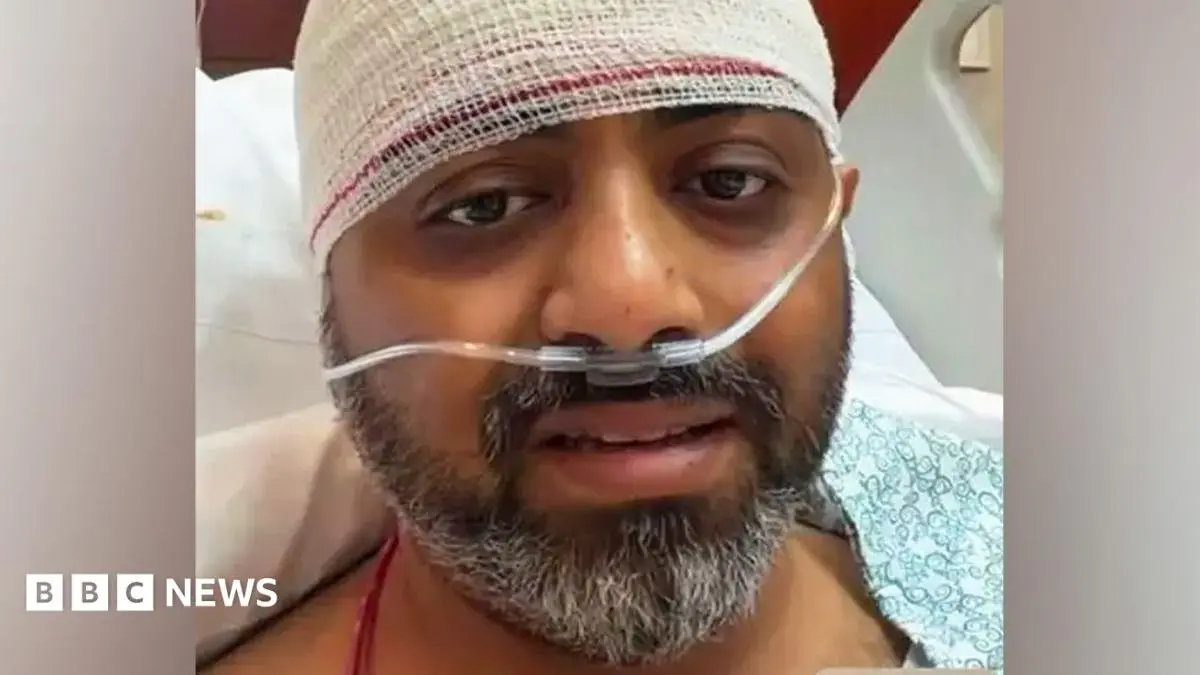
Inside the cockpit, the flight’s captain, Smit Machchhar, was fighting for his life. Having been severely injured and stabbed during the initial onslaught by his co-pilot, Captain Machchhar was lying on the cockpit floor, bleeding and physically weakened. Despite his critical injuries, the captain remained conscious enough to realize that the aircraft was rapidly losing altitude and that he had to take immediate action to save the lives of everyone on board. Recalling the life-or-death struggle, Captain Machchhar explained that he told himself he had to muster one last physical push to unlock and open the armored cockpit security door from the inside. This final, exhausting effort succeeded, allowing the passengers who had gathered outside in the galley to breach the flight deck and intervene.
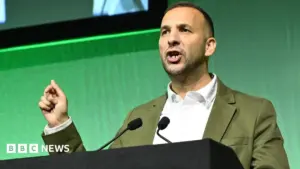
The alarm in the passenger cabin had first been raised by an Israeli passenger, Tali Manes, who heard a violent commotion and shouting coming from the cockpit area. Her husband, Zvika Manes, immediately sprang into action alongside three other passengers: Yaniv Hayun, Dr. Shota Musayev, and Asaf Rajuan. Seizing the opportunity when Captain Machchhar managed to partially open the secure door from the inside, the men rushed into the cockpit to confront the attacker.
Yaniv Hayun, one of the passengers who entered the flight deck, described the chaotic scene inside. In a video statement released by the Israeli Prime Minister’s Office, Hayun recalled that the co-pilot was actively and frantically trying to destroy the cockpit’s flight instruments in a deliberate attempt to disable the aircraft and prevent anyone from recovering control. Hayun acted quickly, placing the attacker in a chokehold and physically dragging him out of the cockpit into the forward galley, where other passengers rushed forward to help pin the assailant to the floor and secure him.
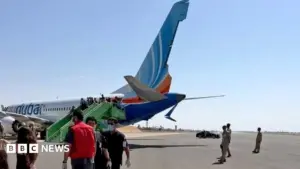
After removing the attacker from the controls, Hayun returned to the cockpit to assist. He stated that he pulled back on the aircraft’s controls to help stabilize the diving plane. The aircraft began to level out, at which point another pilot on board informed Hayun that they were taking over manual control of the aircraft. With the attacker successfully subdued and bound in the cabin, two reserve pilots who were on board the flight took their positions at the controls and managed to fly the aircraft to a safe emergency landing in neighboring Saudi Arabia.
The identity and background of the rogue co-pilot have become a central focus of the ongoing international investigation. While official government confirmation of his identity is still pending, multiple major global media outlets, including Reuters, CNN, and The New York Times, have identified the attacker as Hamam al-Hammami. Israeli Prime Minister Benjamin Netanyahu confirmed that the co-pilot is an Omani national.
Subsequent inquiries into Al-Hammami’s professional history revealed a troubled past in the aviation industry. Reports from US media outlets indicated that while previously employed by Oman Air, the national carrier of the Sultanate of Oman, Al-Hammami had been abruptly removed from active flight training. The decision to pull him from pilot training reportedly stemmed from deep concerns harbored by airline officials regarding his increasingly radical religious and political views. Rather than being terminated, however, he was reassigned to a ground-based, non-flight role within the Omani airline.
In addition to his employment history, educational institutions have provided details about Al-Hammami’s academic background. Buckinghamshire New University, located in the United Kingdom, confirmed that Al-Hammami had enrolled in and completed a three-year distance-learning program with the institution. He graduated in 2023 with a Bachelor of Science degree in aviation management. The university was quick to clarify, however, that his coursework was entirely academic and focused on management, emphasizing that he did not undergo any practical pilot training or flight instruction under the auspices of the UK school.
The political and security ramifications of the mid-air attack have reverberated across the region, drawing strong reactions from top officials in both Israel and the United Arab Emirates. Speaking in an interview with Fox News, Israeli Prime Minister Benjamin Netanyahu detailed the chilling moments immediately following the attacker’s subdual. According to Netanyahu, once the co-pilot was pinned down by passengers, he repeatedly screamed at the cabin crew, "Kill me, kill me!"
Netanyahu pointed to this behavior as clear evidence of the attacker’s state of mind, stating, "So, it’s clear that he was suicidal… It looks very likely that he was going to down the plane." The Israeli Prime Minister further asserted that the Omani co-pilot had "underwent Islamist radical indoctrination." In a separate interview with CNN, Netanyahu praised the quick actions of the wounded captain, the cabin crew, and the passengers, declaring that their bravery had "managed to prevent a 9/11 disaster" by stopping the plane from being weaponized or crashed into a populated area.
In the United Arab Emirates, where the flight originated and where Flydubai is based, the legal system has treated the incident with the utmost severity. UAE Attorney General Hamad Saif Al Shamsi announced that the preliminary findings of the state’s investigation clearly indicate the co-pilot was attempting to execute a pre-planned "terrorist act." The state-run news agency reported that the UAE Attorney General’s office is conducting a comprehensive, multi-agency investigation to fully uncover the circumstances surrounding the attack, establish the suspect’s exact motives, and identify any potential external links, accomplices, or terrorist organizations that may have supported or inspired his actions.
Meanwhile, Captain Smit Machchhar, the Indian pilot whose resilience in opening the cockpit door saved the flight, is on the road to recovery. Following the emergency landing in Saudi Arabia, Machchhar, who suffered multiple stab wounds during the struggle, was rushed to a local hospital to be stabilized. He was subsequently airlifted to a specialized medical facility in Abu Dhabi, where he remains in stable condition.
The Indian Embassy in the United Arab Emirates issued a statement confirming that Captain Machchhar is in good health and recovering well from his physical trauma. From his hospital bed, the captain expressed gratitude and optimism regarding his rehabilitation, stating, "I am confident that the recovery will be there and I will become fit and healthy again." Israeli President Isaac Herzog also publicly lauded the bravery of the flight crew and the passengers, specifically acknowledging Tali Manes for raising the alarm and the group of men who breached the cockpit to neutralize the threat, emphasizing that their collective heroism averted an unspeakable international tragedy.