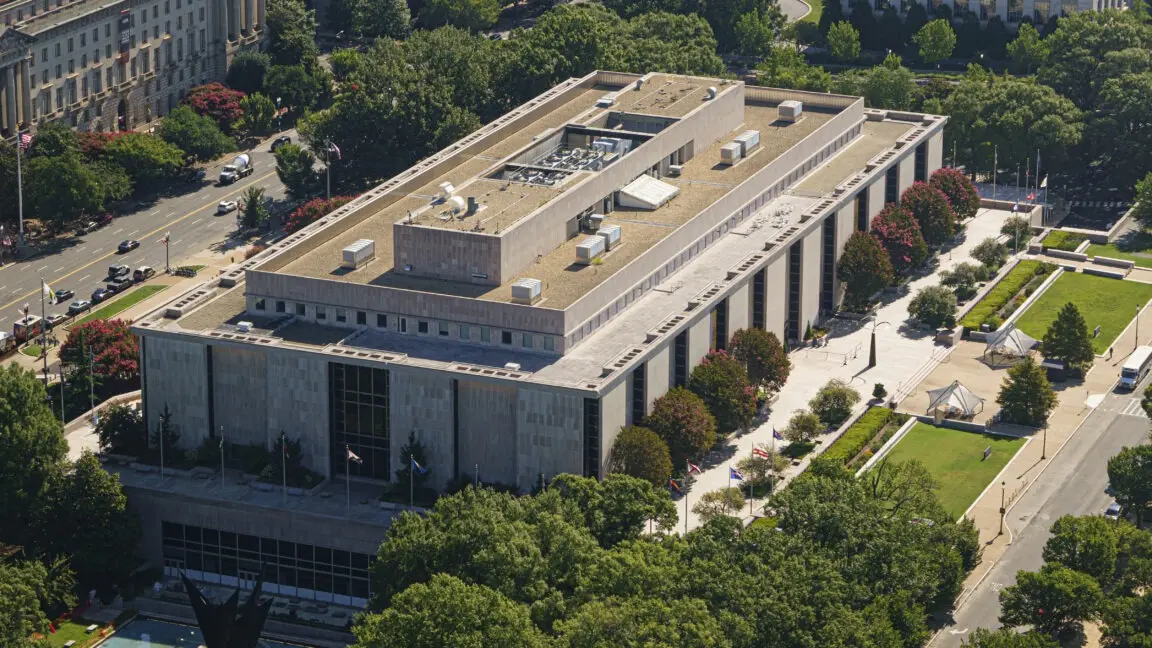
Former directors noted that these thematic exhibits frequently required delicate balancing acts. The "American Enterprise" display drew criticism from some donors for highlighting slavery’s role in early American commerce, while "The Price of Freedom" involved extensive consultation with veterans’ groups to navigate military history thoughtfully. Former director Brent Glass observed that visitors generally welcome historical complexity when presented transparently. Nevertheless, the physical layout—marred by aging infrastructure and dim lighting—often left the museum feeling fragmented, particularly when contrasted with newer, single-topic institutions like the National Museum of the American Indian and the National Museum of African American History & Culture.
The internal direction of the Smithsonian shifted significantly in 2020. Following the onset of the COVID-19 pandemic and the murder of George Floyd, Secretary Lonnie Bunch and leadership launched sweeping diversity, equity, access, and inclusion (DEAI) initiatives. Board minutes from 2020 and 2021 document discussions regarding the creation of a Chief Diversity Officer position, institutional DEAI training, and establishing the Smithsonian as a platform for national conversations on race and identity. During the Biden administration, the Smithsonian actively collaborated with the White House on temporary displays celebrating heritage months. Across individual museums, signage and framing were updated; for instance, the National Portrait Gallery revised text for South Carolina delegate Henry Laurens to highlight his wealth derived from chattel slavery.

These shifts alarmed conservative observers and board members. Former Republican Congressman Garret Graves, who served on the Board of Regents in 2023 and 2024, recalled raising concerns that the staff’s insular culture was alienating broader American audiences. Graves argued that while the nation has serious historic faults, the museum failed to celebrate America’s broader achievements, warning that politicizing the institution threatened its long-term financial sustainability across changing political administrations.
When Republicans regained control of the executive branch, these lingering frustrations erupted publicly. During the late July congressional hearings, House Oversight Subcommittee Chair Tim Burchett opened proceedings by playing video clips of Anthea Hartig delivering tribal land acknowledgments, questioning her commitment to traditional American history. Republican lawmakers pressed Hartig aggressively on graphic exhibit items, while Democratic members and witness David Blight, a Yale historian, defended the institution and characterized the administration’s intervention as an ideological attempt to censor history.
The Smithsonian now stands at a critical juncture. As the nation marks its 250th anniversary, the leadership structure of its centerpiece history institution is in flux. With Secretary Bunch departing, multiple vacancies on the Board of Regents, and crucial decisions ahead regarding leadership appointments, the governance of the institution falls heavily on remaining regents, including Vice President Vance and Chief Justice John Roberts. With the National Museum of the American Latino set to open in the coming decade, the Smithsonian must once again confront its foundational question: how to accurately and cohesively present the nation’s past to the public.