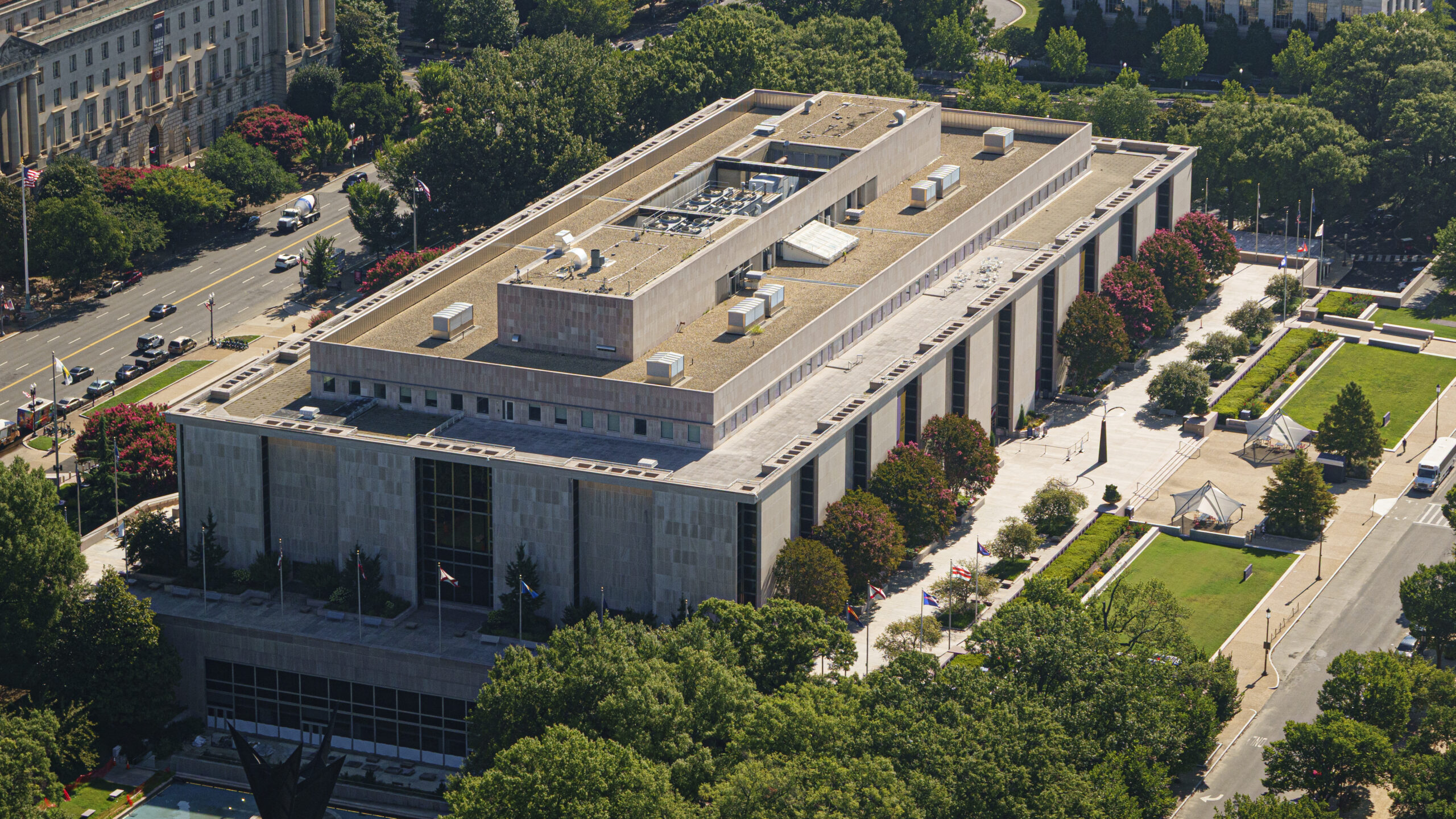
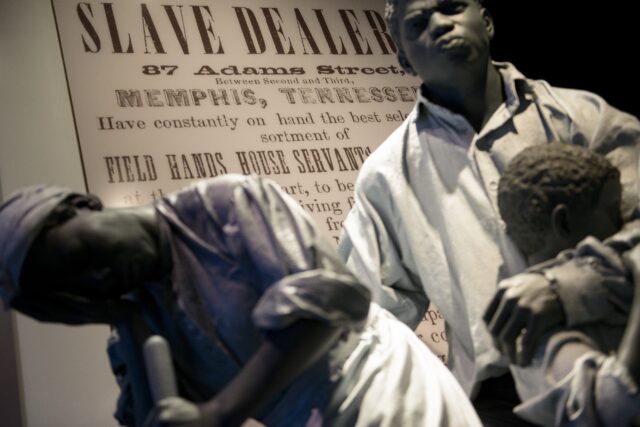
In November 2021, the Smithsonian’s National Museum of American History opened a small exhibit titled “The Electric Dr. Franklin.” Designed to examine Benjamin Franklin’s seminal contributions to electrical science, the display included an explicit historical caveat: prior to becoming an abolitionist, Franklin had held enslaved people in his household. “Benjamin Franklin’s remarkable scientific accomplishments were, in part, enabled by slavery,” one panel declared. The display further speculated that Franklin may have involved enslaved individuals in his dangerous research, noting that while Franklin wrote of administering shocks to family and friends, he rarely identified specific assistants, leaving open the possibility that indentured servants and enslaved household members were used as well.
Though the physical exhibit closed in 2025, its online text became a central flashpoint in an escalating political assault against the nation’s premier cultural institution. On July 4, timed to coincide with the 250th anniversary of the Declaration of Independence, the White House released a blistering 162-page report accusing the Smithsonian of falling victim to an “ideological capture.” The document charged that the institution had drifted away from straightforward historical scholarship in favor of an “extreme political activism that seeks to transform our country.”
The fallout was swift and severe. Following months of escalating threats, executive orders, and contentious congressional hearings, Smithsonian Secretary Lonnie Bunch—the first African American to lead the institution—announced his resignation on September 8 at age 73, plainly acknowledging, “It has been stressful.”
The confrontation marks an unprecedented crisis for the Smithsonian Institution. For decades, the complex of 21 museums—drawing some 15 million visitors annually—operated largely above the partisan fray. Apart from high-profile squabbles such as the 1995 controversy over the National Air and Space Museum’s planned exhibition of the Enola Gay, the institution enjoyed robust bipartisan backing as the custodian of the American story. Today, that institutional independence is severely threatened.
The campaign against the Smithsonian gained momentum in March 2025 when President Donald Trump signed an executive order alleging the institution had embraced a “divisive, race-centered ideology.” The executive order directed Vice President J.D. Vance to purge improper ideology from the institution. Two months later, Trump announced he was firing Kim Sajet, director of the National Portrait Gallery, criticizing her as a supporter of diversity, equity, and inclusion initiatives. Although the presidency lacks direct legal authority to remove museum directors, Sajet stepped down to protect the institution.
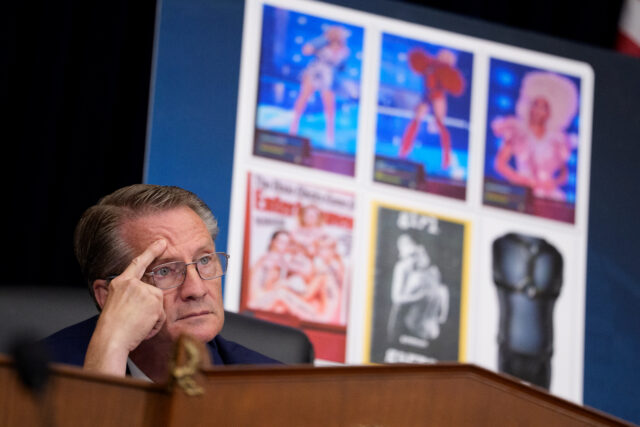
Tensions crested in late July when two House committees held back-to-back hearings focusing on the White House report. Lawmakers subjected National Museum of American History director Anthea Hartig to intense questioning regarding specific displays. Beyond the Franklin exhibit, critics singled out “Girlhood (It’s Complicated),” which featured diary entries from a six-year-old girl reflecting on bodily changes and gender identity, as well as an exhibition on LGBTQ+ history that included a two-piece chrome and rubber crotch harness designed for sadomasochistic sex. Republican members also condemned the museum’s use of the “Museums as a Site for Social Action Toolkit,” a training manual that characterizes concepts like "politeness" as elements of white supremacy culture.
Around the same time, Trump signed an executive order instructing the Department of the Interior to erect signs outside the museum warning visitors about the “ideological capture” inside. In late August, Interior Secretary Doug Burgum escalated matters further, sending a formal letter to the Smithsonian’s Board of Regents stating that federal agencies could no longer “in good conscience continue to support the Smithsonian under current leadership.”
Financially, the Smithsonian is uniquely vulnerable. Although governed independently by a 17-member Board of Regents—headed by the Chief Justice of the Supreme Court and composed of the Vice President, six members of Congress, and nine private citizens—it relies on federal appropriations for roughly 62% of its funding, amounting to over $1 billion annually.

While the battle reflects President Trump’s broader efforts to reshape Washington’s cultural landscape—alongside actions targeting the Kennedy Center and alterations to the White House grounds—the underlying tensions at the American history museum have been developing for decades. The museum has long struggled to articulate a cohesive national narrative, leaving it vulnerable to external critique.
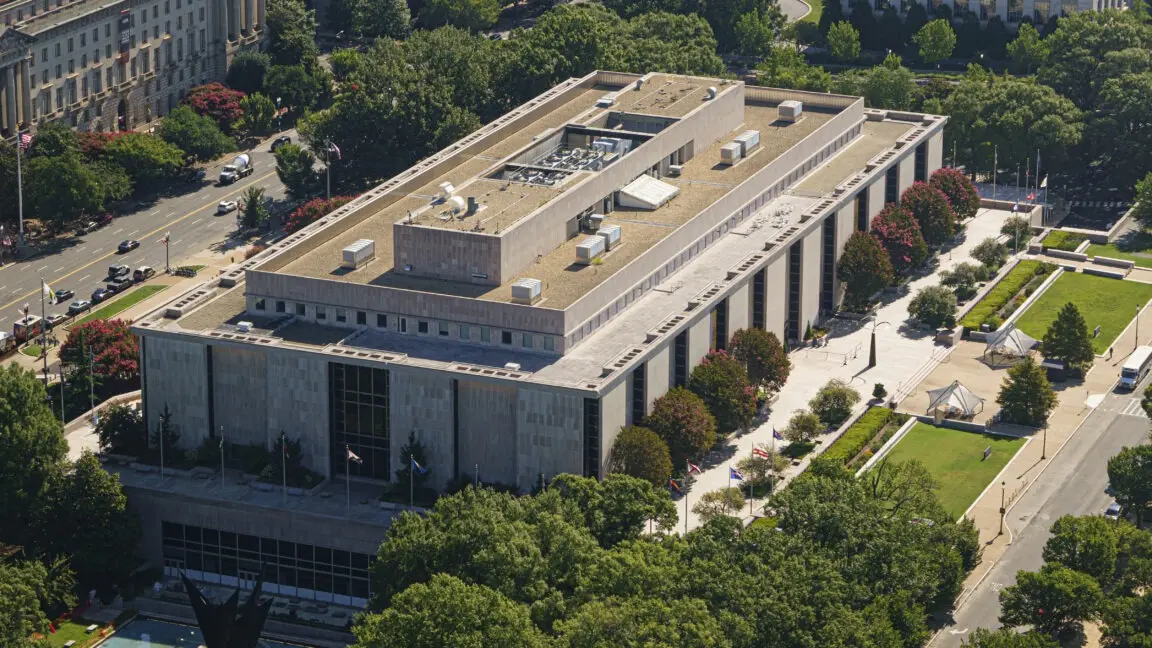
When the facility opened on the National Mall in 1964 as the National Museum of History and Technology, its stated mission was to instill an understanding of the inspiring story of the United States. Yet its dual focus on technological advancements and general history created inherent structural friction. After being renamed the National Museum of American History in 1980, the conceptual confusion persisted. Ivan Selin, a former chair of the museum’s board, noted that shifting from a technology repository to a broad history museum without a unified strategy created a disjointed collection of exhibits.
By the late 1990s, prominent critics argued the museum lacked focus. In a 1999 essay, David Brooks argued that the museum neglected central historical milestones—such as the Constitutional Convention, the Great Depression, and key historical figures—in favor of fragmented narratives centered on social grievances. In response, the Smithsonian established a blue-ribbon commission in 2001, chaired by former Reagan administration official Richard Darman. The commission’s 2002 report concluded that the museum lacked organizational coherence and recommended a central, chronological narrative that celebrated national achievements while responsibly addressing historical shortcomings.
Implementing those recommendations proved difficult. Curators resisted a traditional, linear "great man" approach to history, reflecting a broader shift in museum scholarship toward episodic, thematic storytelling aimed at engaging diverse audiences. Former museum director John Gray noted that efforts to enlist leading academic historians to craft an overarching narrative stumbled because scholars worried the result might appear overly triumphalist. Instead, the museum organized its floor space into thematic sections, including exhibits on business, democracy, immigration, the presidency, military history, and entertainment.
Former directors noted that these thematic exhibits frequently required delicate balancing acts. The "American Enterprise" display drew criticism from some donors for highlighting slavery’s role in early American commerce, while "The Price of Freedom" involved extensive consultation with veterans’ groups to navigate military history thoughtfully. Former director Brent Glass observed that visitors generally welcome historical complexity when presented transparently. Nevertheless, the physical layout—marred by aging infrastructure and dim lighting—often left the museum feeling fragmented, particularly when contrasted with newer, single-topic institutions like the National Museum of the American Indian and the National Museum of African American History & Culture.
The internal direction of the Smithsonian shifted significantly in 2020. Following the onset of the COVID-19 pandemic and the murder of George Floyd, Secretary Lonnie Bunch and leadership launched sweeping diversity, equity, access, and inclusion (DEAI) initiatives. Board minutes from 2020 and 2021 document discussions regarding the creation of a Chief Diversity Officer position, institutional DEAI training, and establishing the Smithsonian as a platform for national conversations on race and identity. During the Biden administration, the Smithsonian actively collaborated with the White House on temporary displays celebrating heritage months. Across individual museums, signage and framing were updated; for instance, the National Portrait Gallery revised text for South Carolina delegate Henry Laurens to highlight his wealth derived from chattel slavery.

These shifts alarmed conservative observers and board members. Former Republican Congressman Garret Graves, who served on the Board of Regents in 2023 and 2024, recalled raising concerns that the staff’s insular culture was alienating broader American audiences. Graves argued that while the nation has serious historic faults, the museum failed to celebrate America’s broader achievements, warning that politicizing the institution threatened its long-term financial sustainability across changing political administrations.
When Republicans regained control of the executive branch, these lingering frustrations erupted publicly. During the late July congressional hearings, House Oversight Subcommittee Chair Tim Burchett opened proceedings by playing video clips of Anthea Hartig delivering tribal land acknowledgments, questioning her commitment to traditional American history. Republican lawmakers pressed Hartig aggressively on graphic exhibit items, while Democratic members and witness David Blight, a Yale historian, defended the institution and characterized the administration’s intervention as an ideological attempt to censor history.
The Smithsonian now stands at a critical juncture. As the nation marks its 250th anniversary, the leadership structure of its centerpiece history institution is in flux. With Secretary Bunch departing, multiple vacancies on the Board of Regents, and crucial decisions ahead regarding leadership appointments, the governance of the institution falls heavily on remaining regents, including Vice President Vance and Chief Justice John Roberts. With the National Museum of the American Latino set to open in the coming decade, the Smithsonian must once again confront its foundational question: how to accurately and cohesively present the nation’s past to the public.