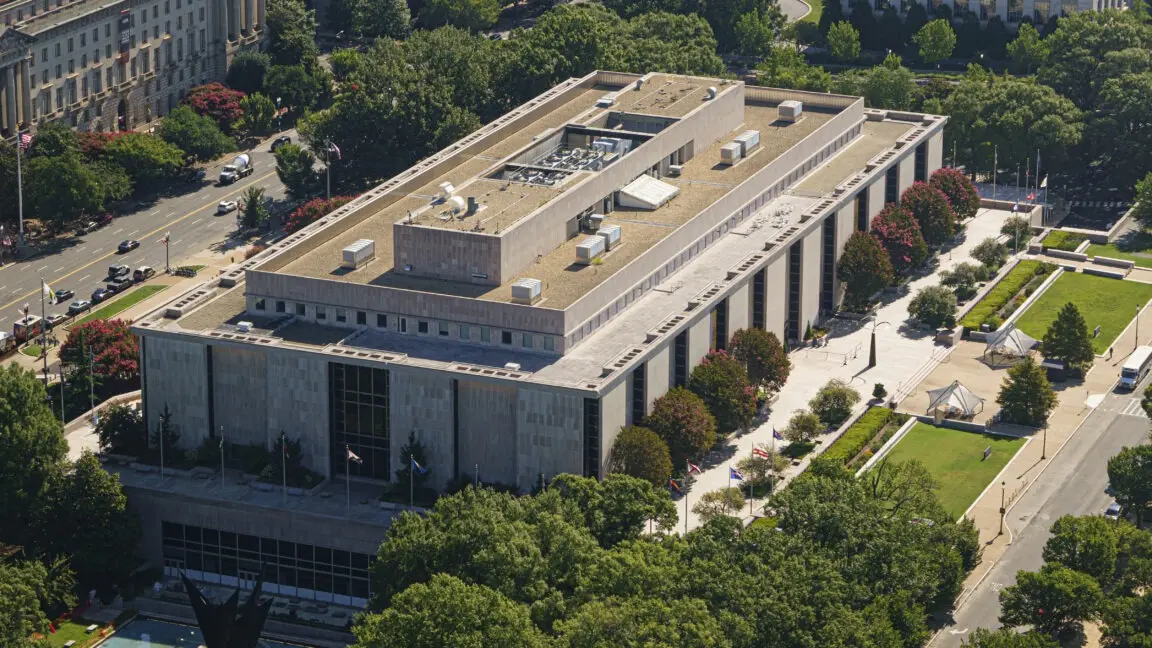
Around the same time, Trump signed an executive order instructing the Department of the Interior to erect signs outside the museum warning visitors about the “ideological capture” inside. In late August, Interior Secretary Doug Burgum escalated matters further, sending a formal letter to the Smithsonian’s Board of Regents stating that federal agencies could no longer “in good conscience continue to support the Smithsonian under current leadership.”
Financially, the Smithsonian is uniquely vulnerable. Although governed independently by a 17-member Board of Regents—headed by the Chief Justice of the Supreme Court and composed of the Vice President, six members of Congress, and nine private citizens—it relies on federal appropriations for roughly 62% of its funding, amounting to over $1 billion annually.

While the battle reflects President Trump’s broader efforts to reshape Washington’s cultural landscape—alongside actions targeting the Kennedy Center and alterations to the White House grounds—the underlying tensions at the American history museum have been developing for decades. The museum has long struggled to articulate a cohesive national narrative, leaving it vulnerable to external critique.
When the facility opened on the National Mall in 1964 as the National Museum of History and Technology, its stated mission was to instill an understanding of the inspiring story of the United States. Yet its dual focus on technological advancements and general history created inherent structural friction. After being renamed the National Museum of American History in 1980, the conceptual confusion persisted. Ivan Selin, a former chair of the museum’s board, noted that shifting from a technology repository to a broad history museum without a unified strategy created a disjointed collection of exhibits.
By the late 1990s, prominent critics argued the museum lacked focus. In a 1999 essay, David Brooks argued that the museum neglected central historical milestones—such as the Constitutional Convention, the Great Depression, and key historical figures—in favor of fragmented narratives centered on social grievances. In response, the Smithsonian established a blue-ribbon commission in 2001, chaired by former Reagan administration official Richard Darman. The commission’s 2002 report concluded that the museum lacked organizational coherence and recommended a central, chronological narrative that celebrated national achievements while responsibly addressing historical shortcomings.
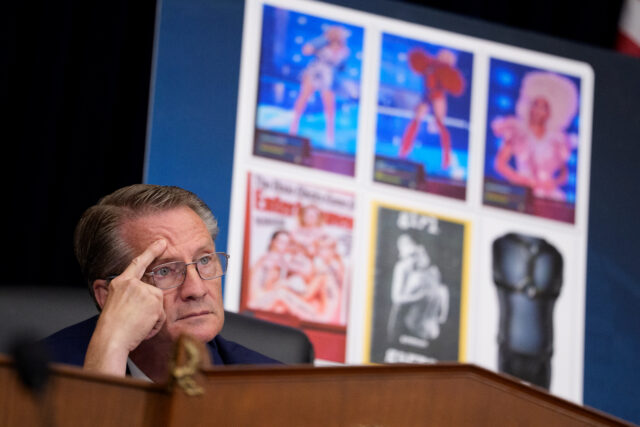
Implementing those recommendations proved difficult. Curators resisted a traditional, linear "great man" approach to history, reflecting a broader shift in museum scholarship toward episodic, thematic storytelling aimed at engaging diverse audiences. Former museum director John Gray noted that efforts to enlist leading academic historians to craft an overarching narrative stumbled because scholars worried the result might appear overly triumphalist. Instead, the museum organized its floor space into thematic sections, including exhibits on business, democracy, immigration, the presidency, military history, and entertainment.