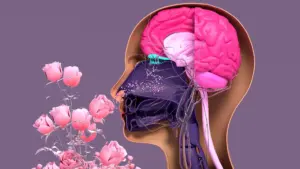
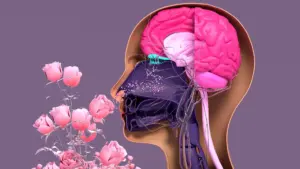
In the intricate architecture of the human sensory system, the ability to perceive odors is often taken for granted—until it vanishes. For millions of people affected by viral infections, environmental toxins, or the natural progression of aging, the loss of smell is a profound disruption to quality of life. However, a groundbreaking study from researchers at the Tufts University School of Medicine and the Graduate School of Biomedical Sciences (GSBS) has illuminated a new path toward understanding how the nose repairs itself, revealing that a class of stem cells previously dismissed as largely inactive may actually be the unsung heroes of nasal regeneration.
The study, recently published in the journal Cell Reports Methods, utilizes a sophisticated, three-dimensional mouse-tissue model—an organoid—to map the complex cellular conversations that govern the birth of new sensory neurons. By peering into this micro-environment, the research team discovered that horizontal basal cells (HBCs), which were long thought to remain dormant unless triggered by catastrophic injury, play a continuous and essential role in supporting the production of smell-sensing nerve tissue.
The Resilient Frontier of the Nasal Cavity
Unlike the delicate neurons of the central nervous system, which are notoriously poor at self-repair following damage, the sensory neurons located in the nasal cavity possess a remarkable, lifelong capacity for regeneration. This biological resilience is a necessity; these neurons are among the few parts of the nervous system directly exposed to the harsh outside environment. Every breath brings a barrage of potential threats, from fluctuating temperatures and humidity to airborne pathogens and chemical pollutants.
Despite this inherent toughness, the regenerative machinery of the nose is not invincible. Factors such as the inflammatory response triggered by COVID-19, chronic exposure to industrial toxins, or the gradual cellular senescence associated with aging can stifle the ability of these cells to replicate. When this process falters, the result is hyposmia (a diminished sense of smell) or anosmia (the total loss of smell). To investigate why this process fails and how it might be jump-started, the Tufts team needed a way to observe the cellular interactions in real-time, leading to the creation of their new olfactory organoid.
Unveiling the Interdependence of Stem Cells
At the heart of the study is the relationship between two primary types of stem cells found in the olfactory epithelium: horizontal basal cells (HBCs) and globose basal cells (GBCs). Historically, the scientific consensus held a somewhat binary view of these cells. GBCs were seen as the primary "workhorses," constantly dividing to replace neurons under normal conditions. In contrast, HBCs were viewed as a reserve population—a "break glass in case of emergency" backup that only became active when the tissue suffered severe trauma.
The Tufts research, however, challenges this traditional hierarchy. Using their 3D model, the team identified a specific subpopulation of HBCs, characterized by the production of a protein called KRT5. Rather than sitting idly by, these cells were found to be active participants in the daily maintenance of the olfactory system.
"Our research suggests that these two stem cells may be interdependent," explains Brian Lin, senior author on the study and a research assistant professor in the Department of Developmental, Molecular and Chemical Biology at Tufts. "One type that we thought was largely dormant—HBCs—may actually play a crucial role in supporting the production of new neurons and the repair of damaged tissue."
This interdependence suggests a much more collaborative ecosystem than previously imagined. When the researchers experimentally depleted these KRT5-producing HBCs from their organoid cultures, the results were striking: the generation of new neurons was significantly impaired. This finding suggests that GBCs cannot operate at peak efficiency without the metabolic or signaling support provided by their HBC counterparts. The "dormant" cells are, in fact, essential scaffolds for the regenerative process.