As the final week of September 2026 unfolds, the literary community finds itself at a unique intersection of historical remembrance and contemporary introspection. From the foundational legacies of early 20th-century editors to the urgent digital anxieties of the modern age, the current discourse reflects a world grappling with its own perspective, history, and the very language used to define the human experience.
THE BEST OF THE LITERARY INTERNET
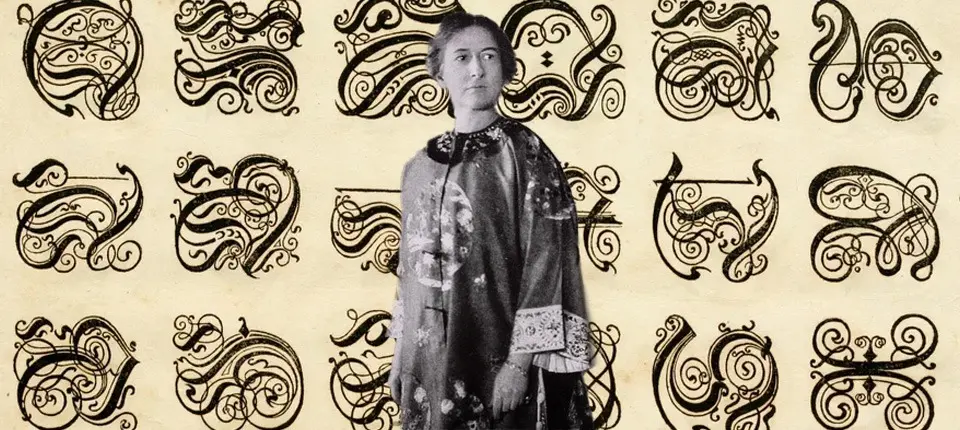
The week’s literary landscape is shadowed by a significant anniversary in the world of American letters. Today marks the day in 1936 when Harriet Monroe, the pioneering founding publisher and longtime editor of Poetry magazine, passed away. Monroe’s contribution to the arts cannot be overstated; she was a woman who essentially built a platform for Modernism when the established literary world was still looking backward. By founding Poetry in Chicago in 1912, she provided the first home for some of the most influential voices of the century, including T.S. Eliot, Ezra Pound, and Wallace Stevens. Her death in Peru at the age of 75, while traveling to a P.E.N. conference, marked the end of an era, but as this week’s literary roundup suggests, the "Open Door" policy she championed—a commitment to publishing the best poetry of the time regardless of its style or school—remains a guiding light for the industry.
In the spirit of Monroe’s intellectual openness, the current literary conversation has turned toward the dangers of intellectual stagnation. Theoretical physicist Carlo Rovelli has recently contributed to this dialogue, warning against the psychological and philosophical traps of getting stuck within one’s own limited conceptual framework. Rovelli, known for his ability to bridge the gap between complex science and humanistic inquiry, argues that the most significant breakthroughs—both in physics and in life—occur only when we are willing to question the very structures through which we view reality. This theme of expanding one’s perspective is echoed in a series of new works that challenge the sterile, often dehumanizing language of the modern state.
A significant focus this week has been placed on the "archive" and how it interacts with human identity. Literary critics are highlighting eight new books that attempt to "wrest humanity back" from the cold, clinical language of bureaucracy. These works examine how official records, census data, and legal documents often flatten the vibrant, messy reality of human lives into mere statistics or categories. By reclaiming these narratives, writers are demonstrating that the "record" is not a neutral space, but a battlefield where the human spirit must constantly fight for recognition.
This struggle for representation and inclusivity is also manifesting in popular genre fiction. The impact of works like Heated Rivalry continues to be felt as readers and critics discuss how queer narratives are reimagining the future of traditionally conservative spaces, such as the National Hockey League (NHL). By imagining a more inclusive future for professional sports, these writers are not just providing entertainment; they are performing a cultural intervention, suggesting that the "old guard" of athletic masculinity is ripe for a more diverse and authentic evolution.
The physical world, too, is receiving renewed attention, particularly through the lens of preservation and craftsmanship. Recent essays on masonry and the beauty found in a simple block of stone remind us of the permanence of physical labor in an increasingly digital world. This fascination with the tangible extends to the secrets of old buildings. Explorations into the hidden histories of ancient structures reveal that architecture is a living record, keeping secrets that only those with a keen eye for detail and a respect for the past can unlock.
However, the allure of the physical is constantly being challenged by the pervasive "digital attention economy." Analysts are observing how the need to perform for digital spectators has seeped into the most private aspects of real-life existence. The "performance of the self" is no longer restricted to the stage or the page; it is a constant, 24-hour requirement of the social media age. This shift has profound implications for how we experience reality, suggesting that many now live their lives as if they are perpetually being watched by an invisible, global audience, fundamentally altering the nature of spontaneity and authentic experience.
The week’s discussions also take a more somber turn toward the environment and the irreversible loss of biodiversity. As species continue to go extinct at an alarming rate, the literary world is asking what, exactly, we lose when a species vanishes. Beyond the ecological impact, there is a profound cultural and linguistic loss; when a creature disappears, the words we used to describe it, the myths we built around it, and the specific beauty it brought to the human imagination are extinguished along with it.
In terms of historical recovery, attention has turned to the complex figure of Hyman Judah Schachtel, the anti-Zionist rabbi of Houston. His story provides a necessary nuance to the history of American Judaism and the diverse political currents that have shaped religious communities in the United States. This interest in historical complexity is mirrored in a new analysis of Weimar Germany’s proportional democracy. The study examines how a system designed to be perfectly representative ultimately provided the structural loopholes that enabled Adolf Hitler’s rise to power, serving as a stark warning about the fragile nature of democratic institutions.
On the creative front, the week has offered both practical and philosophical advice for writers. Bestselling author John Green has shared his thoughts on the creative process, specifically why he gives himself "permission to suck." Green’s perspective is a refreshing antidote to the pressure of perfectionism, suggesting that the path to greatness is paved with mediocre first drafts. For those facing more severe creative hurdles, some suggest that the cure for writer’s block might not be found at a desk, but in the theater. The communal, visceral experience of live performance is touted as a way to shock the imagination back into action.
The poetics of time and identity also remain central to the week’s literary output. Discussions on a poetics that subverts linear chronology suggest that writers are increasingly looking for ways to represent the non-linear way we actually experience memory and trauma. Similarly, the "poetics of daughterhood" explores the specific, loaded relationship between daughters and their origins, a theme that resonates deeply in contemporary verse.
International literature is seeing a surge in interest, particularly regarding Ukrainian voices. Sasha Dovzhyk has recommended a list of essential Ukrainian reads, spanning from memoirs to novels, which provide vital context for a nation under duress. This global outlook is furthered by a call to revisit the work of Grazia Deledda, the Sardinian Nobel Prize winner whose depictions of life, love, and death on the Mediterranean island remain as powerful today as they were a century ago.
The retail side of the literary world is not without its own charms and insights. Katie Clapham, a bookseller in an English seaside town, has shared the joys of eavesdropping on her customers. Her observations offer a humorous and often touching look at the reading habits of the public, proving that the local bookshop remains a vital hub of community life. Meanwhile, the relationship between different art forms is explored through the unlikely comparison of reading The Elements of Style and learning to paint, suggesting that the discipline of craft is universal, whether one is wielding a brush or a pen.
Labor history is also in the spotlight, with a look back at the "9 to 5" movement. Long before it was an iconic film and song, it was a rigorous movement for working women’s rights. The history of this fight serves as a reminder of the necessity of organizing for a better world, a theme echoed by activist Chris Dixon, who emphasizes that rigorous and reliable organizing is the only way to achieve lasting social change.
As the week draws to a close, the industry is also looking at the prophetic nature of past technology writing. Paulina Borsook’s early critiques of Big Tech are being hailed as more relevant than ever, as her warnings about the "cyberego" and the libertarian streaks of Silicon Valley have largely come to pass. In a world increasingly dominated by algorithms, her work serves as a vital reminder of the need for human-centric technological development.
Finally, the literary week concludes with a nod to personal growth and the "second spring" of middle age. Writer Elizabeth Alexander has shared her thoughts on the joy of returning to dancing in one’s middle years, suggesting that this stage of life is not a period of decline, but a perfect time for a creative and physical renaissance.
From the best-reviewed books of the week to the latest Independent Press Top 40 Bestsellers in fiction and nonfiction, the sheer variety of topics—ranging from the loaded nature of an artist’s room to Doireann Ní Ghríofa’s latest reading list—demonstrates a literary culture that is vibrant, self-critical, and deeply engaged with the world. As we remember Harriet Monroe today, it is clear that the "open door" she established continues to admit a vast and diverse array of voices, each contributing to the ongoing story of our time.