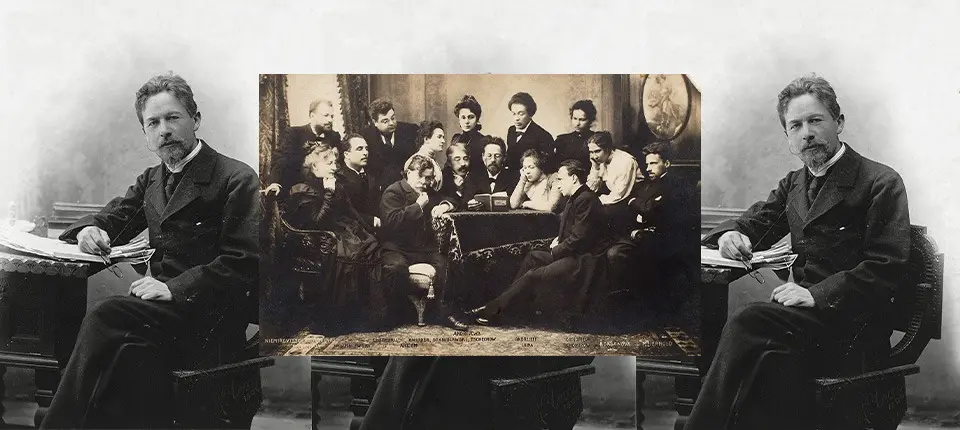
In the late autumn of 1896, the Alexandrinsky Theatre in St. Petersburg hosted the premiere of Anton Chekhov’s The Seagull. It was, by almost all contemporary accounts, a disaster of historic proportions. The audience hissed, the actors were bewildered by the play’s departure from traditional dramatic structures, and Chekhov himself fled the theater in a state of profound humiliation. At the time, he famously declared that "not if I live to be seven hundred will I write another play." History, of course, had other plans; the play would later find its footing at the Moscow Art Theatre, cementing Chekhov’s status as a titan of modern drama. This week in the literary world, as we look back on that infamous failure, the industry continues to grapple with its own transformative moments, ranging from the ethical dilemmas of artificial intelligence to the role of literature in witnessing global catastrophe.
The literary landscape of mid-October 2026 is defined by a tension between tradition and radical change. As writers and thinkers navigate an era of geopolitical instability and technological upheaval, the "best of the literary internet" reflects a community attempting to find meaning in the wreckage of the old world while cautiously building the new.
THE BEST OF THE LITERARY INTERNET
A significant portion of the current discourse focuses on the intersection of storytelling and survival. In a featured conversation, Adam Johnson speaks with Amitav Ghosh about his latest work, The Wayfinder. Ghosh, a writer long preoccupied with the deep currents of history and the looming shadow of the climate crisis, continues to explore how narratives shape our understanding of the world. This dialogue serves as a cornerstone for a broader week of reflection on how literature acts as a witness to history in real-time.
Nowhere is the work of witnessing more urgent than in the Middle East and Ukraine. A recent reckoning published on Lit Hub explores how the ongoing genocide in Gaza has fundamentally reshaped the Middle East, moving beyond immediate political shifts to a deeper, more existential transformation of the region’s cultural and intellectual identity. Parallel to this, Oksana Lutsyshyna has curated a selection of essential Ukrainian literature, highlighting the work of Artur Dron, Andriy Lyubka, and Lena Lyagushonkova. These writers are engaged in the grueling "work of witnessing," documenting a national struggle that is as much about the preservation of language and story as it is about territory.
The ethical responsibilities of the literary community are also being tested on the domestic front. A major point of contention has emerged regarding the publishing industry’s contradictory relationship with technology. Many are asking why major publishers are simultaneously suing Big Tech companies for copyright infringement while "embracing" generative AI with the other hand. This paradox highlights a growing anxiety among authors and editors: the fear that the human element of storytelling is being commodified and automated by the very institutions meant to protect it.
This technological creep is not limited to the printed page. In a jarring investigation into the housing crisis, recent reports suggest that the "real reason the rent is too damn high" may lie in greed-driven corporate algorithms. These systems, which allow landlords to coordinate pricing on a massive scale, have turned the basic human need for shelter into a data-driven extraction machine. It is a reminder that the same algorithmic forces reshaping the creative arts are also reshaping the physical world in ways that often marginalize the most vulnerable.
In the realm of personal history and social justice, the week offers a series of profound remembrances and profiles. Al Sharpton reflects on his mentor, the Reverend Jesse Jackson, detailing how Jackson’s "Keep Hope Alive" philosophy provided a blueprint for contemporary justice narratives. Sharpton’s insights offer a bridge between the Civil Rights era and today’s activism, showing how the art of shaping a narrative is essential to the pursuit of equity.
Simultaneously, the literary world is looking back at figures who built the foundations of American cities. The story of Biddy Mason, the Black matriarch who helped build Los Angeles, is receiving renewed attention. Mason’s journey from an enslaved woman to one of the most prominent landowners and philanthropists in California is a testament to the "hidden" histories that literature is now working to bring to light. In a similar vein of reclamation, E. L. Shen writes about the process of understanding her assassinated ancestor through the act of writing, demonstrating how fiction and memoir can serve as tools for ancestral healing.
The craft of writing itself remains a central theme, with several prominent authors sharing their methods and inspirations. Bonnie Garmus, the bestselling author of Lessons in Chemistry, discusses her new novel, Peck & Peck, in a conversation with Jane Ciabattari. Garmus’s transition into a "coming-of-age novel of poets and poetry" signals a shift toward more introspective, lyrical territory. Meanwhile, Will Maclean offers a more visceral take on the creative process, suggesting that the best way to write a novel is to "fuck up a notebook"—a call to embrace the messiness, errors, and physical chaos of creation rather than striving for immediate perfection.
For those interested in the darker corners of the imagination, Bonnie Jo Campbell has curated a list of seven literary ghost stories that "could be haunting you." This exploration of the gothic and the supernatural coincides with a deeper look at the history of medieval European witch hunts, which are framed not merely as historical anomalies but as systemic slaughters of nonconformist women. These stories remind us that the "ghosts" of the past are often the voices of those the system attempted to silence.
The week’s cultural digest also ventures into the natural world and the unexpected relationships humans form with it. One contributor reflects on what a relationship with a rescue raccoon taught them about themselves, while another makes a plea for the preservation of boglands and peatlands. These ecosystems, often dismissed as "unlikely" beauties, are vital to the planet’s health and possess a hidden danger that mirrors the complexity of the natural world.
In the world of visual culture and cinema, three new films are being analyzed for what they reveal about how contemporary society views poets and poetry. This cinematic trend suggests a renewed public interest in the "poetic life," even as the actual material conditions for poets remain precarious. To complement this, Eric Amling has released a new poem titled "Cruise Control," providing a moment of lyrical pause in a week dominated by heavy news.
As the industry looks toward the future, the "Independent Press Top 40 Bestsellers" lists for fiction and nonfiction show a robust appetite for diverse voices and unconventional narratives. From novels birthed among the superyachts of Monaco to essential books for understanding North Korea’s cult of personality, readers are seeking out stories that challenge their worldview.
The week concludes with a look at the domestic and the aesthetic. A case is made against the ubiquitous trend of painting walls white, exploring the "myriad hidden meanings" behind the choice of a blank wall. It is a fitting metaphor for the current state of literature: a blank space that is never truly empty, but rather filled with the potential for new stories, historical reckonings, and the occasional, spectacular failure that—like Chekhov’s The Seagull—might just change everything.
From the culinary traditions of Melissa King’s Cantonese-American upbringing in Southern California to the radical change of 1960s and 70s America documented by photographers Jean-Pierre and Eliane Laffont, the literary internet continues to be a repository for the vast, messy, and beautiful complexity of human experience. Whether it is Peter Brown discussing what makes a great read-aloud book or an analysis of how newspapers helped democratize knowledge, the message of the week is clear: the story is not just how we entertain ourselves, but how we survive.