The red rock cliffs of southwest Utah are home to what is arguably the most intimidating terrain in the world of action sports. For a quarter of a century, the Red Bull Rampage has served as the ultimate proving ground for freeride mountain biking, a discipline where athletes navigate near-vertical ridges and launch themselves across massive desert canyons. While the world watches the riders descend these impossible lines, a dedicated group of professionals navigates the same treacherous landscape, carrying heavy camera packs instead of handlebars. These are the photographers tasked with documenting every gravity-defying jump and heart-stopping near-miss, often from positions that are just as exposed as those of the athletes they are filming.
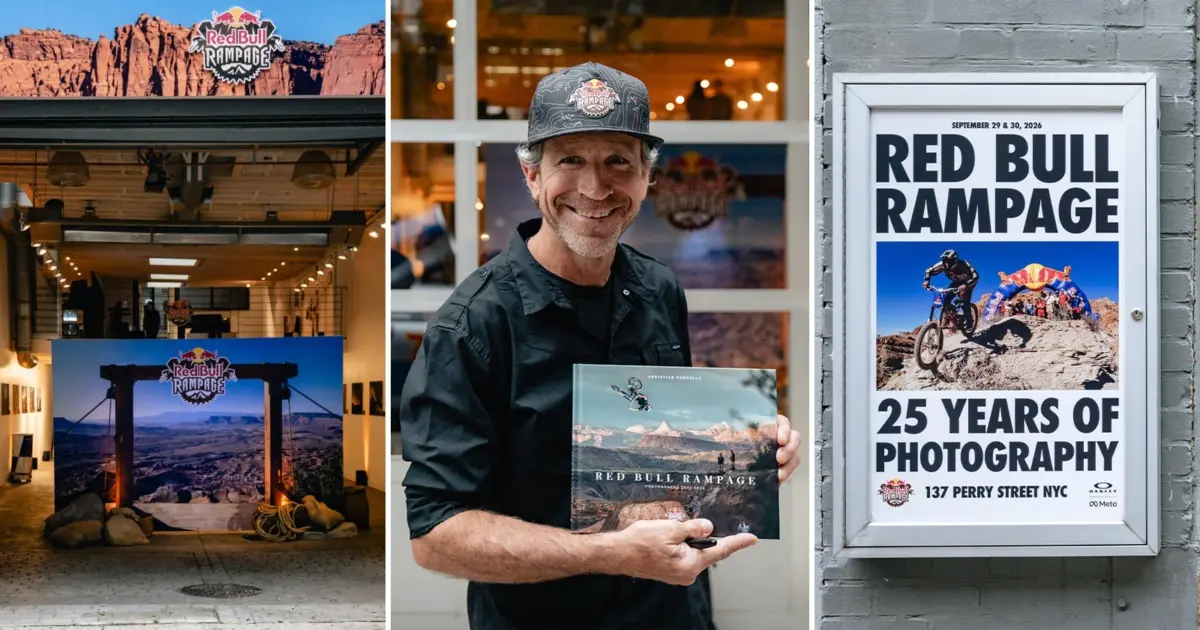
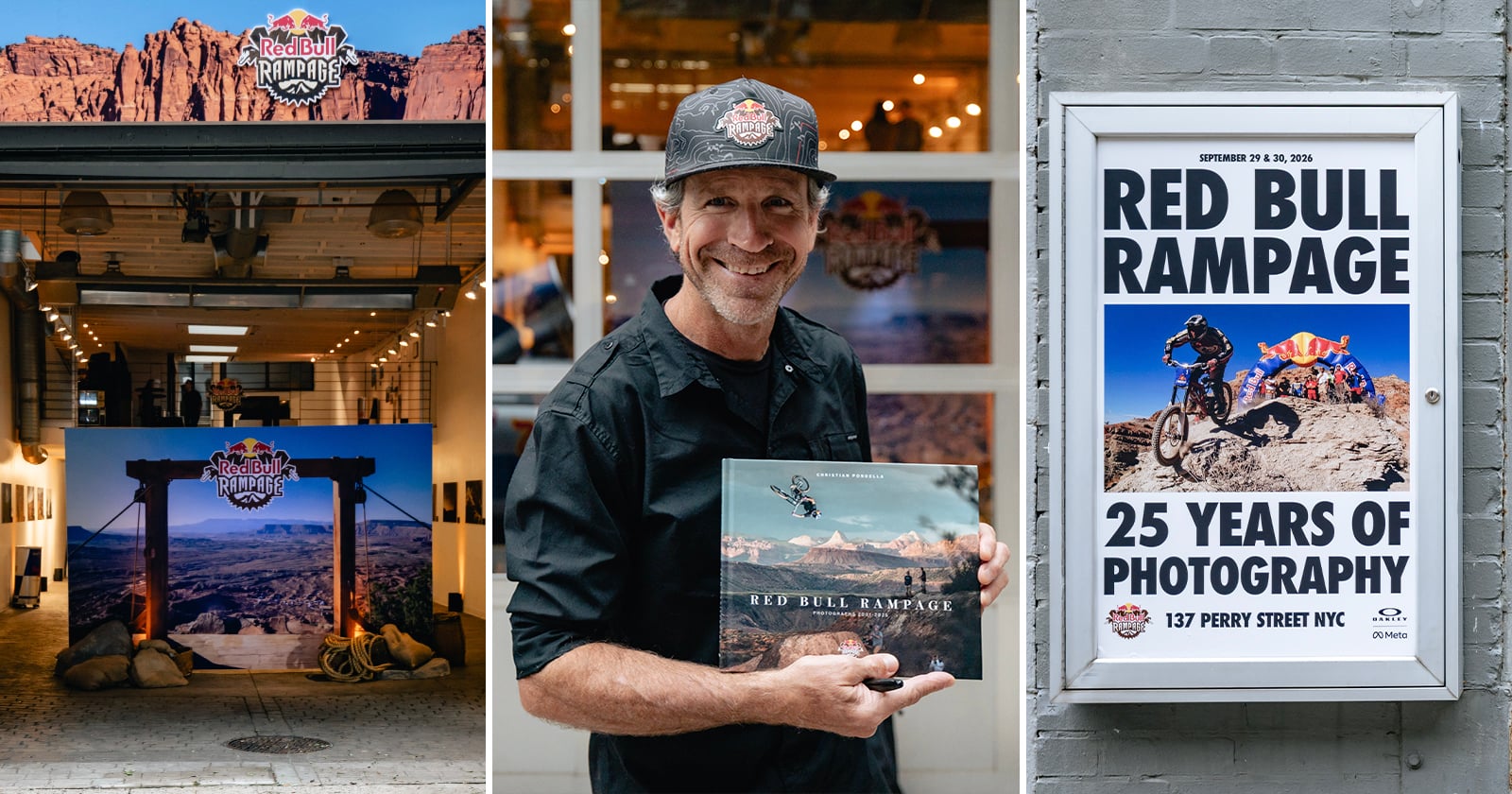
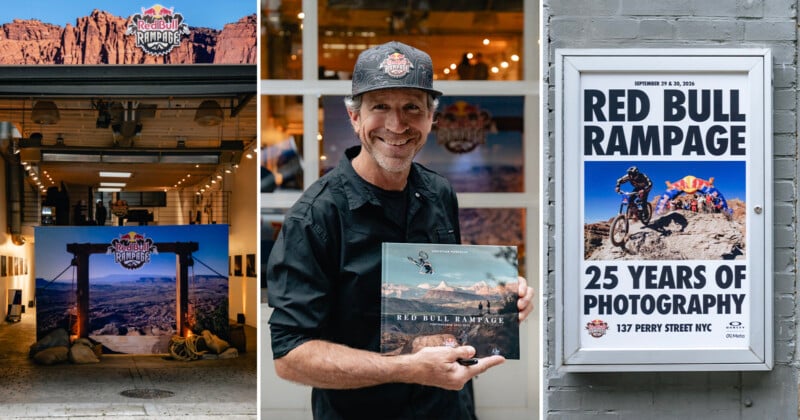
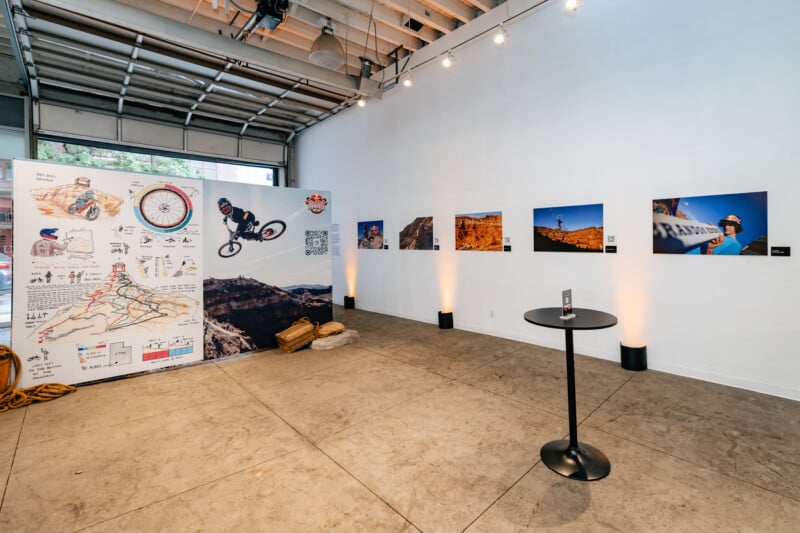
To celebrate the silver anniversary of this iconic event, the Red Bull Rampage 25th Anniversary Photo Gallery recently opened for a special one-day exhibition in New York City. The showcase brought together a curated selection of legendary imagery, offering a rare look at the evolution of the sport through the lenses of the people who have been there since the beginning. Featuring the work of the Red Bull photography team and adventure photography veteran Christian Pondella—who has documented every single edition of the Rampage since its inception in 2001—the exhibition highlighted the extraordinary lengths photographers go to in order to share these moments with a global audience.
The Physical Demands of the High-Altitude Sidelines
For the photographers covering Red Bull Rampage, the job description extends far beyond traditional sports journalism. There are no sidelines, press boxes, or paved paths in the Utah desert. To capture the perfect shot, a photographer must be part mountaineer and part athlete. The terrain that makes the event a legendary challenge for mountain bikers presents a parallel set of obstacles for those documenting it.
Covering the event requires photographers to scramble up steep, crumbling sandstone ridges and position themselves on narrow, exposed ledges. They must do this while carrying dozens of pounds of camera equipment, including multiple bodies, long telephoto lenses, and stabilization gear. The goal is always to find a vantage point that communicates the sheer scale of the landscape—a task that often requires the photographer to stand on the very edge of a cliff to provide the viewer with a sense of the "consequence" involved in a rider’s line.
From these precarious perches, the technical challenges begin. A Rampage photographer must anticipate a rider’s trajectory through a frame, maintain razor-sharp focus in a dusty environment, and manage the harsh, high-contrast lighting of the desert sun. Unlike many other sports, there are no second takes at Rampage. An athlete may spend days digging a specific feature for a single run; the photographer has one opportunity to capture that moment of commitment. The resulting images often make the action look fluid and effortless, but they are the product of hours of planning, grueling climbs, and a high degree of physical risk.
Christian Pondella: A Quarter-Century on the Cliffs
Central to the NYC exhibition is the work of Christian Pondella, a photographer whose career is inextricably linked with the history of the Red Bull Rampage. Pondella is not merely an observer of adventure sports; he is a participant. As an accomplished climber, skier, and cyclist, he possesses the technical skills necessary to access the most remote sections of the Rampage course. This athletic background allows him to understand the terrain from a rider’s perspective, enabling him to predict where the most dramatic action will occur.
Pondella has been on the ground in Utah for every Rampage since the inaugural event in 2001. His archive, which now exceeds 50,000 images from the event alone, serves as a visual timeline of the sport’s progression. In the early days, Rampage was a raw, experimental gathering in the desert, with riders tackling natural features on bikes that would be considered primitive by today’s standards. Over twenty-five years, Pondella has watched the event transform into a massive, highly produced global competition, with custom-built features and a level of athleticism that was once thought impossible.
His work extends far beyond the dust of Utah. Pondella’s portfolio includes assignments for National Geographic, Sports Illustrated, Outside, and Men’s Journal, along with major commercial campaigns for brands like Patagonia and Oakley. Whether he is documenting base jumping, ice climbing, or motocross, his approach remains the same: finding the intimate human story within the spectacle of extreme performance. Despite the technological leaps in camera gear and the increasing complexity of the event’s production, Pondella remains focused on the core of the experience.
Reflecting on his twenty-five-year journey with the event, Pondella notes that the most enduring element isn’t the technology or the size of the jumps, but the community. "Yes, it’s definitely a team, from the amazing athletes to the crew and then photographers working together to put it all together," Pondella said. "Every year that I go back it’s like I’m seeing family again."
A Collaborative Effort Behind the Lens
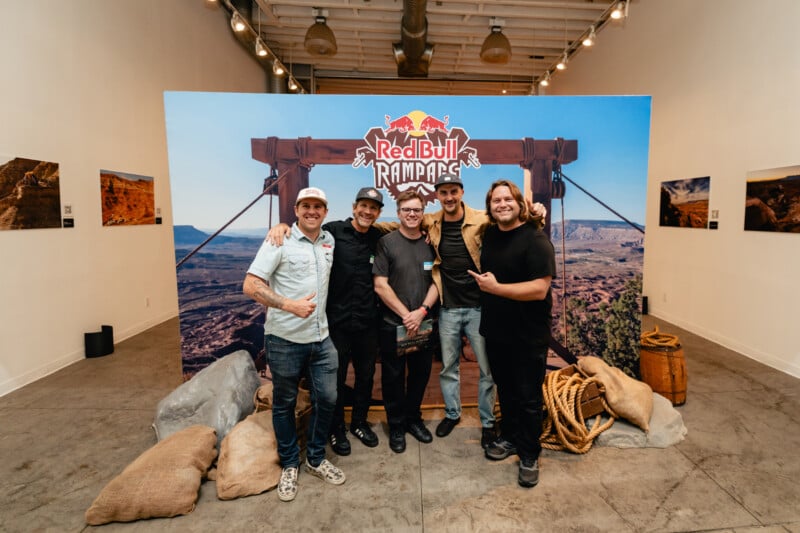
The sense of camaraderie mentioned by Pondella is a recurring theme among the photographers featured in the gallery. Paris Gore, another prominent photographer whose work was showcased in the New York exhibition, echoed this sentiment. For Gore, the annual pilgrimage to the Utah desert is defined by the people who make the event possible. "When I think about Red Bull Rampage it’s definitely the people that bring it all together for me," Gore noted. "I look forward to it every year."
This focus on the human element might seem surprising for an event defined by massive machinery and terrifying cliffs, but it highlights the collaborative nature of action sports photography. A dramatic photograph is rarely the work of a single person in isolation. It represents a deep level of trust between the athlete and the photographer. A rider must trust that the photographer positioned near their landing won’t distract them, while the photographer must trust the event crew to help establish safe zones in the high-exposure terrain.
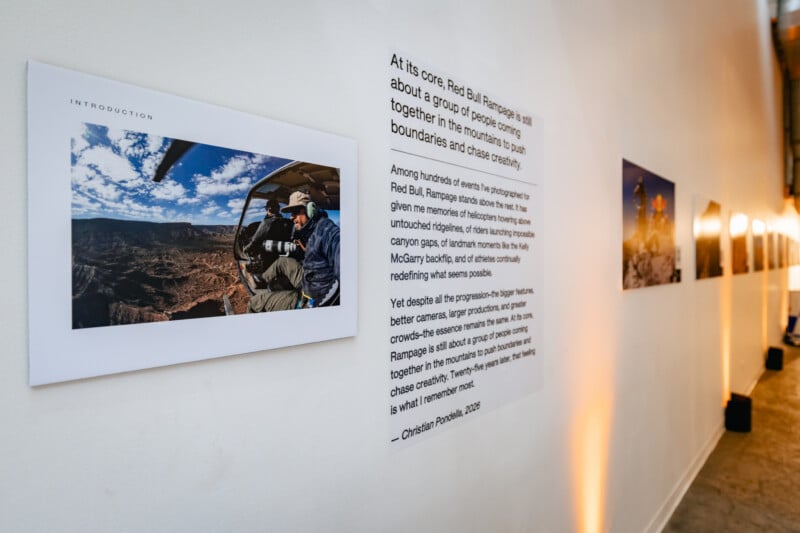
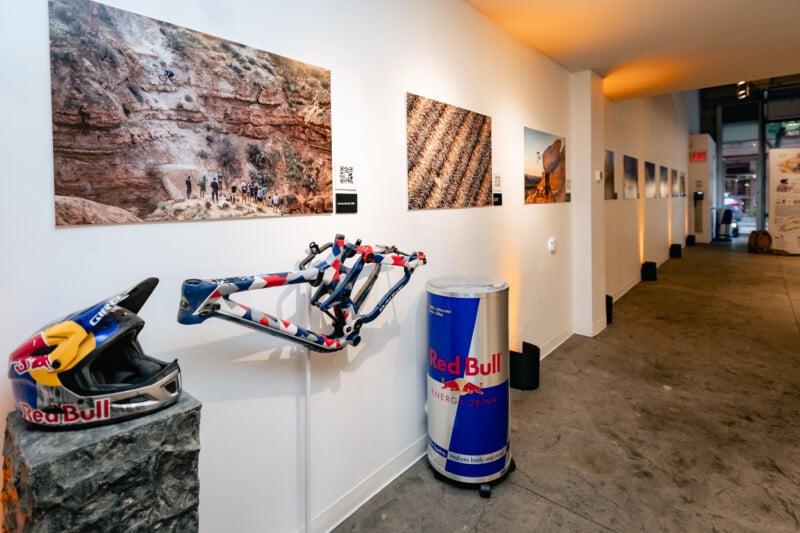
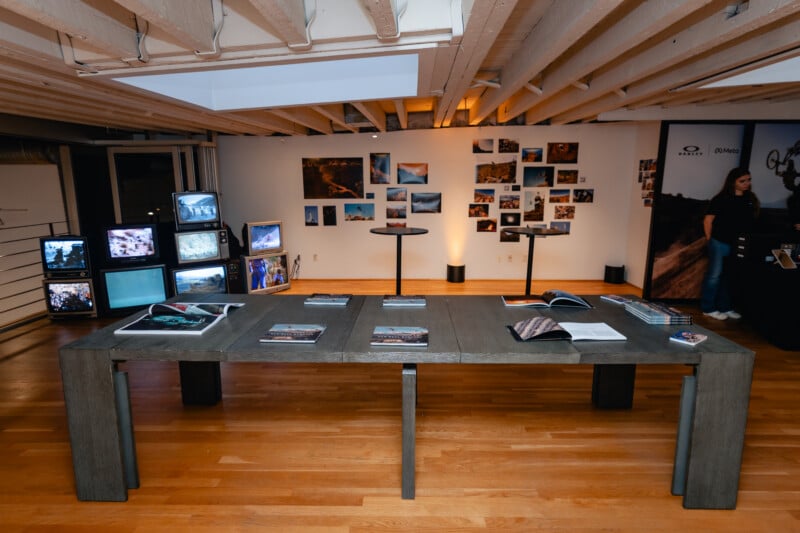
The NYC exhibition allowed visitors to see the results of this collaboration. The photographs on display did more than just show a bike in the air; they captured the tension of the "dig days," the focus in the starting gate, and the relief at the bottom of a successful run. By presenting these images in a gallery setting, Red Bull provided a space for the public to appreciate the artistry required to make an extreme environment understandable to someone who has never stood on a desert ridge.
The Art of Communicating Scale and Speed
One of the primary challenges discussed by the photographers involved in the 25th-anniversary project is the difficulty of translating the "Rampage experience" into a two-dimensional frame. In person, the scale of the Utah cliffs is overwhelming. Through a camera lens, that scale can easily be lost.
A successful Rampage photograph must balance several competing elements: the speed of the rider, the athleticism of the maneuver, and the terrifying nature of the terrain. To achieve this, photographers often use wide-angle lenses from very close proximity to the action, or long telephoto lenses from across the canyon to compress the landscape and show the rider against a backdrop of sheer drops. The best images are those that make the viewer feel as though they are standing on the mountain, experiencing the same vertigo and adrenaline as the people on the ground.
As the exhibition showed, the evolution of camera technology has provided new tools for this storytelling. From the film cameras of 2001 to the high-speed digital sensors of 2026, photographers have gained the ability to capture finer details, higher frame rates, and better dynamic range in the harsh desert light. However, the fundamental requirement remains the same: the photographer must be willing to put themselves in a difficult position to get the shot.
The Road to the 2026 Competition
As the 25th-anniversary celebrations move from the galleries of New York back to the dirt of Utah, the focus shifts to the upcoming 2026 competition. This year’s event marks another significant milestone in the sport’s history, as it continues the expanded two-day format that incorporates both women’s and men’s categories.
The women’s competition is scheduled to take place on Thursday, October 8, 2026, providing a dedicated platform for the world’s top female freeriders to showcase their skills on the legendary terrain. This will be followed by the men’s competition on Saturday, October 10. Both events represent the pinnacle of the sport, where the year’s most anticipated lines will finally be ridden.
For those unable to make the trek to the desert, the event will be broadcast live. The women’s final will begin at 10 a.m. MT on October 8, and the men’s final will follow at 10 a.m. MT on October 10. Both broadcasts will be available on Red Bull TV and the Red Bull Bike YouTube channel, bringing the work of the event’s photographers and cinematographers to millions of screens worldwide.
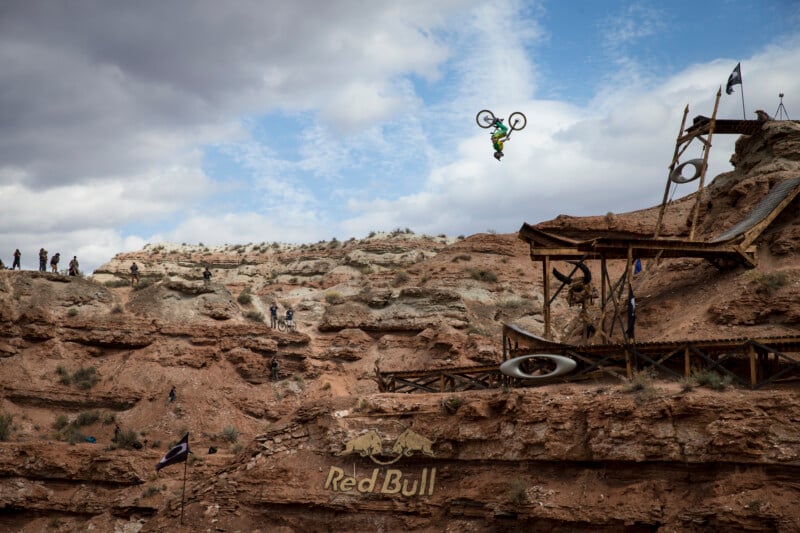
When viewers tune in this October, they will see the incredible feats of athletes like Cam Zink, Kyle Strait, and Chelsea Kimball. But as the 25th-anniversary exhibition in New York reminded us, there is a second story unfolding in every frame. Behind every iconic image of a backflip over a 70-foot canyon is a photographer who climbed the same ridge, braved the same heights, and waited for the perfect millisecond to capture the spirit of the Rampage. The athlete creates the moment, but it is the photographer who ensures that the moment lives on forever.