According to the legal filings and reports first brought to light by the Financial Times, the dispute involves two specific digital assets: Falcon Finance (FF) tokens and ESPORTS tokens. The DWF entities allege that they entered into a contract to sell these tokens to BitGo at a significant discount. In the world of digital asset finance, such discounted sales are standard practice, provided the buyer agrees to a "lock-up" period. This mechanism is designed to ensure market stability, preventing large-scale investors from immediately liquidating their positions for a profit, which would likely trigger a price collapse and harm other stakeholders. In this instance, the agreement reportedly mandated a three-month lock-up period during which BitGo was prohibited from selling the acquired tokens.
The core of the grievance lies in the accusation that BitGo failed to honor this cooling-off period. DWF Maas and Falcon Digital claim that BitGo moved the tokens to various cryptocurrency exchanges and sold them roughly two months before the first scheduled unlock date. This alleged breach of contract, DWF argues, had a direct and devastating impact on the market value of both the Falcon Finance and ESPORTS tokens. The plaintiffs are seeking approximately $114 million in damages, a figure they claim represents the direct financial losses incurred due to the downward price pressure caused by BitGo’s unauthorized selling activity.
The price action of the tokens in question appears to support the plaintiffs’ narrative of a sharp decline during the period of the alleged breach. Market data indicates that the Falcon Finance (FF) token was trading at approximately 8 cents at the commencement of the lock-up period in early March. By late April, the price had eroded to around 7 cents. The ESPORTS token saw an even more dramatic devaluation; after trading at roughly 28 cents in mid-March, its value plummeted to just 7 cents by early June. DWF Labs contends that these price drops were not merely the result of general market volatility but were specifically exacerbated, if not caused, by BitGo’s decision to liquidate its holdings prematurely.
The lawsuit highlights a critical tension within the cryptocurrency ecosystem: the balance between liquidity and long-term project viability. Private token sales are a fundamental pillar of capital raising for blockchain projects. They allow developers to secure the funding necessary for technical advancement and ecosystem growth without the immediate pressure of public market fluctuations. However, for these arrangements to function effectively, the integrity of lock-up agreements is paramount. When a major institutional player like BitGo—traditionally viewed as a safe and compliant custodian—is accused of violating these terms, it sends ripples of concern through the broader investment community.
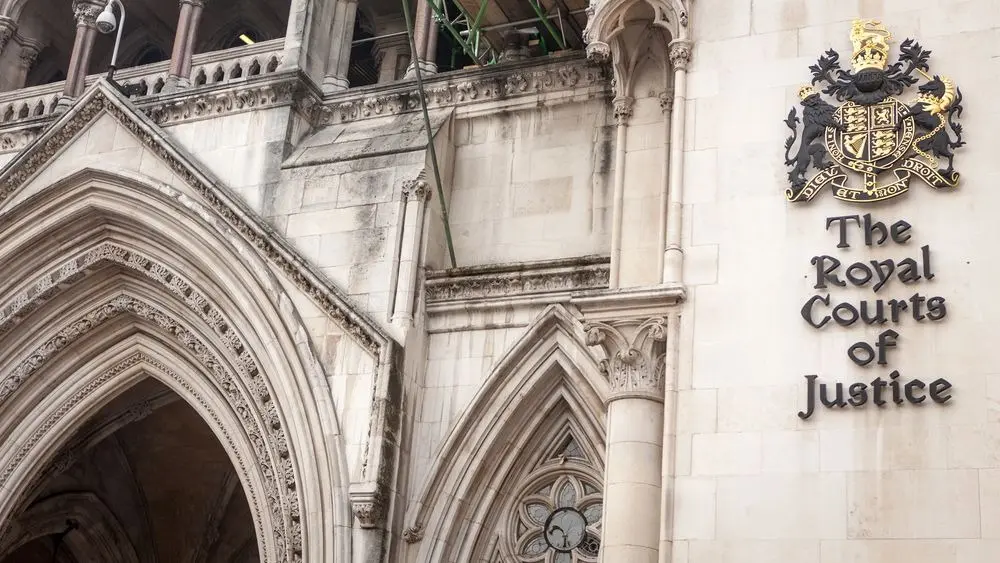
In statements provided to the Financial Times, DWF Labs emphasized that the discount BitGo received was explicitly conditional on the tokens remaining locked. The firm stated that they had identified the movement of tokens to exchanges as early as April and May. DWF further noted that they attempted to resolve the matter privately, seeking undertakings from BitGo to cease the sales and adhere to the original contract. According to DWF, when no such assurances were forthcoming, they felt compelled to seek recourse through the judicial system. This move into the London High Court underscores the increasing reliance on traditional legal frameworks to settle high-stakes disputes within the decentralized finance and digital asset sectors.
The litigation comes at a time when DWF Labs itself is under intense scrutiny. The firm has carved out a reputation as an aggressive market maker and venture investor, often entering into high-profile deals that draw both admiration and skepticism. One of its most notable recent moves was a $25 million investment in WLFI tokens, the native asset of World Liberty Financial. This project gained international attention due to its backing by President Donald Trump and members of his family. While the investment signaled DWF’s intent to play a major role in the intersection of politics and decentralized finance, it also invited unwanted attention from regulators and lawmakers in Washington, D.C.
A significant portion of the concern surrounding DWF Labs stems from the background of its founder, Andrei Grachev. Lawmakers have raised questions regarding Grachev’s previous ties to Russia, specifically his tenure as the CEO of the Russian arm of Huobi, a major cryptocurrency exchange, between 2018 and 2019. Huobi has faced sanctions and regulatory crackdowns in multiple jurisdictions over allegations that its platform was used to help Russian entities evade Western sanctions. While there has been no direct evidence linking Grachev’s current activities at DWF Labs to sanctioned entities, his past professional associations have made the firm a lightning rod for geopolitical debate within the crypto industry.
The lawsuit against BitGo adds another layer of complexity to DWF’s corporate narrative. By positioning itself as a victim of a contractual breach by a major custodian, DWF is asserting its role as a defender of market integrity and contractual obligations. However, the sheer scale of the $114 million claim ensures that this will be a protracted and closely watched legal battle. For BitGo, the stakes are equally high. As a company that has built its brand on the premise of institutional-grade security and trust, an allegation of "dumping" tokens in violation of a legal agreement strikes at the heart of its value proposition.
The broader digital asset industry often relies on "trustless" technology, yet the reality of large-scale institutional trading remains heavily dependent on legal contracts and the reputations of the parties involved. When those contracts are allegedly ignored, the resulting litigation often reveals the fragility of the current market infrastructure. The London High Court is increasingly becoming a preferred venue for these disputes, as it offers a sophisticated legal environment capable of handling complex financial instruments and international jurisdictional issues.
As the case progresses, the court will likely delve into the specific mechanics of the token transfers and the precise wording of the sale agreements between DWF’s subsidiaries and BitGo. The defense mounted by BitGo will be crucial; if they can demonstrate that the sales were permitted under specific clauses or that the price drops were the result of broader market trends unrelated to their actions, the $114 million claim could be significantly undermined. Conversely, if DWF can prove a willful or negligent breach of the lock-up terms, it could set a major precedent for how private token sales are enforced in the future.
Currently, neither DWF Labs nor BitGo has provided a formal public response to the requests for comment regarding the specifics of the lawsuit. The silence from both camps is typical of high-stakes litigation, where every public statement can be scrutinized and used as evidence in court. For now, the industry is left to observe the fallout of a clash between two giants of the crypto world—one a controversial market maker and the other a cornerstone of institutional custody.
The outcome of this case will likely influence how future private placement deals are structured in the digital asset space. If lock-up periods can be circumvented without severe consequences, the discount model used to attract early-stage capital may become obsolete or require even more stringent, perhaps code-enforced, restrictions. As the legal process unfolds in London, it serves as a stark reminder that even in the fast-moving world of cryptocurrency, the traditional principles of contract law and the consequences of market manipulation remain very much in play. The resolution of this $114 million dispute will be a bellwether for the maturity of the industry and its ability to hold its most prominent actors accountable.