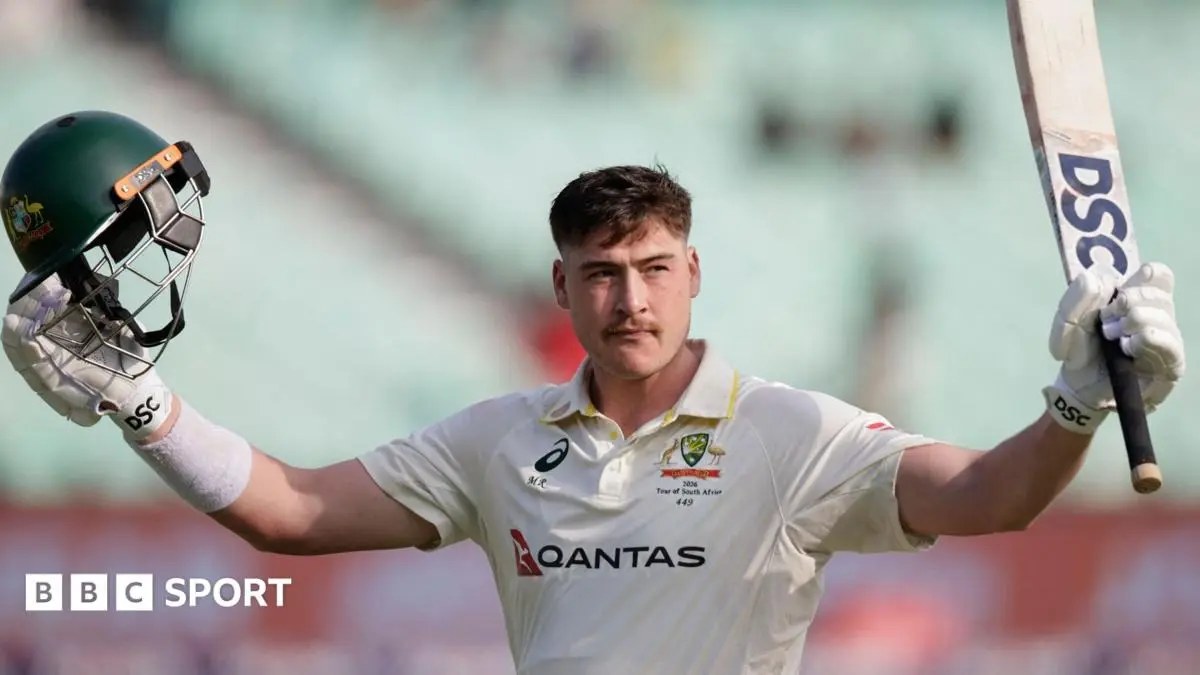
Renshaw’s career has been a series of starts and stops. He burst onto the scene as a 20-year-old, scoring 184 in just his fourth Test against Pakistan in January 2017. At that time, he looked destined for a decade-long tenure at the top of the order. However, the harsh realities of international cricket saw his form dip, and he averaged just 19.41 across his next 10 Tests before being dropped. His recall earlier this year was seen by some as a gamble, but his performance against South Africa has vindicated the selectors’ faith.
The innings was a throwback to a different era of Test cricket. On the first day, Renshaw was almost immobile, hitting only three boundaries as he focused entirely on survival. Statistics revealed that he attacked only 14.2% of the deliveries he faced while making his first 50 runs—the lowest attacking percentage of any player in the Australian top order. While his teammates struggled to find the balance between aggression and defense, Renshaw was content to leave anything wide of the off-stump, trusting his technique and waiting for the South African bowlers to tire.
As day two progressed, the pitch in Durban began to flatten out, and Renshaw began to expand his repertoire. He showed remarkable discipline in his leaves and focused his scoring primarily square of the wicket or behind it. His ability to rotate the strike became more pronounced as the day wore on, particularly as he began to build crucial partnerships with the lower order.
The most vital of these stands began in the morning session with captain Pat Cummins. The pair added 86 runs for the seventh wicket, a partnership that took the sting out of the South African attack and began to move the total toward respectability. Cummins contributed a vital 43, playing a supportive role that allowed Renshaw to anchor the innings. When Cummins eventually fell, Renshaw found an even more resilient partner in Nathan Lyon.
The partnership between Renshaw and Lyon was the turning point of the match. Together, they added 134 runs for the ninth wicket, a stand that left the South African fielders looking increasingly demoralized. Renshaw showed great tactical maturity during this period, expertly controlling the strike to protect Lyon from the raw pace of Anrich Nortje. However, as the partnership grew and the bowlers flagged, Renshaw became more aggressive. He began to find the boundary with greater frequency, punishing anything short or overpitched and inflicting further psychological pain on a South African side that had expected to wrap up the tail quickly.
By the time Renshaw finally fell—caught in the first over after the tea break for 190—he had dragged Australia from the brink of a collapse to a total of 390. He was the last man out, having added a further 21 runs with number 11 Josh Hazlewood. His departure left South Africa with a tricky 22-over period to navigate before the close of play. The pressure of Renshaw’s long vigil immediately paid dividends for the Australian bowlers, as Ryan Rickelton fell for a three-ball duck, leaving the Proteas reeling at the start of their innings.