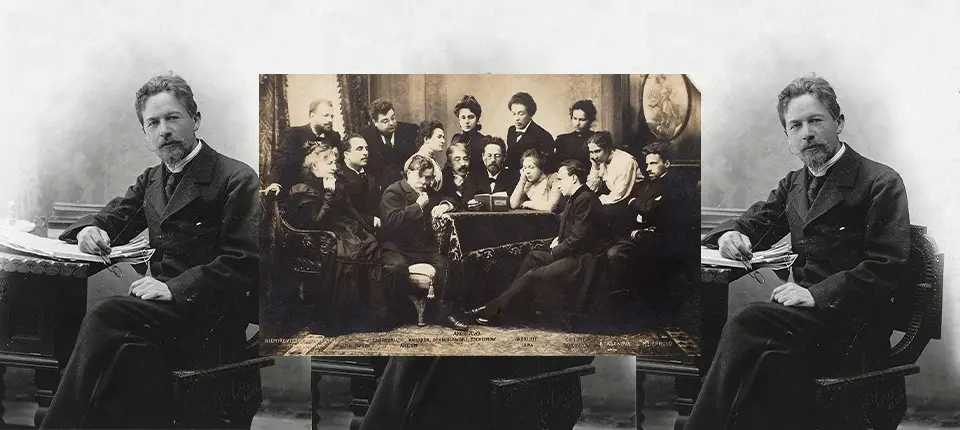
The history of literature is often defined as much by its failures as its triumphs. In the late autumn of 1896, the Alexandrinsky Theatre in St. Petersburg hosted the premiere of Anton Chekhov’s The Seagull. The evening was a disaster of historic proportions; the audience hissed, the lead actress lost her voice, and Chekhov himself fled the theater in a state of deep humiliation. Shaken by the rejection of a work he had poured his soul into, the playwright famously declared, “Not if I live to be seven hundred will I write another play.” History, of course, had other plans. Chekhov went on to revolutionize modern drama, and The Seagull eventually became a cornerstone of the theatrical canon.
This tension between the initial reception of a work and its long-term cultural impact serves as a fitting backdrop for this week’s literary discourse. As we look across the "Literary Internet" for the week of October 12–16, 2026, the conversation remains as vibrant and contentious as ever, spanning from the geopolitical consequences of conflict to the technological anxieties of the digital age.
THE BEST OF THE LITERARY INTERNET
The current literary moment is characterized by a profound intersection between creative storytelling and the pressing social issues of our time. At the forefront of this dialogue is a conversation between Pulitzer Prize winner Adam Johnson and the celebrated novelist Amitav Ghosh. The two discussed Ghosh’s latest work, The Wayfinder, exploring the myriad ways a single narrative can be constructed and interpreted. Their exchange highlights a recurring theme in contemporary letters: the power of the storyteller to navigate complex histories and provide a compass for an increasingly fractured world.
The geopolitical weight of literature is further emphasized in a sobering reckoning with the ongoing crisis in Gaza. Analysis on the site explores how the genocide has fundamentally reshaped the Middle East, challenging traditional Western notions of "civilization" and demanding a new vocabulary for justice. This spirit of witnessing is mirrored in the work of Ukrainian writers such as Artur Dron, Andriy Lyubka, and Lena Lyagushonkova. Oksana Lutsyshyna recommends these authors as essential reading for those seeking to understand the human cost of the invasion of Ukraine and the role of literature in preserving national identity during wartime.
The intersection of history and personal legacy is also explored through the lens of E. L. Shen, who writes about the process of coming to understand an assassinated ancestor. Through the act of writing, Shen bridges the gap between historical record and personal memory, suggesting that the page is a space where the dead can finally be heard. This theme of historical recovery extends to the story of Biddy Mason, the Black matriarch who rose from enslavement to become a prominent landowner and philanthropist, helping to build the foundation of Los Angeles. Mason’s life serves as a vital reminder of the often-overlooked figures who shaped the American West.
In the realm of fiction, the week marks a significant return for Bonnie Garmus, the bestselling author of Lessons in Chemistry. In a conversation with Jane Ciabattari, Garmus discusses her new novel, Peck & Peck, which shifts its focus to the world of poets and poetry. The novel is described as a coming-of-age story that treats the craft of verse with the same rigor and wit that Garmus previously applied to the world of science. This interest in the poetic life is further reflected in a broader cultural analysis of three recent films that examine how society perceives poets, questioning whether the "tortured artist" trope still holds weight in the 21st century.
The technical and emotional challenges of the writing process are also given space this week. Will Maclean offers a candid look at the messy reality of creation, discussing the necessity of "fucking up a notebook" to eventually produce a coherent novel. This sentiment is echoed by those participating in the Lit Hub Questionnaire, where five authors tackle seven questions with "no wrong answers," revealing the diverse and often idiosyncratic habits that sustain a writing life. For those seeking more specific inspiration, Bonnie Jo Campbell shares a curated list of seven literary ghost stories, suggesting that the most effective hauntings are those that occur within the pages of a book.
While the literary world looks back at history and inward at the creative process, it is also grappling with the rapid technological shifts of the present. A major point of contention this week is the contradictory relationship between the publishing industry and Big Tech. Publishers find themselves in the awkward position of suing tech giants for copyright infringement with one hand while embracing artificial intelligence with the other. This tension raises fundamental questions about the future of intellectual property and whether AI is a tool for democratization or a threat to the livelihood of human creators.
The influence of technology extends beyond the printing press and into the very structures of our daily lives. An investigation into the housing crisis reveals the "real reason the rent is too damn high," pointing the finger at greed-driven corporate algorithms. These systems, designed to maximize profit, have fundamentally altered the relationship between landlords and tenants, making the basic human need for shelter subject to the whims of data-driven speculation.
Even the aesthetics of our living spaces are under scrutiny. A compelling case is made against the modern obsession with painting walls white. What is often framed as a clean, minimalist choice is analyzed here as a "blank wall" that masks myriad hidden meanings, potentially stripping homes of their character and history in favor of a sterile, algorithmic neutrality.
The natural world and our relationship to it remain a vital source of literary inquiry. From a heartwarming and insightful essay on what a relationship with a rescue raccoon can teach us about self-discovery to a call for the preservation of boglands and peatlands, writers are urging a closer look at the environment. The "unlikely beauty and hidden danger" of these landscapes serve as a metaphor for the fragility of the planet. Furthermore, a nuanced look at rural American life seeks to move past the "endless stereotyping" that often dominates political discourse, arguing that the rural experience is as diverse and complex as any urban one.
As always, the week provides a wealth of recommendations for those looking to expand their reading lists. Jonathan Cheng offers a guide to five essential books for understanding North Korea’s cult of personality, while another list explores the history of the Venetian ghetto. For those interested in the visual arts, the work of Jean-Pierre and Eliane Laffont is highlighted, documenting the radical changes of American counterculture in the 1960s and 70s.
The week’s news is rounded out by tributes and memories. Josefine Kals remembers the late writer and professor Stephen Dixon, while Al Sharpton reflects on the mentorship of Jesse Jackson. Anand Giridharadas further explores Sharpton’s own career, analyzing how "The Rev" has worked to shape narratives of justice in the American consciousness.
From the best-reviewed books of the week to the Independent Press Top 40 Bestsellers in fiction and nonfiction, the literary landscape remains a place of intense activity and reflection. Whether it is through the "Cruise Control" of a new poem by Eric Amling or a deep dive into the systemic slaughter of nonconformist women during medieval witch hunts, the written word continues to be the primary medium through which we process our past and imagine our future. Just as Chekhov eventually returned to the stage to change the world, today’s writers continue to push against the "flops" and failures of the present to find a lasting truth.