A remarkably resilient and unusually shaped wych elm, standing on the central promenade of Newcastle in County Down, has been officially crowned the UK’s Tree of the Year for 2026. The historic victory marks the very first time a tree from Northern Ireland has secured the prestigious national title, capturing the imagination of voters across the United Kingdom and highlighting the extraordinary endurance of urban nature.
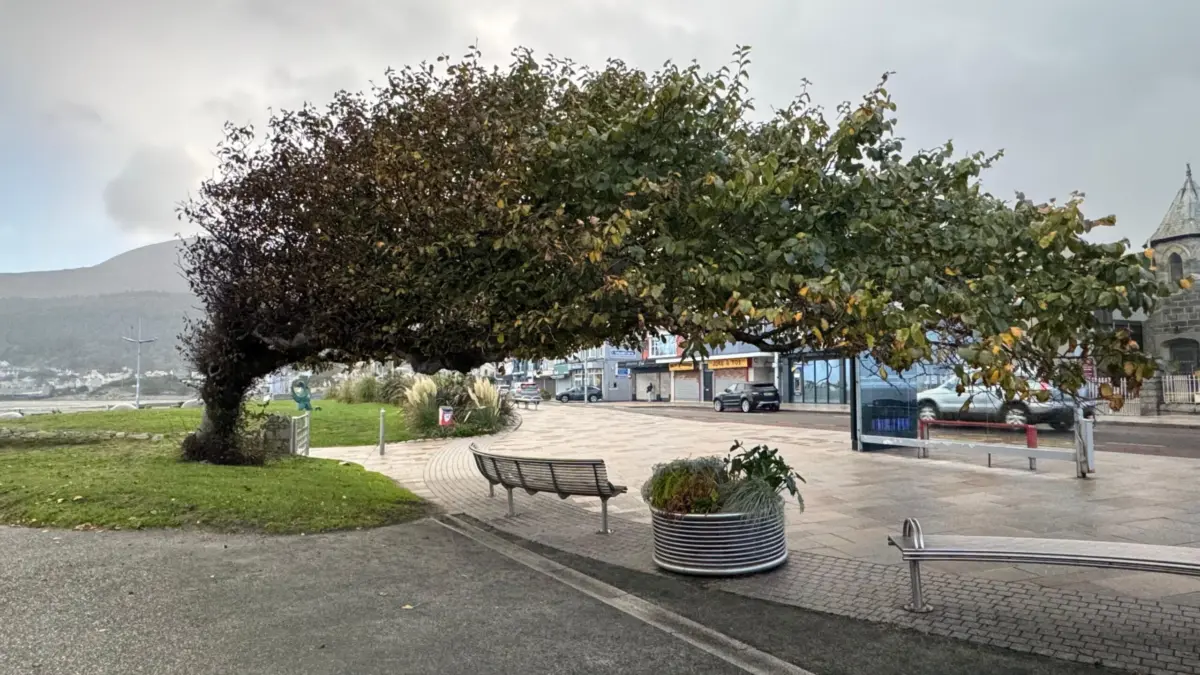
Known affectionately by locals as the "Bendy Tree" due to its near-horizontal trunk, the 150-year-old specimen emerged as the decisive winner in the Woodland Trust’s annual competition. It secured more than 30 percent of the national public vote, triumphing over a highly competitive shortlist of ancient, historic, and visually spectacular trees from England, Scotland, and Wales.
The theme for this year’s competition was "Against All Odds." The Woodland Trust curated a shortlist of trees from across the UK that represent impressive, beautiful, and sometimes utterly baffling examples of how the natural world can survive extreme adversity, human interference, and environmental change.
John Martin, the Northern Ireland director for the Woodland Trust, expressed his pride in the tree’s landmark victory, noting that he had been enthusiastically rooting for the whimsical specimen to win the top prize. He stated that the fact that tens of thousands of people across the UK cast their votes for the County Down elm is a testament to the deep, universal connection people feel toward unique natural landmarks. He described the win as a great testament to the resilience of nature.
Standing Tall Against All Odds
To claim the national title, the Newcastle wych elm had to overcome stiff competition from nine other shortlisted entries, each boasting its own remarkable story of survival against the elements and human history.
Among the competitors was a small yew tree that has managed to grow directly out of the stone masonry of a church tower in Devon for two centuries, defying the lack of soil and harsh exposure. Another contender was a resilient Scottish ash tree that managed to survive a devastating, direct lightning strike. The shortlist also featured a historic yew in Surrey, inside of which early 19th-century villagers discovered an embedded English Civil War cannonball, physical proof of the turbulent history the tree had witnessed.

Despite these formidable contenders, it was the distinctive silhouette and local charm of the Newcastle wych elm that captured the public’s heart. Its victory brings national recognition to a tree that has become a beloved symbol of Newcastle’s coastal identity and a living reminder of the area’s Victorian past.
The Last Tree Leaning: A Century and a Half of Survival
The history of the Bendy Tree is intimately linked with the development of Newcastle as a popular seaside destination. Planted approximately 150 years ago during the 19th century, the wych elm was not originally a solitary landmark. Instead, it was part of a formal row of trees planted along the town’s original seaside promenade. The purpose of the row was highly practical: to provide a physical shelter for Victorian strollers, protecting them from the fierce, salty sea breezes blowing in from the Irish Sea.
Over the decades, the environment shaped the trees, but human activity eventually proved to be a more immediate threat. During a major redevelopment of the Newcastle promenade in the 1980s, the decision was made to fell the historic row of trees. Through a combination of luck, local appreciation, and sheer physical placement, the bendy wych elm was spared, making it the last remaining survivor of the original Victorian planting.
The relentless coastal winds that the tree was planted to block have left a permanent mark on its physical form. Decades of strong onshore gales forced the trunk to grow at an extreme angle, leaving it running almost parallel to the ground. Today, the tree forms a dramatic, leafy archway over the public path, resembling a green rainbow. While it no longer stands as part of a protective row, its sweeping canopy continues to offer shelter and character to the promenade, albeit in a highly unusual and striking way.
A Double Survivor of Wind and Disease
The Newcastle wych elm’s survival is even more remarkable when considered against the wider ecological challenges faced by its species. In addition to weathering coastal storms and escaping the chainsaws of 1980s developers, the tree successfully resisted one of the most devastating ecological events in modern British history: the Dutch elm disease epidemic.
During the 1960s and 1970s, Dutch elm disease—a highly contagious fungal pathogen spread by bark beetles—swept across the United Kingdom. The disease caused near-total devastation, destroying an estimated 30 million native elm trees and permanently altering the landscape of the British countryside. Wych elms, which are native to the UK, were particularly hard hit.

The fact that this coastal specimen survived the epidemic intact is a biological marvel. John Martin emphasized that the tree has demonstrated remarkable resilience to live as long as it has, and he expressed his delight at seeing a tree of this advanced age and historical significance receive such high-profile national recognition.
May Chemais, the Ancient Tree inventory lead at the Woodland Trust, also spoke warmly of the Newcastle winner, describing it as an astonishing and bizarre tree that has endured a great deal of hardship over its long life. She noted that the Bendy Tree has been blasted by extreme winds, over and over again, for well over a century, yet it has continued to exist, remain firmly rooted, and adapt to its challenging environment.
Chemais suggested that the tree’s survival story is precisely why it resonated so strongly with the voting public. She noted that humans, much like the tree, go through changes and hardships that shape who they are, which is likely why the Bendy Tree struck such a deep chord with people. She added that ancient trees are a vital part of a community’s culture, offering not just physical shade, but also a repository of shared local stories.
To celebrate and preserve this unique local treasure, the local council installed a public bench directly underneath the horizontal trunk of the elm. Today, the bench is a popular resting spot where locals and tourists can sit protected beneath the leafy canopy, enjoying panoramic views of the Irish Sea and the dramatic peaks of the nearby Mourne Mountains.
The Broader Challenge of Northern Ireland’s Woodland Canopy
While the victory of the Newcastle wych elm is a cause for celebration, environmental experts hope the spotlight on the tree will also draw attention to the wider state of forestry and woodland cover in Northern Ireland.
Currently, Northern Ireland has one of the lowest rates of woodland cover in all of Europe, standing at just 8.7 percent. When compared to the rest of the United Kingdom and the Republic of Ireland, the region lags significantly behind:

- Scotland boasts the highest woodland cover in the UK at 19 percent.
- Wales has approximately 15 percent woodland cover.
- England stands at 10 percent.
- The Republic of Ireland has a woodland cover of 11 percent.
In response to this ecological deficit, environmental advocates and policymakers have launched a tree-planting action plan, which sets an ambitious target of reaching 12 percent woodland cover across Northern Ireland by the year 2050.
However, conservationists warn that achieving this goal will require a massive scale-up of current efforts. To remain on track for the 2050 target, current tree-planting rates across the region will need to more than triple.
Against this backdrop of sparse woodland, individual mature trees like the Newcastle wych elm carry immense ecological, historical, and cultural value. The Woodland Trust hopes that the Bendy Tree’s high-profile victory will inspire communities across Northern Ireland to cherish, protect, and advocate for their local trees, ensuring that future generations can continue to find shelter and inspiration beneath their branches.