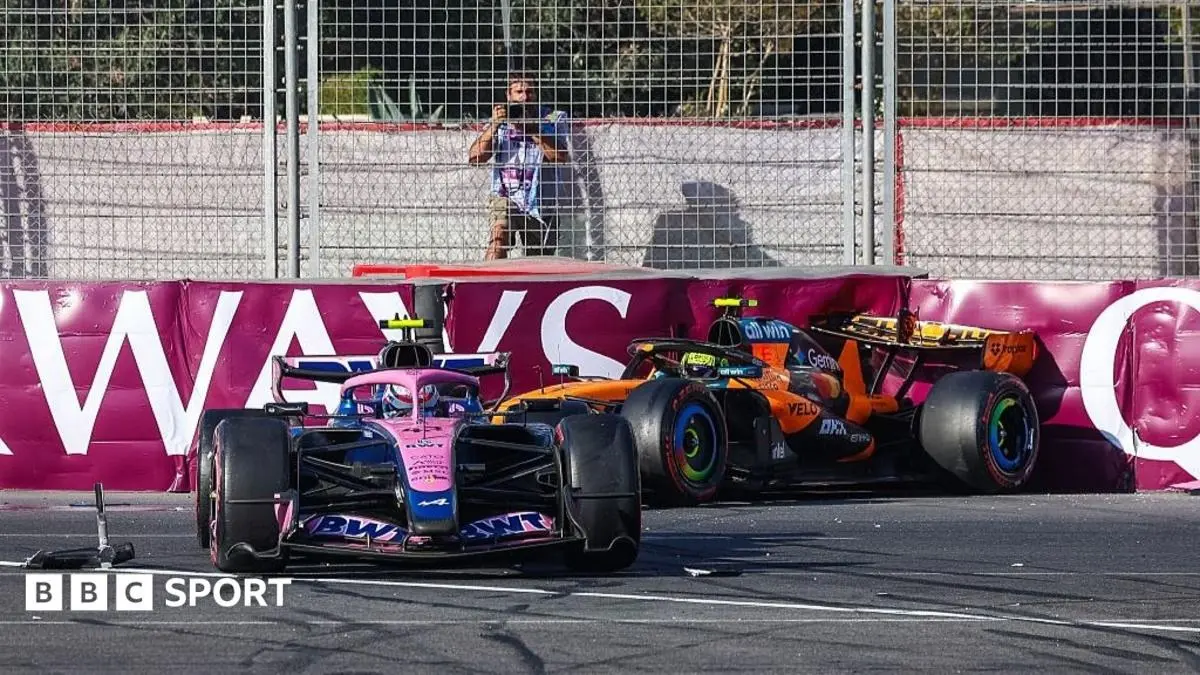
Norris’s argument centers on two primary concerns: the sporting integrity of the race for blameless drivers and the staggering financial burden placed on teams due to repair costs. In the modern era of Formula 1, where a strict cost cap dictates every aspect of a team’s development and operational budget, the destruction of a car is no longer just a logistical headache—it is a strategic disaster.
"The FIA should be more strict and start handing out bans for this kind of stuff," Norris explained, highlighting the ripple effect that one driver’s error can have on the rest of the grid. "It’s careless from people. It costs a lot of money. All my parts are in the bin now, so people should just get banned for this kind of driving."
The phrase "all my parts are in the bin" resonates deeply within the technical side of the sport. Each wing, floor, and suspension component on a modern Formula 1 car represents hundreds of man-hours of engineering and hundreds of thousands of dollars in manufacturing. When a car is "taken out" in a chain reaction, the victimized team loses not only the opportunity to score points but also the physical hardware that may have been part of a specific upgrade package designed to improve performance in future races. For a driver of Norris’s caliber, seeing state-of-the-art technology reduced to scrap metal because of a rookie-level mistake is a bridge too far.
Norris went further, questioning whether drivers who commit such errors possess the necessary temperament for the series. "(They) don’t deserve to be in Formula 1," he asserted, a comment that underscores the immense pressure and the "elite-only" mindset of the paddock. "If you cause a crash on a restart like this, yeah, you should have at least a one-race ban."
The call for a one-race ban is a significant escalation in the ongoing dialogue regarding driver discipline. Historically, race bans in Formula 1 have been reserved for the most egregious of offenses or for drivers who have accumulated a specific number of penalty points over a rolling twelve-month period. By suggesting an automatic ban for causing a restart collision, Norris is advocating for a shift toward a "zero-tolerance" policy. He believes that the current environment allows for a level of recklessness because the penalties—often five or ten-second additions to a race time—do not match the severity of the damage caused to other competitors.
The incident also highlights the internal difficulties at Alpine, as Colapinto’s error directly eliminated his teammate, Pierre Gasly. Intrateam collisions are notoriously the most difficult for team principals to manage, as they result in a total loss of data and points for the organization, often leading to strained relationships within the garage. The fact that the error then cascaded to involve a championship frontrunner like Norris only amplified the visibility and the criticism of the mistake.