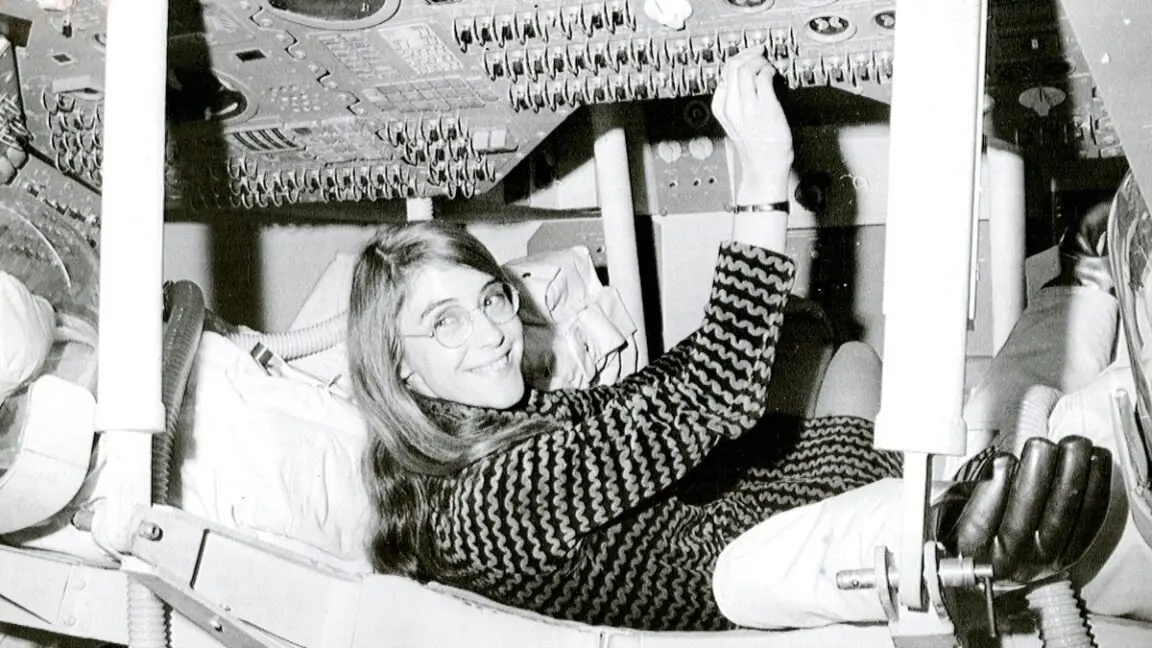
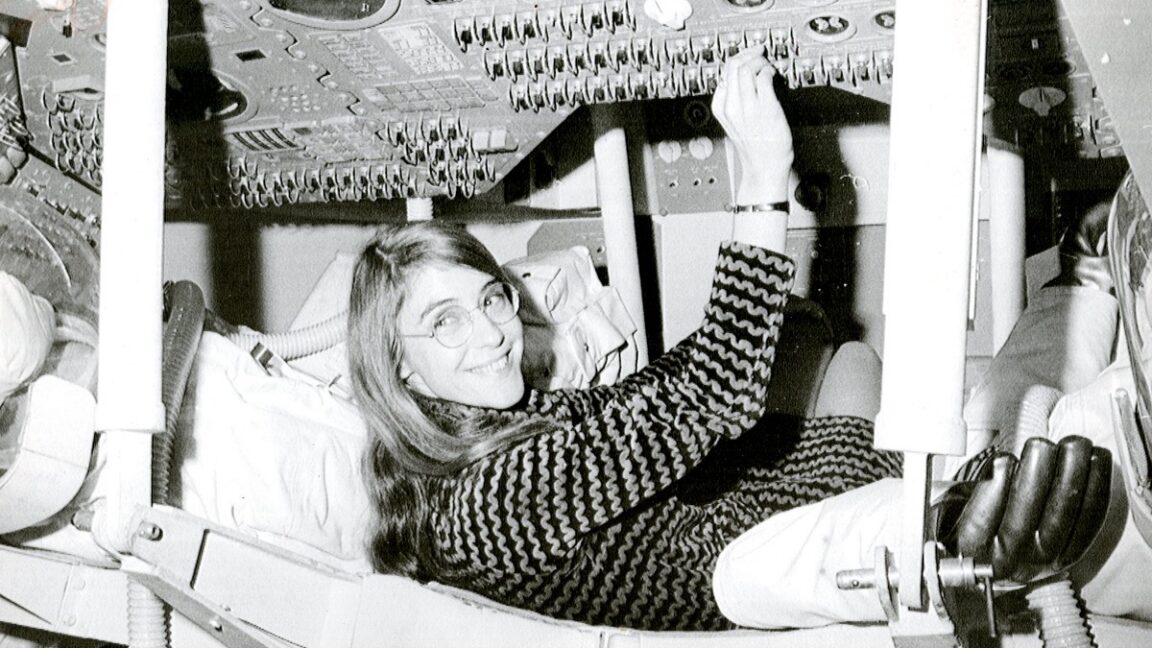
Margaret Hamilton, the visionary computer scientist whose pioneering work defined the field of modern software engineering and ensured the safe landing of Apollo 11 on the Moon, has died at the age of 90.
Hamilton, who famously coined the term "software engineering" at a time when programming was considered an art rather than a formal technical discipline, led the development of onboard flight software for NASA’s Apollo space program during the 1960s and 1970s. Her death marks the passing of one of computing’s most pivotal historical figures—a scientist whose focus on error prevention and system reliability laid the groundwork for modern computer science.
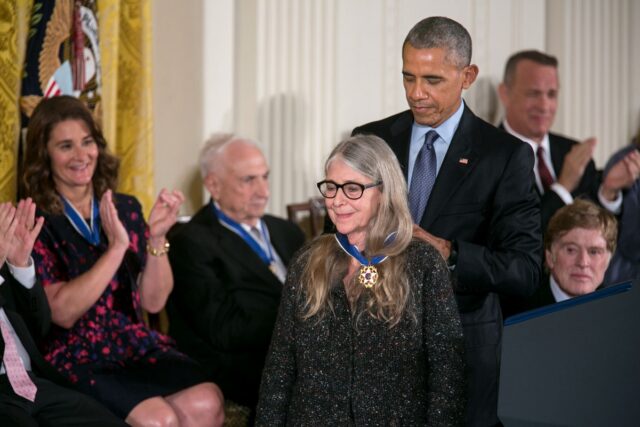
A recipient of the Presidential Medal of Freedom—the highest civilian honor in the United States—awarded by President Barack Obama in 2016, Hamilton’s legacy extends across space exploration, theoretical computer science, and commercial technology. She was immortalized in 2017 as part of LEGO’s "Women of NASA" set alongside trailblazing astronauts Mae Jemison and Sally Ride, cementing her legacy in popular culture as an enduring symbol for women in science, technology, engineering, and mathematics (STEM).
Tributes from the academic and aerospace communities underscored the historic magnitude of her achievements.
"To say Margaret Hamilton was a pioneer—to say she was ahead of her time—would be a dramatic understatement. She was a software engineer at a time when that field was in its infancy, and she not only developed advanced code herself but also led a team in using that nascent technology to develop one of the most complex systems humanity had ever achieved," said Olivier de Weck, interim head of the Massachusetts Institute of Technology (MIT) Department of Aeronautics and Astronautics. "The Apollo program still stands as one of our greatest testaments to the power of collaboration, ingenuity, and engineering, and Hamilton was a fundamental contributor to that program’s success."
Born in Paoli, Indiana, in 1936, Hamilton grew up in a family that valued literature, education, and analytical thought. Her father was a poet and her grandfather served as a school headmaster—influences that fostered her intellectual curiosity and led her to pursue a minor in philosophy alongside her primary major in mathematics. She graduated from Earlham College in 1958 with a Bachelor of Arts in mathematics, marrying her first husband, James Cox Hamilton, that same year.
The couple established a practical plan to support each other’s higher education: Hamilton would take a full-time position to support her husband while he completed his law degree, after which he would financially support her through graduate school so she could earn a PhD in mathematics.
That career pathway took an unexpected and historic turn when Hamilton took a job at MIT working with Edward Lorenz, the renowned mathematician and meteorologist. Lorenz was in the midst of pioneering the mathematical principles of weather forecasting using differential equations that accounted for continuously changing atmospheric variables such as temperature, barometric pressure, and wind velocity.
Lorenz’s famous research on his LGP-30 computer ultimately birthed chaos theory and the concept of "sensitivity to initial conditions"—often described as the "butterfly effect"—where infinitesimal variations in starting values produce drastically different mathematical outcomes. While history frequently highlights Lorenz’s discovery during a 1961 simulation run, it was Hamilton who was responsible for programming the LGP-30 computer that made those calculations possible.
At the time, formal coursework in computer programming did not exist; computers were massive, mechanical novelties, and both Lorenz and Hamilton had to teach themselves how to write code from scratch. Lorenz was frequently entertained by Hamilton’s inventive and pragmatic problem-solving tactics. To bypass the tedious and time-consuming process of debugging through standard machine protocols, Hamilton took to rolling long strips of paper tape down the hallways of MIT to inspect the binary routines visually.
Using a simple pencil, she would edit the code manually: poking physical holes in the paper tape to create binary "ones" and covering existing holes with bits of Scotch tape to turn them into binary "zeros." In 1961, when Hamilton transitioned to her next research project, she thoroughly trained her replacement—a recent Mount Holyoke mathematics graduate named Ellen Fetter. Lorenz later formally recognized the vital technical contributions of both women in his scientific papers, acknowledging their essential role in the dawn of chaos theory.
In 1961, Hamilton moved to MIT’s SAGE (Semi-Automatic Ground Environment) project, writing software for the prototype XD-1 computer used by the United States Air Force to process radar signals and search for potential enemy aircraft during the Cold War.
Upon joining the project, Hamilton was handed a challenging assignment: a complex software program that no previous developer had managed to run successfully. Compounding the difficulty, the original author’s technical notes and documentation were written entirely in Latin and Greek. Hamilton tackled the puzzle, successfully deciphering the code and bringing the program to operational status. To her amusement, when the software finally executed and output its results, the program printed its calculations in Greek and Latin. Her work on the SAGE project marked a major turning point in her career, sparking a lifelong fascination with software reliability, fault tolerance, and systemic error prevention.
To the Moon
By 1965, Hamilton was preparing to carry out her original plan to enroll in graduate school for her PhD in mathematics. However, her husband noticed a newspaper advertisement announcing that MIT’s Instrumentation Laboratory was seeking programmers to develop onboard guidance and navigation computer software for NASA’s newly launched Apollo program.
Fascinated by the unprecedented technical challenge of sending human beings to the Moon, Hamilton applied and became the first programmer—and the first woman—hired for the Apollo software development effort. Over the next decade, she would lead software development efforts across six lunar landing missions between 1969 and 1972.
Computing technology in the mid-1960s required radical physical manufacturing techniques to withstand the extreme conditions of spaceflight. The Apollo Guidance Computer relied on "core rope memory," a permanent read-only storage mechanism where binary code was physically woven through magnetic cores using copper wires. A copper wire passing through a magnetic core represented a binary "1," while a wire bypassing the core represented a binary "0."
Because the physical weaving required exceptional dexterity and patience, NASA contracted New England textile workers—many of them expert seamstresses—to thread the copper wires into long memory ropes. Because Hamilton was responsible for supervising the code specifications and managing the production of these memory units, her colleagues affectionately bestowed upon her the moniker "rope mother."
During the grueling development cycle of the Apollo code, Hamilton frequently worked nights and weekends at the MIT lab, often bringing along her four-year-old daughter, Lauren. While Hamilton worked on programming, Lauren played in the lab’s mission simulator, pretending to be an astronaut.
One day, while pushing buttons in the simulated Apollo spacecraft, Lauren accidentally triggered a sequence that caused the entire simulator system to crash. The young girl had typed the command "P01," a pre-launch initialization routine, while the simulated spacecraft was already in flight. The computer attempted to overwrite its active flight data, causing the system to freeze.
Recognizing that an astronaut could easily make the same human error during a real mission, Hamilton approached NASA management with a proposal to add software safeguards to prevent the execution of pre-launch routines while in flight. However, NASA officials dismissed her concerns, insisting that astronauts were rigorously trained professionals who would never make such a mistake.
Hamilton’s warning proved prophetic during the Apollo 8 mission in December 1968, the first manned spacecraft to orbit the Moon. Astronaut Jim Lovell inadvertently selected the P01 command while in lunar orbit, wiping out all the computer’s navigational vector data. The accidental deletion left the spacecraft unable to calculate its position or trajectory for the return journey to Earth.
Hamilton and her team were called in emergency conditions to resolve the crisis. Working through the night, they devised a fix to upload fresh navigational data into the computer, restoring guidance and bringing Apollo 8 home safely. Within the lab, Hamilton jokingly referred to the issue as the "Lauren bug," and NASA subsequently authorized her team to implement safety checks in future software builds to protect against accidental human entry errors.
By 1968, Hamilton had risen to Assistant Director of the Software Engineering Division, leading the team responsible for Command Module and Lunar Module onboard software. During this period, she formulated groundbreaking concepts in system architecture, incorporating error recovery mechanisms directly into the flight software.
Recognizing that hardware failures or human input errors could easily overload the Apollo guidance computer’s limited processing power during crucial flight phases, Hamilton designed an asynchronous executive program. This software featured "priority display" interface routines that allowed the computer to drop non-essential background tasks automatically if system resource utilization approached critical levels.
This design proved to be the difference between success and catastrophic failure on July 20, 1969, during the historic descent of Apollo 11’s Lunar Module, the Eagle.
As astronauts Neil Armstrong and Buzz Aldrin approached the lunar surface, Aldrin entered radar codes that caused the system to become overloaded with extraneous calculations. The guidance computer was quickly overwhelmed, forced to process more computations than its memory could handle simultaneously. Just minutes before reaching the surface, the computer’s display screen flashed emergency "1201" and "1202" alarm codes. Inside Mission Control in Houston, flight controllers faced an agonizing decision over whether to abort the landing.
Hamilton’s software architecture performed precisely as designed. Recognizing that it was under severe processing stress, the system activated its priority recovery software. It automatically interrupted lower-priority tasks—such as updating telemetry displays—and redirected processing power exclusively to the highest-priority task: calculating the thruster firings and guidance trajectories required to land the spacecraft safely.

Because the software was able to recover gracefully without crashing, Mission Control recognized that the guidance system was functioning properly, allowing Armstrong and Aldrin to proceed. The Eagle touched down safely on the Sea of Tranquility, marking humanity’s first steps on another celestial body.
In a 1971 letter reflecting on the event, Hamilton detailed the sophisticated self-healing capabilities she and her team built into the flight code:
"The computer (or rather the software in it) was smart enough to recognize that it was being asked to perform more tasks than it should be performing. It then sent out an alarm, which meant to the astronaut, ‘I’m overloaded with more tasks than I should be doing at this time and I’m going to keep only the more important tasks’; i.e., the ones needed for landing… Actually, the computer was programmed to do more than recognize error conditions. A complete set of recovery programs was incorporated into the software. The software’s action, in this case, was to eliminate lower priority tasks and re-establish the more important ones… If the computer hadn’t recognized this problem and taken recovery action, I doubt if Apollo 11 would have been the successful Moon landing it was."
Following the conclusion of the Apollo program, MIT’s Instrumentation Laboratory became the independent Draper Laboratory. Hamilton worked there until 1976, when she decided to transition her flight-proven methodologies of fault tolerance, error prevention, and software reliability into the private sector.
She co-founded Higher Order Software in 1976 to commercialize software design tools focused on systemic error prevention. In 1985, she founded Hamilton Technologies, serving as its Chief Executive Officer. There, she created the Universal Systems Language (USL) for developing complex software systems, emphasizing defensive programming, error prevention, and rigorous architectural design to eliminate bugs before code execution.
In the decades following her work on Apollo, Hamilton’s contributions received widespread global recognition. In 2015, the complete source code for the Apollo Guidance Computer was uploaded to GitHub, where a new generation of software developers dissected and celebrated her team’s engineering techniques. In July 2019, on the 50th anniversary of the Apollo 11 landing, Google honored Hamilton’s crucial role by training over 100,000 motorized mirrors at its Mojave Desert solar power farm to reflect moonlight into a massive portrait of Hamilton across the desert floor.
Hamilton’s coining of the term "software engineering" originally faced skepticism from traditional engineers who viewed software development as secondary to hardware design. However, her work on Apollo proved that software was just as critical to complex engineering systems as physical machinery, establishing software development as an essential scientific discipline.
Hamilton is survived by her daughter, Lauren Hamilton; her son-in-law, Richard Selesnick; two grandsons; four great-grandchildren; and her siblings John, David, and Kathryn.