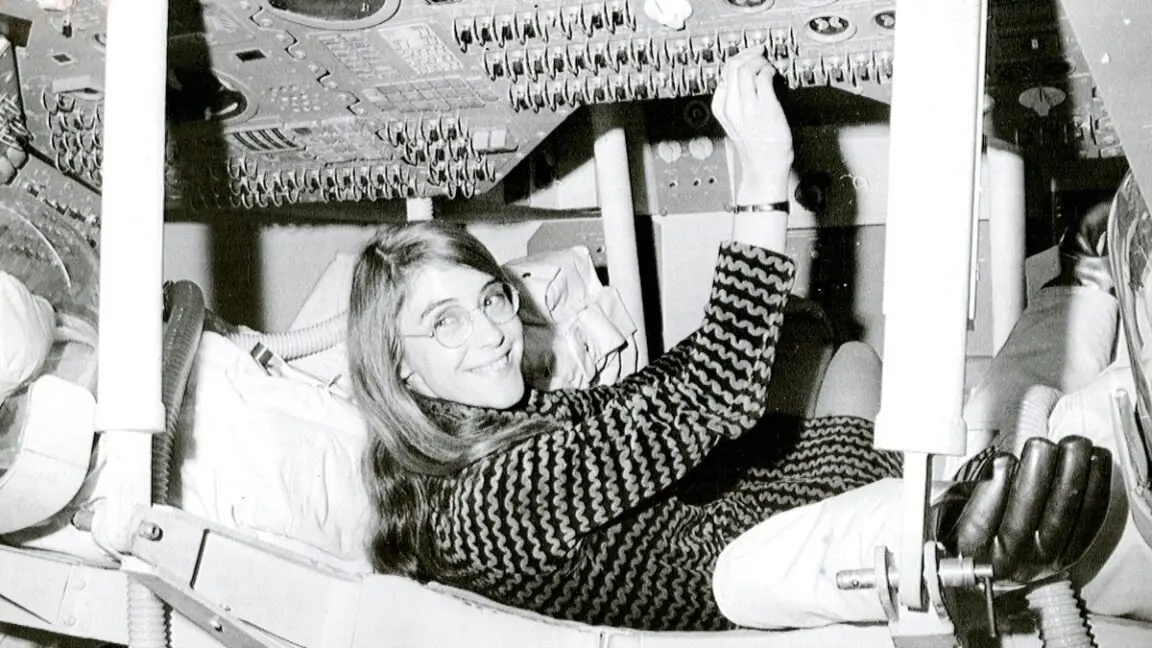
Upon joining the project, Hamilton was handed a challenging assignment: a complex software program that no previous developer had managed to run successfully. Compounding the difficulty, the original author’s technical notes and documentation were written entirely in Latin and Greek. Hamilton tackled the puzzle, successfully deciphering the code and bringing the program to operational status. To her amusement, when the software finally executed and output its results, the program printed its calculations in Greek and Latin. Her work on the SAGE project marked a major turning point in her career, sparking a lifelong fascination with software reliability, fault tolerance, and systemic error prevention.
To the Moon
By 1965, Hamilton was preparing to carry out her original plan to enroll in graduate school for her PhD in mathematics. However, her husband noticed a newspaper advertisement announcing that MIT’s Instrumentation Laboratory was seeking programmers to develop onboard guidance and navigation computer software for NASA’s newly launched Apollo program.
Fascinated by the unprecedented technical challenge of sending human beings to the Moon, Hamilton applied and became the first programmer—and the first woman—hired for the Apollo software development effort. Over the next decade, she would lead software development efforts across six lunar landing missions between 1969 and 1972.
Computing technology in the mid-1960s required radical physical manufacturing techniques to withstand the extreme conditions of spaceflight. The Apollo Guidance Computer relied on "core rope memory," a permanent read-only storage mechanism where binary code was physically woven through magnetic cores using copper wires. A copper wire passing through a magnetic core represented a binary "1," while a wire bypassing the core represented a binary "0."
Because the physical weaving required exceptional dexterity and patience, NASA contracted New England textile workers—many of them expert seamstresses—to thread the copper wires into long memory ropes. Because Hamilton was responsible for supervising the code specifications and managing the production of these memory units, her colleagues affectionately bestowed upon her the moniker "rope mother."
During the grueling development cycle of the Apollo code, Hamilton frequently worked nights and weekends at the MIT lab, often bringing along her four-year-old daughter, Lauren. While Hamilton worked on programming, Lauren played in the lab’s mission simulator, pretending to be an astronaut.
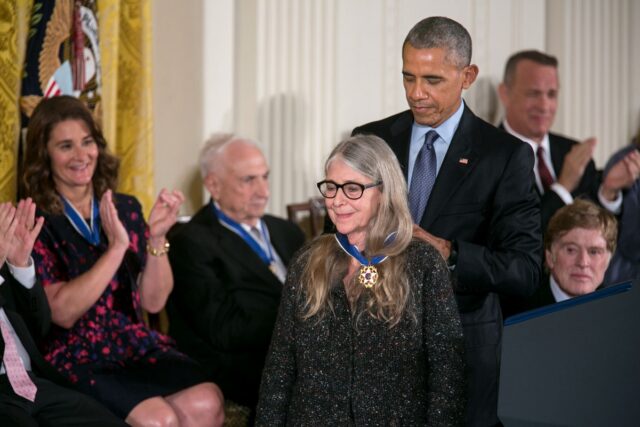
One day, while pushing buttons in the simulated Apollo spacecraft, Lauren accidentally triggered a sequence that caused the entire simulator system to crash. The young girl had typed the command "P01," a pre-launch initialization routine, while the simulated spacecraft was already in flight. The computer attempted to overwrite its active flight data, causing the system to freeze.
Recognizing that an astronaut could easily make the same human error during a real mission, Hamilton approached NASA management with a proposal to add software safeguards to prevent the execution of pre-launch routines while in flight. However, NASA officials dismissed her concerns, insisting that astronauts were rigorously trained professionals who would never make such a mistake.
Hamilton’s warning proved prophetic during the Apollo 8 mission in December 1968, the first manned spacecraft to orbit the Moon. Astronaut Jim Lovell inadvertently selected the P01 command while in lunar orbit, wiping out all the computer’s navigational vector data. The accidental deletion left the spacecraft unable to calculate its position or trajectory for the return journey to Earth.
Hamilton and her team were called in emergency conditions to resolve the crisis. Working through the night, they devised a fix to upload fresh navigational data into the computer, restoring guidance and bringing Apollo 8 home safely. Within the lab, Hamilton jokingly referred to the issue as the "Lauren bug," and NASA subsequently authorized her team to implement safety checks in future software builds to protect against accidental human entry errors.
By 1968, Hamilton had risen to Assistant Director of the Software Engineering Division, leading the team responsible for Command Module and Lunar Module onboard software. During this period, she formulated groundbreaking concepts in system architecture, incorporating error recovery mechanisms directly into the flight software.
Recognizing that hardware failures or human input errors could easily overload the Apollo guidance computer’s limited processing power during crucial flight phases, Hamilton designed an asynchronous executive program. This software featured "priority display" interface routines that allowed the computer to drop non-essential background tasks automatically if system resource utilization approached critical levels.