The Nikon Small World in Motion competition, a prestigious annual event that celebrates the intersection of high-level scientific research and breathtaking visual artistry, has been thrust into a state of controversy. The scientific community is currently reeling from allegations that the most recent first-place winner, Dr. Ning Xu, may have utilized prohibited artificial intelligence tools to create his award-winning entry. What began as a celebration of microscopic discovery has rapidly transformed into a rigorous investigation into the integrity of digital imaging in the age of generative AI, prompting a formal review by Nikon and sparking a heated debate among researchers worldwide.
For decades, the Nikon Small World competition has served as the premier showcase for the "hidden world" that exists beyond the reach of the naked eye. While the photography category has been a staple since 1975, the Small World in Motion category, introduced more recently, focuses on the dynamic, living processes of biology captured through time-lapse and high-speed microscopy. The entries are typically abstract, often appearing as alien landscapes or mesmerizing patterns to the layperson, but they are rooted in the rigorous demands of biological science. However, when Dr. Xu, an optical engineering researcher at the National University of Singapore, was announced as the winner last month, the initial awe was quickly replaced by skepticism from experts who noticed anomalies that seemed to defy the laws of biological physics.
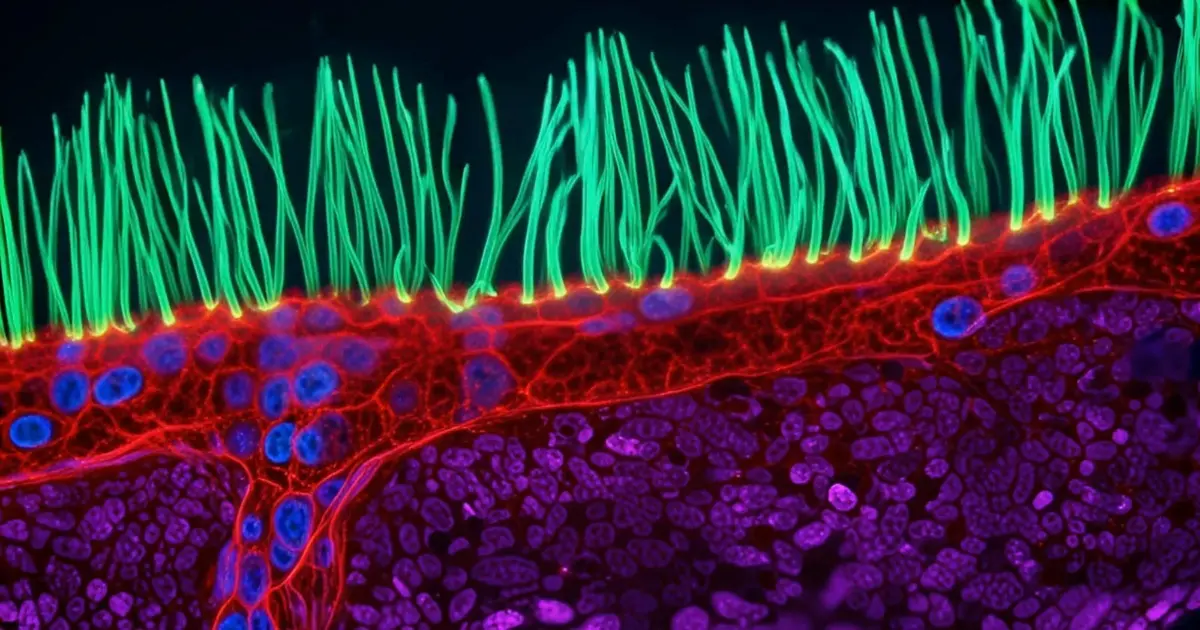
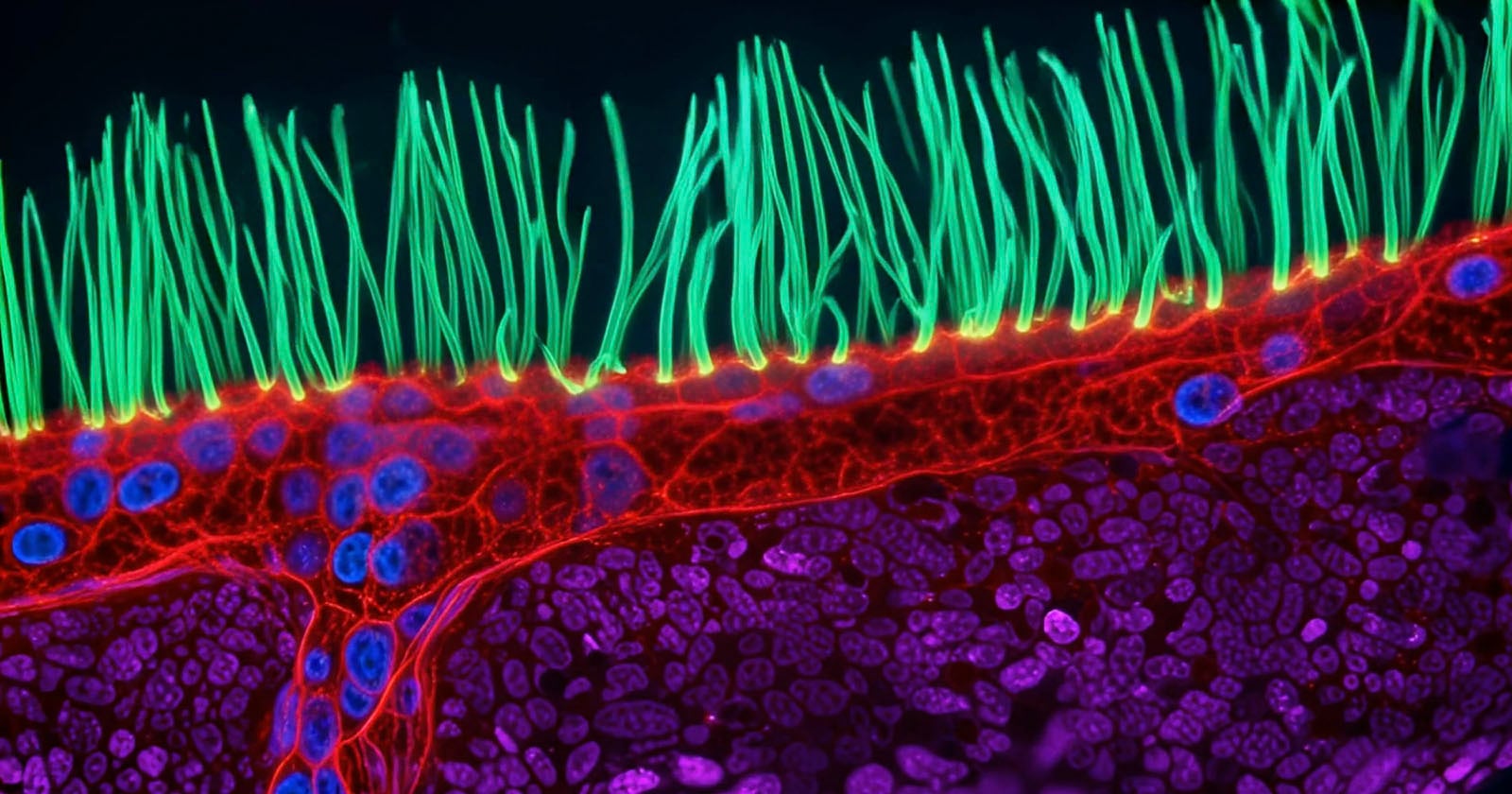
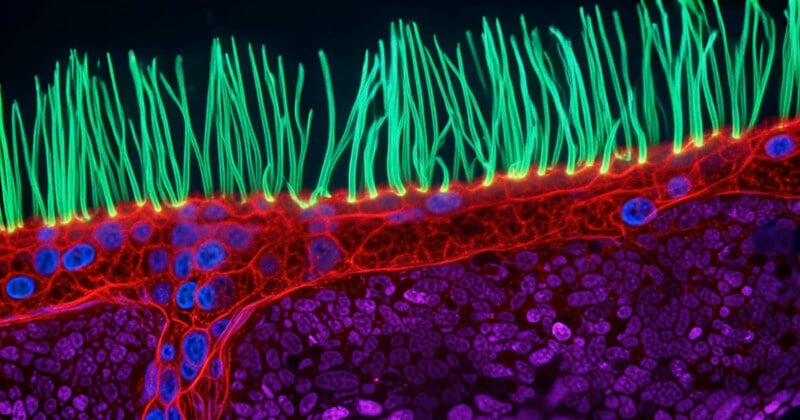
The winning video was intended to provide a rare glimpse into the movement of cilia—tiny, hair-like structures that line the respiratory tract and play a critical role in clearing mucus and foreign particles from the lungs. According to the submission details provided by Dr. Xu, the tissue used for the imaging was obtained from a child suffering from primary ciliary dyskinesia (PCD). This rare genetic disorder impairs the function of the cilia, leading to chronic respiratory issues, including persistent lung, sinus, and ear infections. Capturing the motion of these structures in such a specific pathological context was hailed as a significant achievement, both for its visual complexity and its potential scientific value.
The acclaim was short-lived. Almost immediately following the announcement, members of the scientific community began to voice their concerns publicly, pointing toward what they described as "continuity errors" that are uncharacteristic of authentic microscopy. Edward Phelps, an associate professor at the University of Florida, was among the first to raise a red flag. Writing on LinkedIn, Phelps detailed several "serious problems" within the footage that suggested the video was not a pure representation of captured data.
Phelps observed that certain "purple structures" within the frame appeared to "pop in and out of existence," a phenomenon that does not occur in standard fluorescence microscopy unless there is a catastrophic failure of the sample or the equipment. Furthermore, he noted that the green cilia appeared to materialize from nowhere, exhibiting movements and sizes that did not align with established biological measurements. In the precise world of microscopy, where structures are measured in micrometers, such discrepancies are often the first sign of digital manipulation or synthetic generation.
The skepticism intensified when Ian Donovan, an MD/PhD student at the UT Southwestern Medical Center, conducted his own technical analysis of the footage. Donovan reported that he ran the winning video through Google Gemini, a sophisticated AI tool, which reportedly identified an invisible Google SynthID watermark embedded within the file. SynthID is a technology developed to label and identify AI-generated content by embedding a digital watermark directly into the pixels of an image or video. The presence of such a watermark strongly suggests that at least portions of the video were processed or generated by an AI model, a direct violation of the competition’s longstanding rules.
Nikon Small World has traditionally maintained a strict boundary regarding the use of digital tools. While post-processing to enhance clarity, adjust contrast, or balance color is standard practice in scientific imaging, the rules explicitly state that "AI-generated videos are not permitted." The integrity of the competition relies on the premise that the visuals are a direct, albeit enhanced, representation of physical reality captured through a microscope lens.
In response to the mounting pressure and the technical evidence presented by researchers, Nikon Small World has officially reopened the vetting process for Dr. Xu’s entry. The organization updated its public announcements with a note acknowledging the questions raised and stating that they are "carefully re-reviewing the information provided during the initial vetting, along with additional supporting materials from the entrant." Nikon also clarified that Dr. Xu has been "respectfully complying" with the investigation, providing the committee with detailed technical documentation that outlines the specific microscopy equipment, imaging methods, and processing techniques he claims were used to create the source video.
Dr. Xu initially attempted to defend his work in the comments section of the LinkedIn post where the controversy first erupted. According to a report by the journal Nature, Dr. Xu admitted to using an AI model during the post-production phase of the video. However, he maintained that he did not break the competition’s rules. He argued that the AI was applied only after the reconstruction of the grayscale data, serving as a tool to "distinguish and color structures with similar morphology." In scientific imaging, "morphology" refers to the study of the size, shape, and structure of animals, plants, and microorganisms. Dr. Xu’s defense centered on the idea that the AI was used as an advanced form of "pseudocoloring"—a common practice where colors are added to grayscale images to help viewers differentiate between different types of tissue or cellular components.
Despite this explanation, the scientific community remains unconvinced. The distinction between using AI for colorization and using it to generate or "hallucinate" structural details is a fine line that many believe Dr. Xu crossed. If an AI model is used to "distinguish" structures, there is a risk that the software is creating edges and shapes that were not present in the original raw data, effectively inventing biological information.
The situation took a more mysterious turn when, shortly after his public defense, Dr. Xu’s comments on LinkedIn disappeared. Furthermore, his entire LinkedIn profile appears to have been deleted, leaving many to wonder about the current status of his research and his standing at the National University of Singapore. This sudden withdrawal from public discourse has only fueled further speculation regarding the authenticity of the winning video.
The controversy has sparked a broader conversation about the ethics of AI in science and art. Sarah Goetz, a scientist and commentator, expressed a sentiment shared by many in the field on the social media platform Bluesky. She remarked that if the video is indeed AI-generated, there is something "profoundly cynical and sad" about using synthetic images to win a contest dedicated to the inherent beauty of biology. The consensus among many researchers is that the beauty of microscopy lies in its truth—the fact that these complex, vibrant structures actually exist within the human body. Replacing that reality with a "hallucinated" version generated by an algorithm undermines the very purpose of the competition.
The path forward for the investigation seems clear to most experts: the truth lies in the raw data. Scientists have repeatedly stated that the controversy could be resolved almost instantly if Dr. Xu were to share the original, unprocessed RAW grayscale video files. In professional microscopy, these files serve as the "ground truth," showing exactly what the microscope’s sensors captured before any filters, AI models, or coloring techniques were applied. If the structures in the raw video match those in the final submission, Dr. Xu may be vindicated. If the raw video is missing the "popping" structures or the specific cilia movements seen in the winning entry, it would confirm that the video was synthetically altered.
As of now, the title of the Nikon Small World in Motion winner remains in a state of limbo. Nikon has not yet announced a final decision or a timeline for the conclusion of their review. The outcome of this investigation will likely set a significant precedent for how scientific imaging competitions handle the rapidly evolving capabilities of artificial intelligence. In an era where "deepfakes" and generative models can create near-perfect replicas of reality, the scientific community is fighting to ensure that the microscopic world remains a domain of empirical truth rather than algorithmic fiction.
PetaPixel has reached out to the organizers of Nikon Small World for further comment on the investigation and the specific technical criteria being used to evaluate the submission. This story continues to develop as the scientific community awaits a definitive answer on whether the year’s most celebrated microscopic video was a triumph of observation or a masterpiece of digital deception.