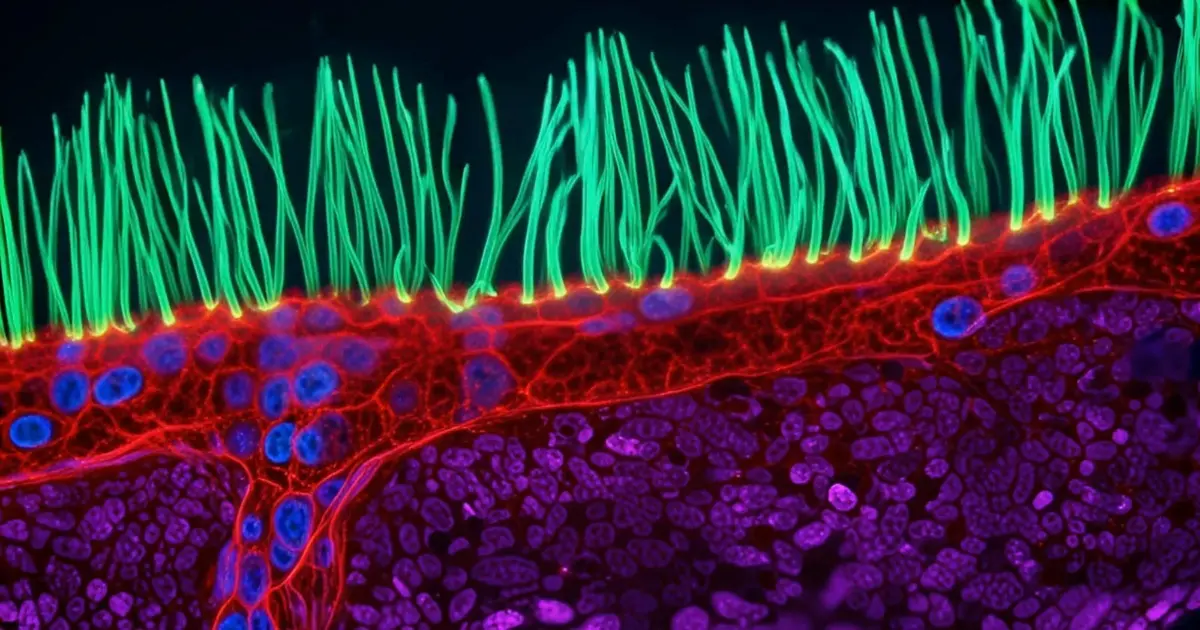
The situation took a more mysterious turn when, shortly after his public defense, Dr. Xu’s comments on LinkedIn disappeared. Furthermore, his entire LinkedIn profile appears to have been deleted, leaving many to wonder about the current status of his research and his standing at the National University of Singapore. This sudden withdrawal from public discourse has only fueled further speculation regarding the authenticity of the winning video.
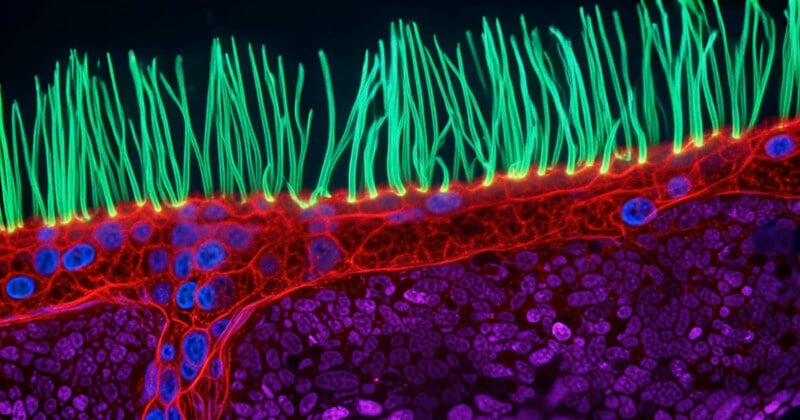
The controversy has sparked a broader conversation about the ethics of AI in science and art. Sarah Goetz, a scientist and commentator, expressed a sentiment shared by many in the field on the social media platform Bluesky. She remarked that if the video is indeed AI-generated, there is something "profoundly cynical and sad" about using synthetic images to win a contest dedicated to the inherent beauty of biology. The consensus among many researchers is that the beauty of microscopy lies in its truth—the fact that these complex, vibrant structures actually exist within the human body. Replacing that reality with a "hallucinated" version generated by an algorithm undermines the very purpose of the competition.
The path forward for the investigation seems clear to most experts: the truth lies in the raw data. Scientists have repeatedly stated that the controversy could be resolved almost instantly if Dr. Xu were to share the original, unprocessed RAW grayscale video files. In professional microscopy, these files serve as the "ground truth," showing exactly what the microscope’s sensors captured before any filters, AI models, or coloring techniques were applied. If the structures in the raw video match those in the final submission, Dr. Xu may be vindicated. If the raw video is missing the "popping" structures or the specific cilia movements seen in the winning entry, it would confirm that the video was synthetically altered.
As of now, the title of the Nikon Small World in Motion winner remains in a state of limbo. Nikon has not yet announced a final decision or a timeline for the conclusion of their review. The outcome of this investigation will likely set a significant precedent for how scientific imaging competitions handle the rapidly evolving capabilities of artificial intelligence. In an era where "deepfakes" and generative models can create near-perfect replicas of reality, the scientific community is fighting to ensure that the microscopic world remains a domain of empirical truth rather than algorithmic fiction.
PetaPixel has reached out to the organizers of Nikon Small World for further comment on the investigation and the specific technical criteria being used to evaluate the submission. This story continues to develop as the scientific community awaits a definitive answer on whether the year’s most celebrated microscopic video was a triumph of observation or a masterpiece of digital deception.