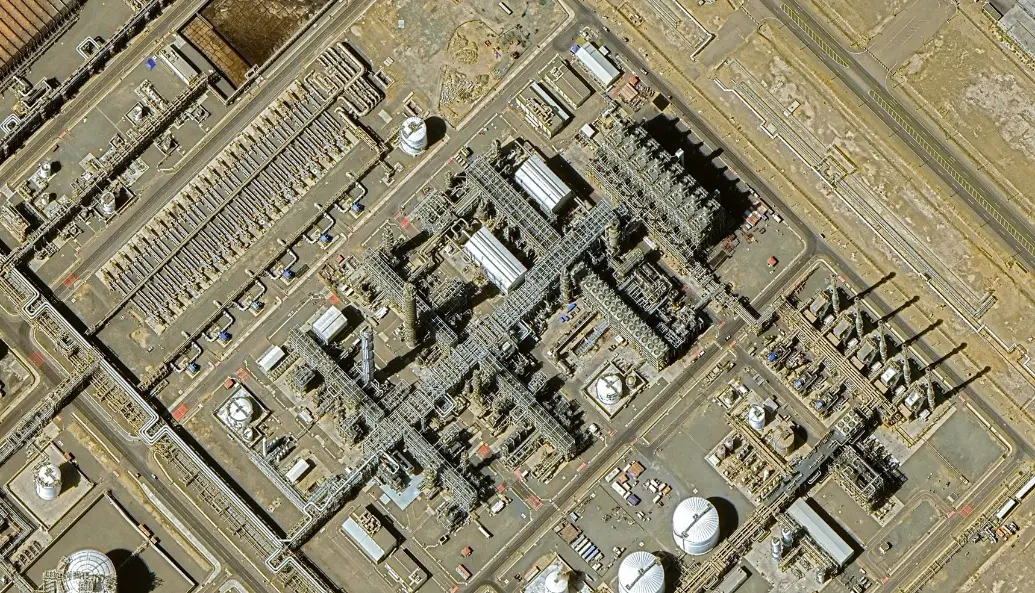
The decision to halt supplies to Europe appears to be a systemic response to the operational constraints currently facing the Saudi energy apparatus. According to reports from industry observers and trade publications, including OilPrice.com, at least two major European refiners have already been notified that their expected allocations for October will be non-existent. Market analysts suggest that this policy is not being applied selectively but is instead expected to be enforced across the board for all European term buyers who rely on consistent, contractually obligated volumes of Saudi crude. The move underscores the severity of the damage to the East-West pipeline, which serves as a vital strategic bypass for the kingdom’s oil exports, allowing them to reach western markets without navigating the increasingly volatile waters of the Persian Gulf.
To understand the magnitude of this disruption, one must consider the strategic role of the East-West pipeline, often referred to as the Petroline. This massive infrastructure project spans approximately 1,200 kilometers across the Arabian Peninsula, connecting the prolific oil fields in the Eastern Province—most notably the Ghawar field—to the port of Yanbu on the Red Sea coast. Under normal operating conditions, the pipeline has the capacity to transport between four and five million barrels of crude oil per day. By moving oil to Yanbu, Saudi Arabia can load tankers that have immediate access to the Suez Canal and the Mediterranean, effectively bypassing the Strait of Hormuz. The Strait of Hormuz is a notorious maritime choke point that is frequently subject to geopolitical tensions and threats of closure, making the Petroline the primary insurance policy for Saudi Arabia’s westward-bound energy exports.
The damage to this pipeline, which follows recent strikes attributed to Houthi forces, has effectively severed this western exit route. With the pipeline incapacitated or operating at a severely diminished capacity, the crude that would normally flow to Yanbu is essentially stranded in the eastern part of the country. For European refiners, who have calibrated their facilities to process specific grades of Saudi crude—such as Arab Light and Arab Extra Light—the sudden disappearance of these volumes presents an immediate logistical and economic challenge. These refiners must now look to the spot market to fill the void, likely turning to more expensive or less compatible grades from the North Sea, West Africa, or the United States, all of which carry higher freight costs and different chemical profiles that can affect refining margins.
While Saudi Aramco has reportedly sought ways to mitigate the impact of the pipeline disruption, the solutions implemented thus far have offered no relief to the European market. Instead, the kingdom has pivoted its focus toward its eastern export terminals. Reports indicate that Saudi Arabia has begun the massive logistical undertaking of moving approximately 60 million barrels of crude from its primary Persian Gulf export terminal at Ras Tanura. Ras Tanura is the world’s largest offshore oil loading facility, and it remains the heart of the Saudi export machine. However, the crude being loaded at this terminal is not being redirected to the West to make up for the shortfall in Yanbu. Instead, these additional supplies are being prioritized for Asian buyers, including major industrial economies such as China, South Korea, India, and Japan.
This prioritization of Asian markets is a reflection of the long-term strategic shift in Saudi energy policy, which views the Asia-Pacific region as the primary engine of global demand growth. By ensuring that Asian customers remain supplied despite the domestic infrastructure crisis, Saudi Aramco is protecting its most valuable market share and maintaining its reputation as a reliable partner in the East. However, this "Asia-first" approach leaves European refiners in a precarious position. Because the crude is being exported from the Persian Gulf rather than the Red Sea, any shipments intended for Europe would face a significantly more arduous and expensive journey.
For a tanker to reach Europe from Ras Tanura, it must first navigate the Strait of Hormuz, then travel around the Arabian Peninsula and through the Bab el-Mandeb strait into the Red Sea to reach the Suez Canal. This route is not only longer but also fraught with security risks, particularly in the southern Red Sea where maritime traffic has faced persistent threats. The alternative is even more daunting: sailing the entire length of the African continent and rounding the Cape of Good Hope. This route adds thousands of miles and several weeks to the journey, dramatically increasing shipping costs and tying up tanker capacity for longer periods. Given these logistical hurdles, the decision to zero out European allocations appears to be a pragmatic, albeit painful, acknowledgment that supplying the West from the Persian Gulf is currently inefficient compared to serving the Asian market.
The impact on European crude markets is already becoming evident as traders and refiners digest the news. The sudden removal of millions of barrels of Saudi crude from the October balance sheet adds immense pressure to an already strained regional supply chain. Europe has been navigating a complex energy landscape for several years, characterized by the transition away from Russian energy and a heightened reliance on seaborne imports from more distant suppliers. The loss of Saudi volumes, which are typically stable and reliable, introduces a new layer of volatility. Refiners in Northwest Europe and the Mediterranean are now forced to compete for available "sweet" and "medium-sour" grades in the spot market, which is likely to drive up the premiums for regional benchmarks like Brent.
Furthermore, the disruption highlights the continued impact of regional conflict on global energy security. The strikes on Saudi energy facilities, which targeted the nodes of the East-West pipeline, demonstrate that even the most robust and strategically defended infrastructure is vulnerable to asymmetric threats. For the global oil market, the incident serves as a stark reminder that the "bypass" routes designed to ensure the free flow of energy are just as susceptible to disruption as the maritime choke points they were built to avoid. The fact that Saudi Arabia, the world’s preeminent swing producer, is forced to cut off term customers in a major economic bloc like Europe illustrates the severity of the physical damage to its network.
As October approaches, the focus will remain on how quickly Saudi Aramco can repair the damage to the Petroline and restore the flow of oil to Yanbu. In the interim, the European refining sector faces a period of heightened uncertainty. The search for alternative supplies will likely involve complex negotiations and a reshuffling of global tanker routes. While some refiners may have sufficient inventories to weather a short-term disruption, a prolonged absence of Saudi crude could lead to reduced refinery runs or even temporary shutdowns if suitable replacements cannot be secured at viable prices.
The broader implications for the global oil market are also significant. While the total volume of global supply may not be drastically reduced—given that the oil is being diverted to Asia rather than lost entirely—the dislocation of supply and demand creates localized imbalances. The "zeroing" of European allocations effectively tightens the Atlantic Basin market while potentially oversupplying the Asian market, leading to a divergence in regional pricing. This fragmentation of the market complicates the efforts of global energy bodies and OPEC+ to maintain price stability, as the physical reality of infrastructure damage overrides the theoretical quotas and production targets set at the boardroom level.
Ultimately, the situation underscores the interconnected and fragile nature of the modern energy trade. A disruption at a single pipeline in the Saudi desert can dictate the operational strategy of a refinery in Rotterdam or a trading desk in London. As Saudi Arabia redirects its 60 million barrels from Ras Tanura to its partners in the East, Europe is left to contend with the logistical and economic fallout of a supply chain that has been broken by regional strife. The coming weeks will be a critical test for European energy resilience as the continent prepares for an October without its usual intake of Saudi crude, waiting for the taps at Yanbu to once again open to the West.