
As low-Earth orbit grows increasingly crowded with commercial internet constellations, scientific platforms, and military assets, space has enough physical room to accommodate massive numbers of new satellites—provided that every entity operating in orbit is willing to transparently share precise location data and planned flight paths. That warning was delivered by a top executive representing both SpaceX and its artificial intelligence affiliate during a major industry gathering.
Speaking at the International Astronautical Congress in Antalya, Turkey, Michael Nicolls—vice president for Starlink at SpaceX and president of Elon Musk’s AI venture, xAI—issued a call for immediate, widespread improvements in orbital data-sharing among global satellite operators. Highlighting a series of troubling near-misses involving active spacecraft, Nicolls emphasized that unannounced maneuvers in orbit pose a growing hazard to space sustainability.
SpaceX’s Starlink network currently encompasses more than 11,000 active satellites, representing roughly two-thirds of all operational spacecraft in low-Earth orbit. Beyond these functional platforms, ground-based radars and optical tracking networks monitor thousands of fragments of orbital space debris.
While Starlink stands as the single largest satellite constellation ever deployed, industry projections indicate that low-Earth orbit is on the threshold of an even larger surge in launch traffic. SpaceX recently unveiled long-term concepts for a project called Starmind, an ambitious initiative aimed at placing up to one million satellites into low-Earth orbit to provide high-density artificial intelligence computing infrastructure directly from space. At the same time, major competitors are accelerating their own deployments. Amazon is actively scaling its own satellite broadband constellation, while two major state-backed Chinese megaconstellations are moving forward with full-scale orbital deployment.
Law of large numbers
The rapid expansion of commercial and national satellite fleets has rekindled long-standing concerns regarding the risk of high-velocity orbital collisions. A single catastrophic impact between two large objects in orbit could generate thousands of untracked fragments, creating the potential for a cascading chain reaction of debris generation that could render specific orbital shells hazardous for decades.
Engineers and orbital mechanics experts generally emphasize that the probability of a collision on any single day remains extremely low. Space is extraordinarily vast, and low-Earth orbit is nowhere near physical saturation. Furthermore, SpaceX and most other Western commercial operators intentionally design their missions to de-orbit spent rocket upper stages and end-of-life satellites quickly, using atmospheric reentry to minimize long-term space junk.
Nevertheless, as the sheer quantity of hardware in orbit grows, the statistical reality changes. "That said, the law of large numbers says that if it can happen, it will happen," Nicolls noted during his presentation.
Despite the growing volume of orbital traffic, space traffic management remains largely fragmented and decentralized. No universal international treaties or legally binding global regulations require satellite operators to broadcast their exact positions in real time, publish their planned maneuvers, or coordinate trajectory adjustments with other spacecraft operators. In the absence of a centralized regulatory authority, maintaining a safe operating environment depends heavily on voluntary coordination and established industry norms.
"Once you can track this debris, and if you can track it well, these are like obstacles on a road. If you can measure them, you can predict where they’re going to be, and you can avoid them," Nicolls said. "What you can’t avoid is other operators who maneuver without telling you where they’re going to go. We have many examples of this on Starlink, unfortunately."
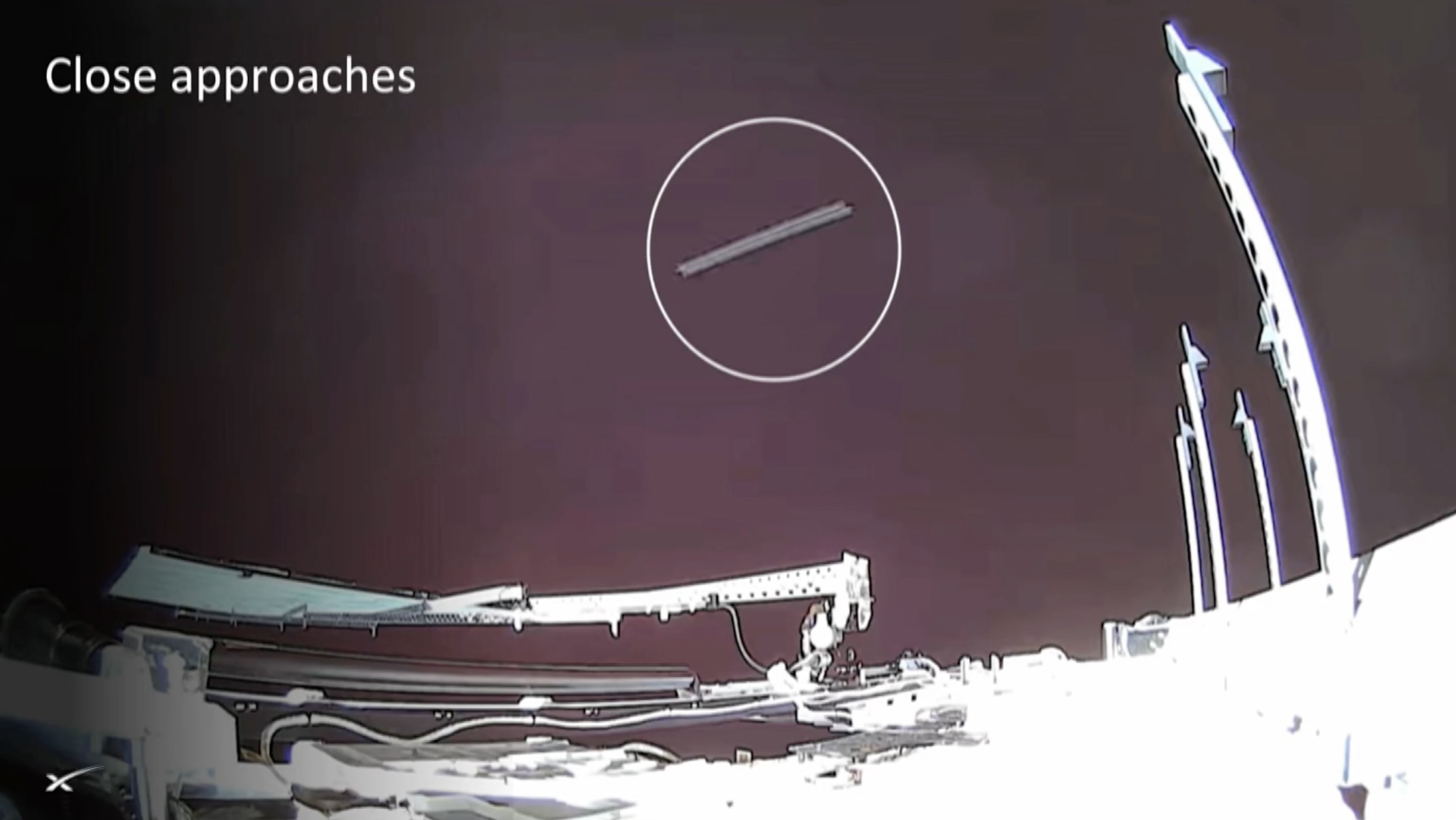
Nicolls presented specific case studies illustrating active satellites from other operators approaching Starlink spacecraft at close range while traveling at orbital velocities of approximately 5 miles per second. These close approaches did not appear to stem from deliberate aggressive behavior, such as orbital reconnaissance or anti-satellite tests. Rather, they were the result of routine operational maneuvers conducted without advance notification to the broader space tracking community.
"Either they were not publishing their ephemeris to us, or they were not considering the ephemeris of others when they were maneuvering, and these led to conjunctions of tens of meters to hundreds of meters," Nicolls said. "Way too close to comfort."
An ephemeris is a data file containing precise coordinates and trajectory predictions detailing where a satellite is currently located and where it will be at specific times in the future. Some operators, particularly national defense entities or commercial firms guarding proprietary operational techniques, have historically been hesitant to publicly distribute precise ephemeris data. Space safety advocates argue, however, that operational transparency must take precedence over operational secrecy in heavily populated orbits.
"The minimum standard in low-Earth orbit needs to be that you know where your satellite is, and you know where it’s going. You need to be able to predict where your trajectory is, and that prediction needs to be reliable," Nicolls stated.
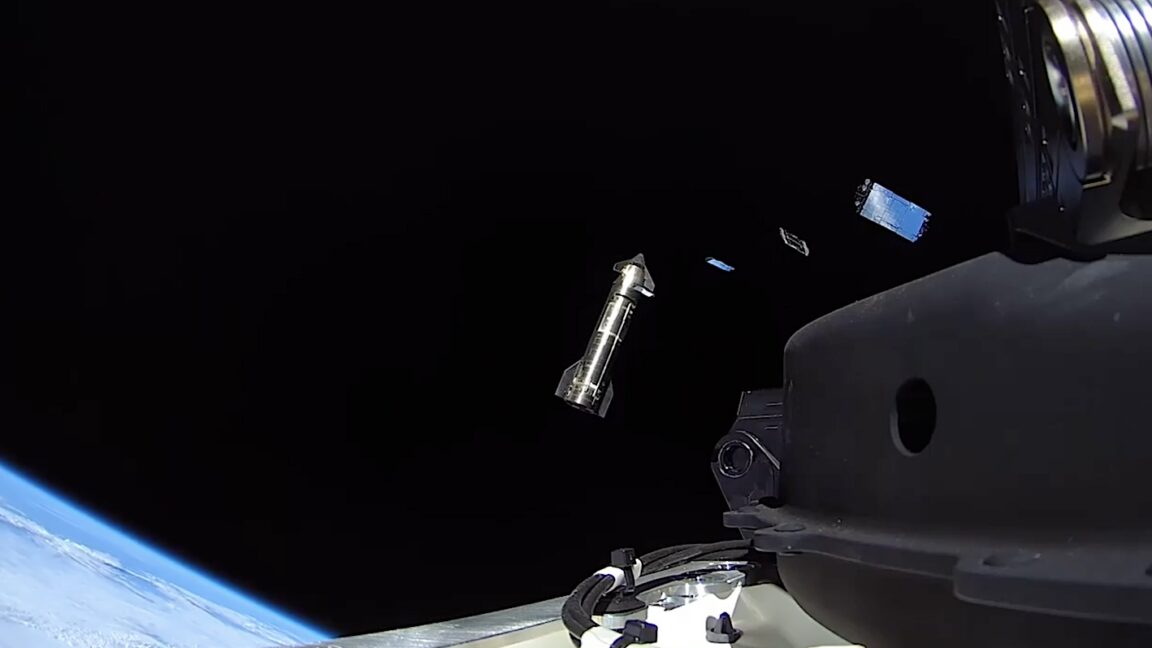
SpaceX has framed its operational practices as a model for responsible orbital stewardship—a necessity given the sheer size of its Starlink fleet and the company’s reliance on open space access. To reduce collision hazards and accelerate natural de-orbiting timelines, SpaceX lowered the operating altitude of its entire active Starlink fleet to below 500 kilometers (310 miles).
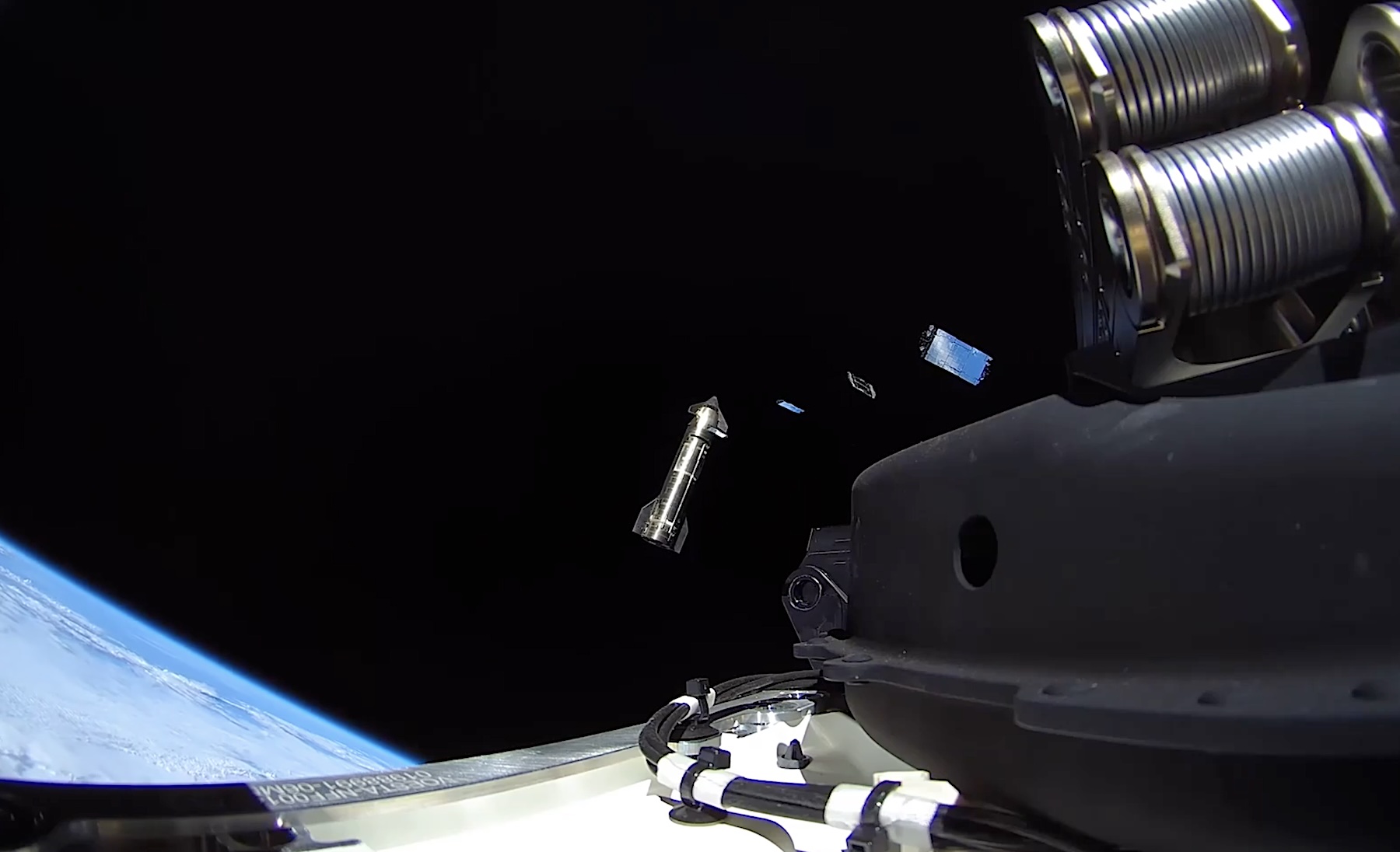
This altitude adjustment achieved three major goals: it shifted the primary Starlink constellation away from higher, more congested orbital regimes; it guaranteed that any disabled or non-responsive Starlink satellite would passively reenter the Earth’s atmosphere within a few years due to atmospheric drag; and it optimized latency and performance for end-users on the ground. Building on this approach, SpaceX’s next-generation Starlink V3 satellites—the first batch of which was deployed on September 28 utilizing the company’s Starship launch system—are designed to operate even lower, at an altitude of roughly 350 kilometers (217 miles).

To manage potential orbital conflicts, SpaceX regularly publishes detailed ephemeris data for the entire Starlink constellation and encourages all orbital operators to reciprocate. When third-party ephemeris data is unavailable, operators are forced to rely strictly on external radar networks or onboard detection hardware.
To enhance its situational awareness, SpaceX equipped its Starlink satellites with an onboard system called Stargaze, which uses star-tracker navigation cameras to visually detect and track nearby objects in space. According to Nicolls, Stargaze now successfully detects and tracks approximately 90 percent of maneuvering satellites whose paths cross Starlink operational orbits.
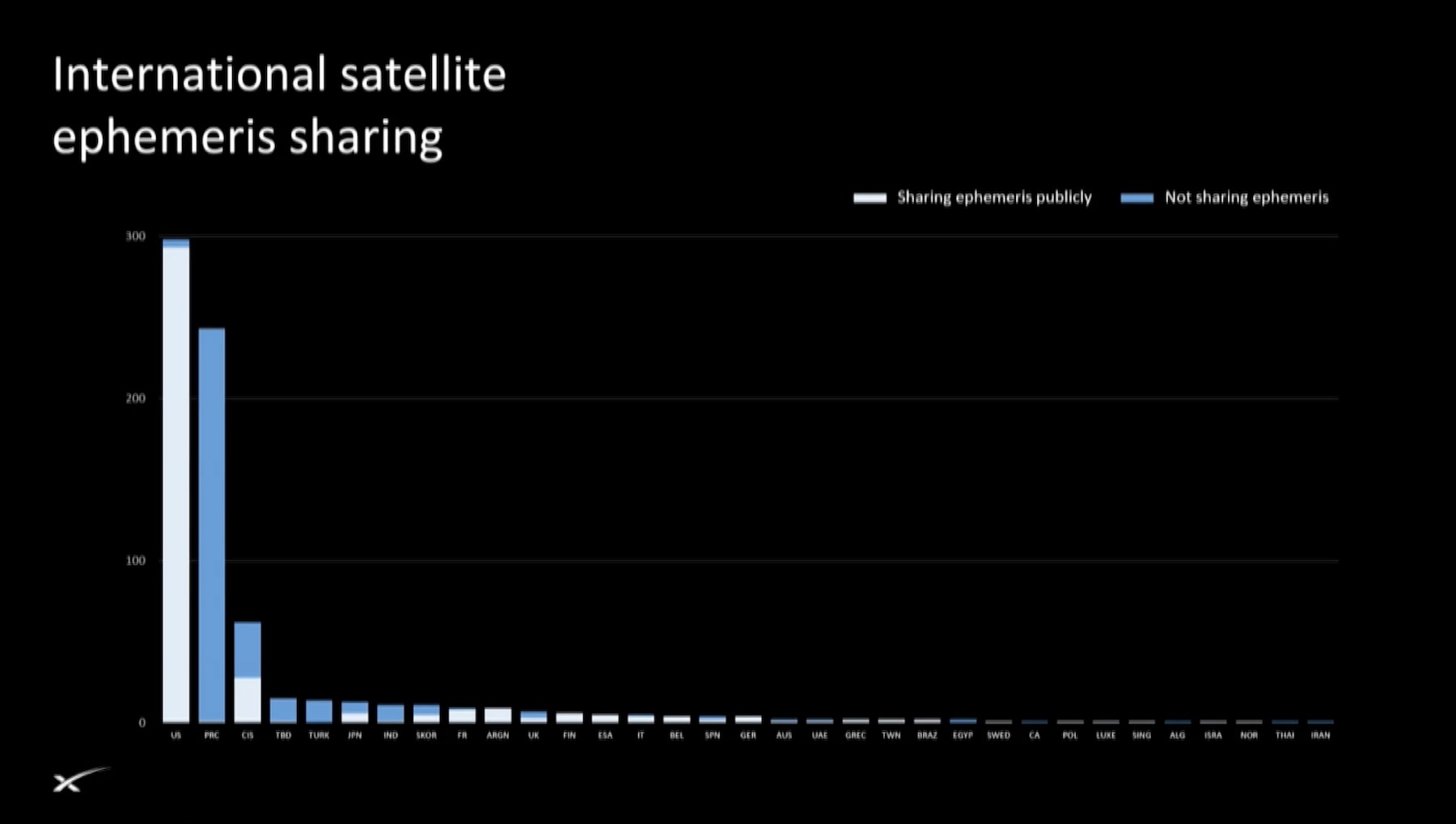
While onboard tracking provides an additional safety layer, automated evasive maneuvering has become a continuous operational requirement. Starlink satellites perform roughly 1,000 collision avoidance maneuvers every day to steer clear of active satellites and tracked pieces of space debris. Nicolls revealed that in recent months alone, Starlink spacecraft executed evasive maneuvers to clear approximately 650 active satellites owned by other operators. Remarkably, only half of those 650 satellites belonged to entities that actively engage in reciprocal ephemeris data-sharing with SpaceX.
When reaction times are limited or orbital geometries constrain propulsion options, Starlink satellites can execute specialized orientation adjustments known as "ducking maneuvers." These procedures involve turning the satellite’s solar arrays and chassis edge-on relative to the incoming object’s trajectory, drastically reducing the spacecraft’s cross-sectional area and minimizing the statistical probability of an impact during the point of closest approach.
What about China?
Establishing seamless data-sharing channels remains particularly complex on the international stage, where geopolitical friction and regulatory divergence frequently impede collaboration.
"In particular, it’s been very challenging to share data with international operators," Nicolls explained. "There has been good progress here. There have been some good stories here on how we’ve begun to share data. For example, we share data closely with the Chinese space station as well as some other Chinese satellite operators, but there are many that we do not, and we have no information about where those satellites are or where they’re going."
Data presented during Nicolls’ presentation indicated that a significant portion of non-reporting active satellites originate from Chinese and Russian operators, though select commercial and government entities in the United States, Europe, and Japan also refrain from publishing detailed ephemeris data.
"My fundamental ask here is that we need to make headway here and begin sharing data across all vehicles, from whatever country you are, with us and with others, to promote a safe operating environment," Nicolls urged.
The stance outlined by SpaceX reflects a broader consensus emerging among major commercial constellation developers. Rajeev Badyal, head of Amazon Leo—the division developing Amazon’s orbital broadband network—echoed the need for strict coordination across operators. Amazon currently has 396
satellites in orbit, with extensive launch manifests planned as rocket vehicles become available.
"Space safety is paramount to us as well," Badyal said when asked about operational coordination with Starlink. "Every launch we do, we actually coordinate with SpaceX. We coordinate with others who have satellites. We let them know where we’re going to drop them off, how we’re going to orbit raise, etc. So we have regular meetings with companies like SpaceX to exchange data."
For Amazon, open communication regarding fleet positions is considered an operational prerequisite. "So, for us, sharing ephemeris or sharing the information necessary for space safety is a non-issue," Badyal added. "We’re big proponents of making sure that all of us operate in this domain in space in a coordinated fashion because [the] consequences of not doing so are significant for everybody, and there’s no reason not to."
Amazon’s initial constellation architecture calls for 3,232 first-generation satellites. In February, the Federal Communications Commission approved Amazon’s application for an expanded second-generation system comprising 4,504 additional satellites. Furthermore, Amazon has submitted regulatory filings with the FCC seeking approval for 5,105 satellites designed to support direct-to-device cellular connectivity.
Although Amazon’s current fleet remains smaller than SpaceX’s existing infrastructure, Badyal emphasized that bilateral and multilateral safety coordination must expand rapidly as non-Western constellations scale up.
"Obviously, SpaceX is the largest constellation out there," Badyal noted. "We work with them hand in hand. In terms of China and adversaries, that’s something I can’t comment on at the moment. At some point, we will have to coordinate, or it’ll end up being a negative thing for everybody, especially if they get to scale."