
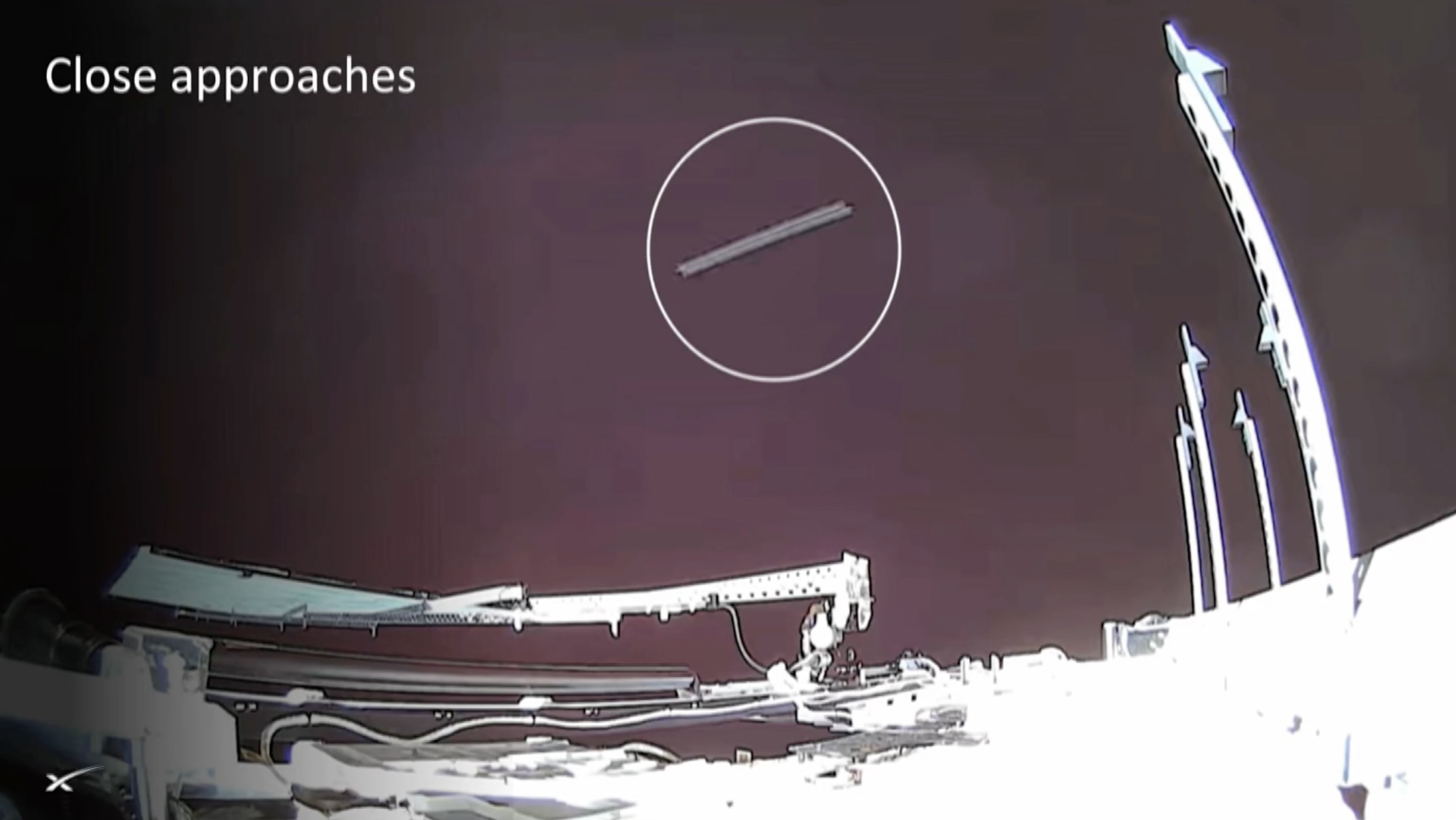
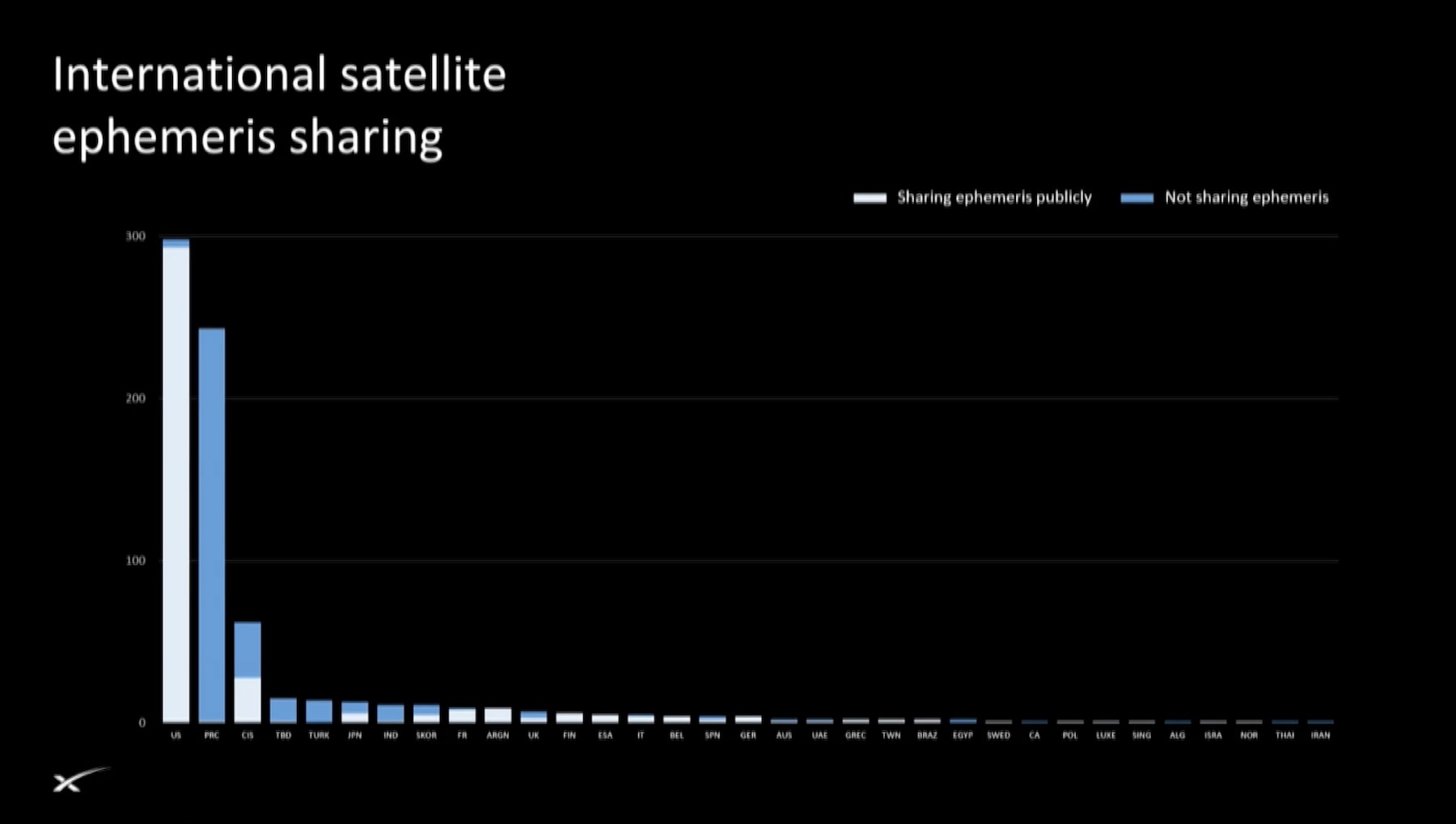
"In particular, it’s been very challenging to share data with international operators," Nicolls explained. "There has been good progress here. There have been some good stories here on how we’ve begun to share data. For example, we share data closely with the Chinese space station as well as some other Chinese satellite operators, but there are many that we do not, and we have no information about where those satellites are or where they’re going."
Data presented during Nicolls’ presentation indicated that a significant portion of non-reporting active satellites originate from Chinese and Russian operators, though select commercial and government entities in the United States, Europe, and Japan also refrain from publishing detailed ephemeris data.
"My fundamental ask here is that we need to make headway here and begin sharing data across all vehicles, from whatever country you are, with us and with others, to promote a safe operating environment," Nicolls urged.
The stance outlined by SpaceX reflects a broader consensus emerging among major commercial constellation developers. Rajeev Badyal, head of Amazon Leo—the division developing Amazon’s orbital broadband network—echoed the need for strict coordination across operators. Amazon currently has 396
satellites in orbit, with extensive launch manifests planned as rocket vehicles become available.
"Space safety is paramount to us as well," Badyal said when asked about operational coordination with Starlink. "Every launch we do, we actually coordinate with SpaceX. We coordinate with others who have satellites. We let them know where we’re going to drop them off, how we’re going to orbit raise, etc. So we have regular meetings with companies like SpaceX to exchange data."
For Amazon, open communication regarding fleet positions is considered an operational prerequisite. "So, for us, sharing ephemeris or sharing the information necessary for space safety is a non-issue," Badyal added. "We’re big proponents of making sure that all of us operate in this domain in space in a coordinated fashion because [the] consequences of not doing so are significant for everybody, and there’s no reason not to."
Amazon’s initial constellation architecture calls for 3,232 first-generation satellites. In February, the Federal Communications Commission approved Amazon’s application for an expanded second-generation system comprising 4,504 additional satellites. Furthermore, Amazon has submitted regulatory filings with the FCC seeking approval for 5,105 satellites designed to support direct-to-device cellular connectivity.
Although Amazon’s current fleet remains smaller than SpaceX’s existing infrastructure, Badyal emphasized that bilateral and multilateral safety coordination must expand rapidly as non-Western constellations scale up.
"Obviously, SpaceX is the largest constellation out there," Badyal noted. "We work with them hand in hand. In terms of China and adversaries, that’s something I can’t comment on at the moment. At some point, we will have to coordinate, or it’ll end up being a negative thing for everybody, especially if they get to scale."