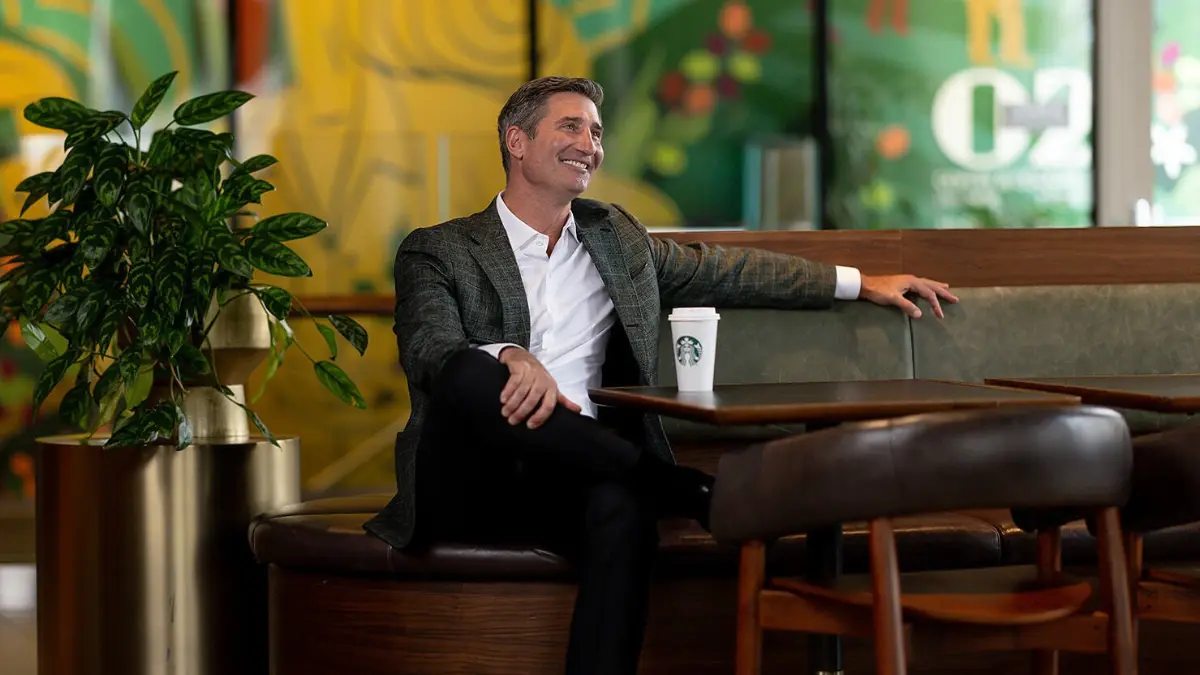
In the high-stakes world of global retail and quick-service dining, few leadership transitions have been watched as closely as Brian Niccol’s move to the helm of Starbucks. The former Chipotle Mexican Grill executive, credited with one of the most successful turnarounds in modern corporate history, now faces the daunting task of reinvigorating a brand that has become a victim of its own ubiquity. While much of the recent market speculation has centered on aggressive expansion and even the possibility of high-profile acquisitions, Niccol is focusing his early efforts on a fundamental operational challenge: the persistent struggle to capture the afternoon consumer.
In a wide-ranging discussion with ADWEEK for its October cover story, conducted on September 17, Niccol was remarkably candid about the current state of the Starbucks menu and the specific areas where the company is falling short of its potential. While he steered clear of commenting on swirling reports that Starbucks had explored a potential takeover of Chipotle—a move some analysts believe would be a massive operational hurdle for the coffee giant—he was vocal about his primary mission. For Niccol, the path to a revitalized Starbucks runs directly through the food program, which he intends to make "category-defining."
The centerpiece of this strategy involves addressing a long-standing imbalance in Starbucks’ daily sales cycle. The company has long been the undisputed king of the morning commute, a period when its caffeine-driven ecosystem functions with high efficiency. However, as the clock ticks past midday, the momentum often stalls. "We’re pretty darn good in the morning, but we have to be much better in the afternoon," Niccol told ADWEEK. This admission highlights a strategic pivot for the company, as it seeks to build a second sales peak after 2 p.m., a goal that has eluded the brand for years despite various attempts at menu diversification.
To understand the magnitude of this challenge, one must look at the historical context of Starbucks’ relationship with food. For decades, the company has grappled with its identity as either a "third place" for community gathering or a high-throughput beverage factory. While beverages like the Pumpkin Spice Latte and various Cold Brew innovations drive massive traffic, the food offerings have often been viewed as secondary—a "grab-and-go" necessity rather than a destination in their own right. Niccol’s vision of a "category-defining" food program suggests a shift away from the supplementary role of snacks and toward a more substantial, quality-focused culinary identity that can compete with dedicated lunch and mid-afternoon dining options.
The pursuit of a second sales peak is not merely about increasing the number of transactions; it is about changing the consumer’s perception of what Starbucks represents in the later hours of the day. In the morning, the customer is typically focused on speed, reliability, and the functional necessity of caffeine. In the afternoon, however, consumer behavior shifts toward indulgence, socialization, or a more substantial meal to bridge the gap between lunch and dinner. By improving the afternoon food selection, Starbucks aims to give customers a reason to visit when the morning coffee rush has subsided.
This strategic focus comes at a time when the broader industry is seeing a convergence of coffee and quick-service food. Competitors in the fast-food space have aggressively moved into the premium coffee market, while boutique coffee chains have begun to offer more sophisticated, freshly prepared food items. For Starbucks to maintain its market share, Niccol recognizes that the company cannot rely on its beverage dominance alone. The goal of making the food program "category-defining" implies a level of quality and innovation that would place Starbucks food on par with its coffee, potentially moving away from the pre-packaged, reheated perception that has characterized much of its food history.
Niccol’s background at Chipotle is particularly relevant here. At Chipotle, he oversaw a brand that centered its entire identity on "food with integrity" and culinary transparency. While the operational models of a coffee shop and a burrito line are vastly different, the underlying principle of driving growth through food quality remains a constant. At Starbucks, the operational complexity of introducing a more sophisticated food program is significant. The stores are designed for high-volume beverage production, with limited kitchen space and a reliance on rapid-heating ovens. Any move toward "category-defining" food will require a delicate balance between culinary ambition and the practical realities of a fast-paced retail environment.
The reports regarding a potential interest in Chipotle, while not confirmed by Niccol during the interview, provide a fascinating backdrop to his comments. Analysts have noted that such an acquisition would be a monumental undertaking, potentially stretching Starbucks’ resources and complicating its already intricate global supply chain. The "more than it can chew" sentiment reflected by some industry observers suggests that Starbucks may find more success by applying the lessons of Chipotle’s success to its own internal menu development rather than through a massive merger. By focusing on the afternoon daypart, Niccol is targeting a specific, measurable area of growth that does not require a total overhaul of the company’s corporate structure, but rather a refinement of its existing footprint.
Furthermore, the emphasis on the post-2 p.m. window addresses a critical financial metric: store utilization. Starbucks locations are expensive to operate, and maximizing the revenue generated during every hour of the day is essential for long-term profitability. If the company can successfully drive even a modest increase in food "attach rates"—the frequency with which customers add a food item to their drink order—during the afternoon hours, the impact on the bottom line could be substantial.
Niccol’s "back to basics" approach also touches on the atmospheric elements of the Starbucks experience. A key part of the afternoon strategy involves making the stores more inviting places to linger, a return to the "third place" philosophy that the brand was founded upon. However, this must be reconciled with the modern reality of mobile ordering and delivery, which has turned many Starbucks locations into high-traffic pick-up hubs. Creating a "category-defining" food program requires not only better products but also a service environment where customers feel comfortable ordering and consuming those products.
The challenges are manifold. Starbucks must innovate its menu without slowing down its beverage service, which remains the core of its business. It must also navigate the rising costs of ingredients and labor while maintaining a price point that consumers find acceptable for an afternoon snack or light meal. Niccol’s experience in navigating these exact pressures at Chipotle will be his greatest asset as he attempts to steer the coffee giant through this transition.
As the industry looks toward the final quarter of the year, the focus will remain on how Niccol translates these high-level ambitions into tangible menu changes. The "category-defining" label sets a high bar, one that implies a departure from the status quo and a move toward culinary excellence. Whether this means new partnerships with artisan bakers, a complete redesign of the warming process, or a new suite of fresh-prepared items remains to be seen.
What is clear, however, is that Brian Niccol is not content with Starbucks simply being the world’s most famous coffee shop. He envisions a brand that is equally respected for its food, capable of attracting a steady stream of customers from the first light of dawn through the late afternoon slump. By identifying the afternoon gap as a primary area for improvement, Niccol has provided a clear roadmap for his tenure. The success of this strategy will depend on whether the company can truly elevate its food offerings to match the iconic status of its beverages, creating a "second sales peak" that solidifies Starbucks’ position as a multi-functional leader in the global food and beverage landscape.
The road ahead for Starbucks involves a complex choreography of operational efficiency and brand evolution. In the coming months, the results of this focus on the afternoon daypart will likely manifest in trial menus, store layout adjustments, and a renewed marketing push aimed at the post-lunch crowd. For a company that has already mastered the morning, the afternoon represents the final frontier of daily retail dominance. Under Niccol’s leadership, the mission is clear: to ensure that when customers think of Starbucks, they aren’t just thinking of their first cup of the day, but also their most satisfying meal of the afternoon.